

Most destructive force South Africa has ever seen: Dawie Roodt


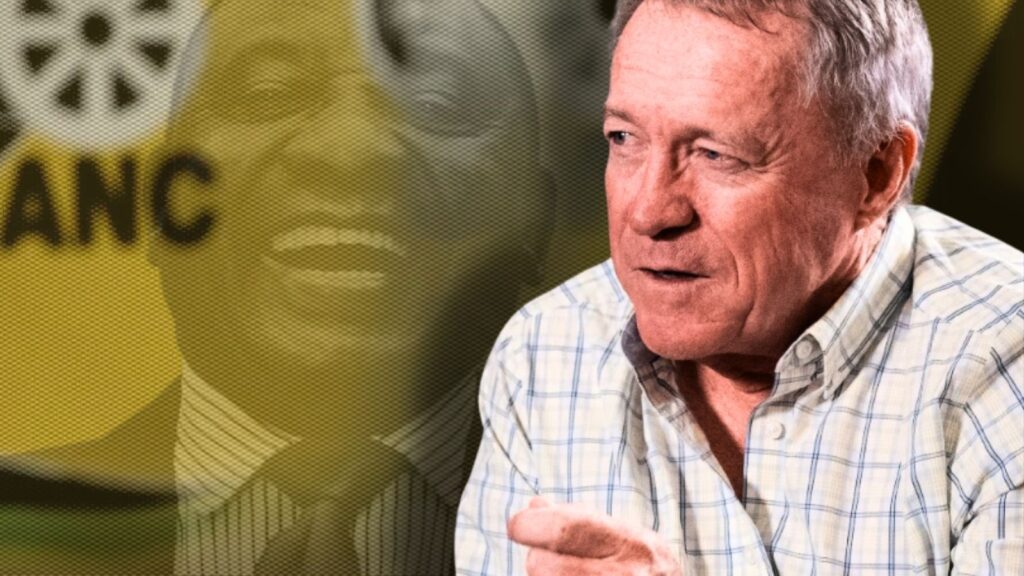
South Africa’s political leadership over the past 15 years, and the growing state and tax burden, have been the most destructive forces South Africa has ever seen.
This is the feedback from renowned economist and Efficient Group founder Dawie Roodt, who addressed the 9th BizNews Conference in the Drakensberg.
Roodt said he was increasingly frustrated by politicians promising to spend public money more effectively, while overlooking the need to reduce the amount of money the government spends.
“I’m really getting sick and tired of these politicians. Because they all tell us how they’re going to spend our money and how well they’re going to spend it,” Roodt said.
“They promise to fix things and do better, claiming no corruption, full transparency, and all that sort of stuff.”
He said the priority should instead be reducing the amount of money the government takes from taxpayers.
“Of course, they must spend it well, but they must spend less of it. We are totally overburdened, and this economy cannot carry it anymore,” he said.
Roodt argued that the role of the state should primarily be to provide law and order, protect property rights, and create an environment in which individuals and businesses can trade and create wealth.
He traced economic development back to the emergence of private property rights and trade, arguing that these institutions played a critical role in improving living standards.
According to Roodt, the modern state has become too large and increasingly views taxpayers as a source of funding for government programmes rather than as the people it exists to serve.
Roodt said that figures from the South African Reserve Bank’s latest quarterly bulletin support his point of view.
The report showed that national government expenditure had reached 35% of gross domestic product (GDP) in the first quarter of 2026, while government revenue had risen to 30% of GDP.
Roodt described both figures as the highest in South Africa’s history. He also said government debt was around 80% of GDP.
The cause of this in South Africa has a name
Against this backdrop, Roodt argued that South Africa’s economic deterioration over the past 15 years could be linked directly to government policy and administration.
“Today, we are poorer than we were 15 years ago on a per capita basis. So, the South African economy is not doing well. In fact, it’s doing absolutely horribly,” he said.
He then identified what he sees as the central cause of the problem. “And what is that cause? I think that cause has a name, and that name is the ANC,” Roodt said.
He criticised what he described as the party’s ideological roots in socialism and communism, as well as policies such as expropriation.
He argued that policies affecting private property rights undermine one of the foundations of economic development.
“The ANC’s policies are wrong as well. Policies like expropriation are wrong because private property rights are the very reason we are where we are today,” he said.
Roodt also blamed cadre deployment, corruption, and government incompetence for the deterioration of municipalities and state-owned enterprises.
“We have a new form of state capture in South Africa, driven by two distinct groups. The first includes civil servants, politicians, and bureaucrats, while the second consists of tenderpreneurs,” he said.
Despite his criticism of the government, Roodt rejected calls for taxpayers to stop paying their taxes. Instead, he advised taxpayers to legally minimise their tax liabilities.
“Do not evade taxes. Do not break any laws, but do whatever you can to pay as little tax as possible,” he said.
Roodt also warned that South Africa could not afford to lose its relatively small pool of high-income taxpayers, given the country’s extensive redistribution system.
Looking ahead, he said there were reasons for cautious optimism, particularly if South Africa implemented reforms that encouraged investment and economic growth.
He pointed to the reduction of the inflation target to 3% as an example of how policy changes could influence financial markets and potentially the broader economy.
However, he said political reform remained the biggest obstacle. “We need to fix politics in South Africa to get politicians and political parties that can put the right economic policies in place to help this economy grow,” Roodt said.
He argued that South Africa could achieve economic growth of 4%, 5% or 6% if the right policies were implemented.
“The right policies will be put in place only by another political party or grouping, because the ANC has proven itself to be incompetent and the most destructive force South Africa has ever seen,” Roodt said.













 Loading ...