

Ramaphosa’s R58 billion projects in South Africa under the spotlight


The National Council of Provinces (NCOP) will travel across various provinces this week to assess the progress of infrastructure projects and identify problem areas where they have previously conducted oversight.
These visits are part of the annual oversight initiative, focusing on the timely delivery of public infrastructure and the provision of basic services.
Next week, the Northern Cape delegation is expected to receive an update from Premier Zamani Saul regarding delays and unfinished public infrastructure projects.
This is in addition to the initiatives aimed at improving municipalities. With this being a local government election year, the performance of municipalities is under increased scrutiny.
In KwaZulu-Natal, Members of Parliament (MPs) will engage with provincial and local government authorities and interact with community members to determine whether previous oversight interventions have yielded tangible progress.
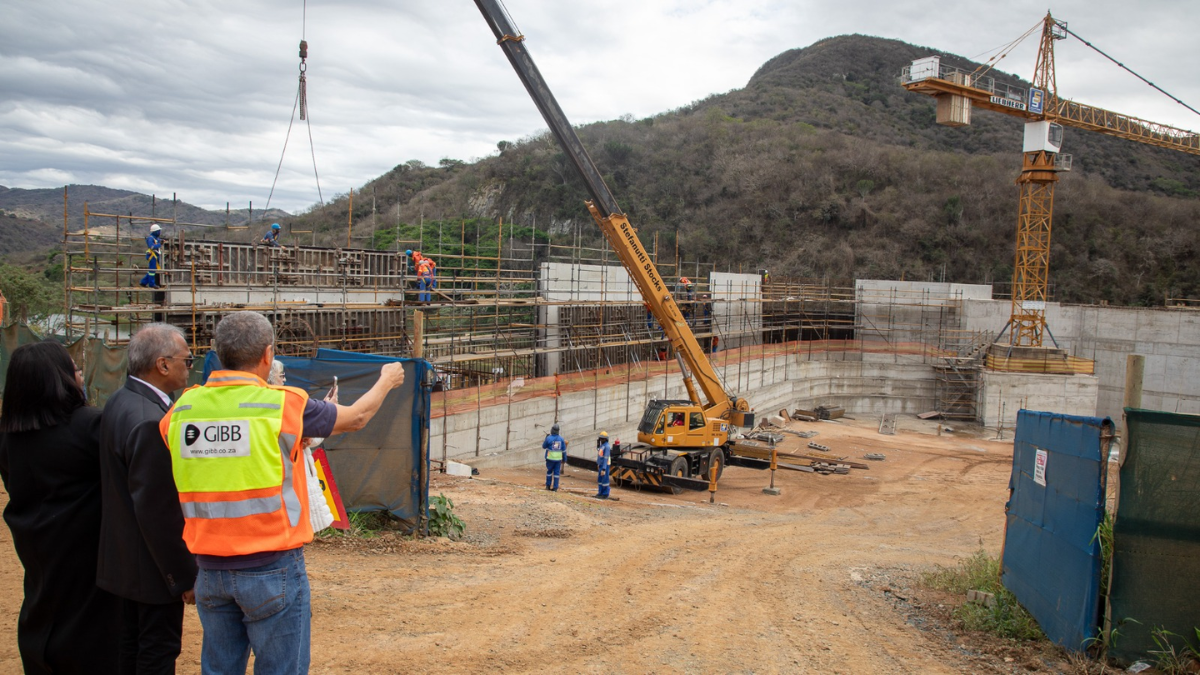
Key projects under review include the Umkomaas Water Project, which was last inspected during the provincial week in 2024.
The Umkomaas Water Project or uMkhomazi Water Project is a multi-phase bulk water security scheme with an estimated cost of roughly R27.5 billion, making it the largest infrastructure project on the NCOP oversight list.
The project is managed by Umgeni-uThukela Water in collaboration with the Department of Water and Sanitation and serves eThekwini and surrounding districts.
In June 2026, the eThekwini Metropolitan Municipality announced that it is moving forward with multi-billion-rand water infrastructure projects to enhance water security, stabilise supply, and improve service delivery throughout the city.
The Lower uMkhomazi Bulk Water Supply Scheme, which includes a storage dam, a water abstraction point, and a water treatment plant, has now entered Phase 2, with a budget of R11 billion.
The eThekwini Municipality Mayor, Cyril Xaba, announced that upon completion, the project will produce 100 megalitres of water per day.
Of this total, 75 megalitres will be supplied to eThekwini Municipality. This volume will be sufficient to meet the water needs of all areas in the south, from Isipingo to uMkhomazi.
Housing and water projects under inspection
Several housing projects will also be evaluated, and MPs are expected to receive feedback from municipalities on the implementation of previous provincial week resolutions.
In the Northern Cape, MPs will visit projects in and around Kimberley, including the Schmidtsdrift Land Restitution Project, the Sol Plaatje Bulk Water Project, and the Hull Street Housing Initiative.
This will be to assess the progress of infrastructure implementation and the delivery of human settlements.
The Sol Plaatje Bulk Water Project is estimated to cost approximately R2.5 billion.
It is funded through the National Treasury’s Budget Facility for Infrastructure (BFI) grant and aims to overhaul Kimberley’s ageing water treatment facilities and distribution networks.
The Hull Street Housing Initiative is estimated to cost between R140 million and R180 million. It is a social human settlement development project located in Kimberley.
The Schmidtsdrift Land Restitution Project involves multi-million-rand investments that may vary across the ongoing phases.
This project focuses on infrastructure, agriculture, and post-settlement community support in response to historical land restitution claims.
The NCOP will also engage with residents in Douglas regarding challenges affecting the provision of basic services.
In Prieska, two major economic development projects will be evaluated: the recommissioning of the Prieska Copper Zinc Mine and the Prieska Power Reserve.
The Prieska Power Reserve is estimated to cost between R10.7 billion and R12 billion.
This project is an initiative for green hydrogen and ammonia, developed by Mahlako a Phahla, Central Energy Corporation (CENEC), and the Industrial Development Corporation (IDC).
The recommissioning of the Prieska Copper Zinc Mine has a total capital expenditure and peak funding requirement estimated to be between R7.2 billion and R7.6 billion (depending on exchange rates).
Orion Minerals has provided these estimates for the combined upper- and deep-mining development.















 Loading ...