

End of cash for one group of people in South Africa


The South African Human Rights Commission (SAHRC) has called for a ban on all cash transactions by scrap metal dealers to protect the country’s infrastructure from vandalism and illicit trade.
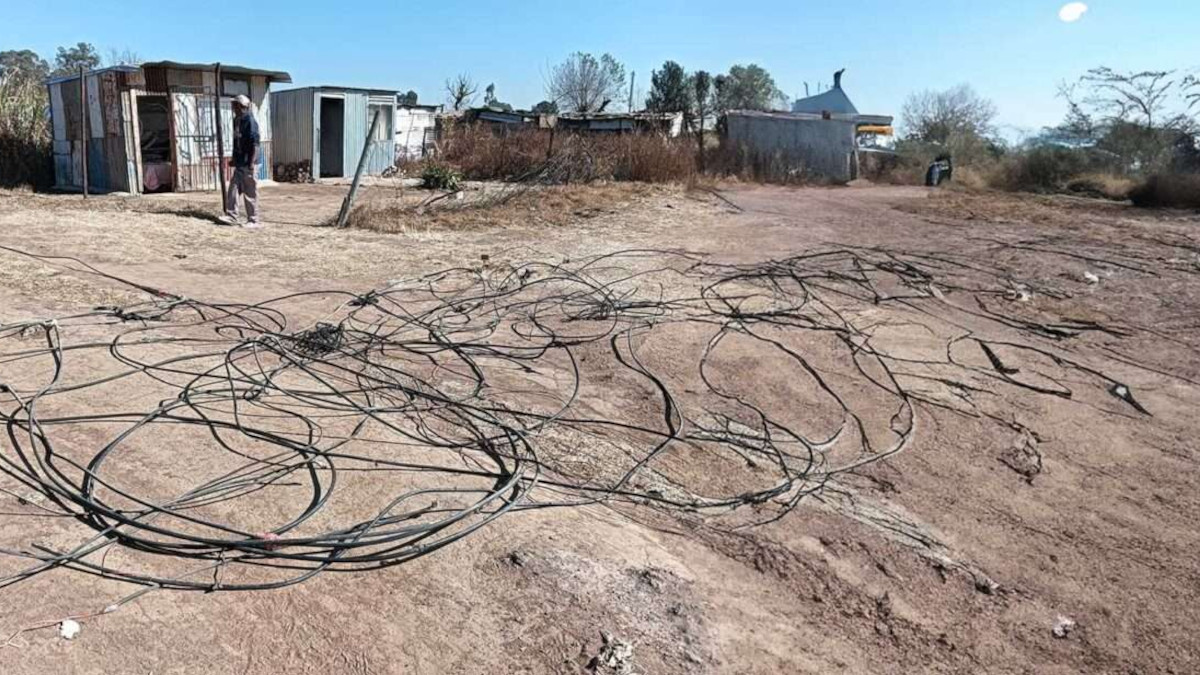
In a new policy brief published this week, the SAHRC took aim at the theft and trafficking of copper cables and scrap metal from public infrastructure, calling it a human rights crisis.
While the vandalism and theft of this infrastructure are routinely framed in economic and law-enforcement terms, the commission said it is also a crisis of rights.
This is because this activity repeatedly disrupts access to constitutionally protected services, leaving South Africans vulnerable.
“Where the State fails to take reasonable and effective measures to prevent foreseeable harm, enforce the law, restore services and protect affected communities, constitutional responsibility may arise,” it said.
“Communities already living at the margins of service delivery bear the greatest harm.”
The theft of metals from public infrastructure is also a crisis in terms of the cost to the economy, where it is estimated at R45 billion annually from the fiscus.
The commission cited thousands of kilometres of copper cable stolen from state infrastructure groups such as Eskom and Transnet, resulting in hundreds of millions of rands in losses.
Critically, this stolen metal is trafficked across borders, with a 2026 crime intelligence report indicating that 121 tonnes of suspected stolen copper were transported internationally.
The commission said that the government needs to step up its action against the crime, and the first port of call would be to recognise it as a human rights crisis and adjust their actions accordingly.
“Parliament and the relevant Portfolio Committees should formally acknowledge infrastructure vandalism as a human rights crisis and not merely an economic or security matter,” it said.
It recommended that the government then move to fast-track regulatory reforms, particularly around second-hand goods, to combat the sale of stolen metals through legitimate trade.
This is a key part of combating the crime, it said, as enforcement is currently focused on the individuals and networks physically removing infrastructure—not the platforms through which they are traded.
Mandatory cashless transactions
The commission noted that the Second-Hand Goods Amendment Bill has been approved for public comment, but no gazetted publication of the Bill has been identified.
The bill specifically targets cable theft, stolen goods, and unlawful scrap metal trades, and aims to strengthen the oversight mechanisms outlined in the original Second-Hand Goods Act (SHGA).
The SAHRC said the bill needs to be published for public comment without further delay.
As part of the fight against stolen metals, the commission put forward a key proposal to address the platforms used to trade cable theft.
This is to implement mandatory cashless transactions for scrap metal dealers.
“Cash transactions reduce traceability and can facilitate the movement of stolen metal through apparently legitimate transactions,” the commission said.
To this end, it said that the Financial Intelligence Centre should be directed to monitor suspicious patterns in scrap metal transactions and report to SAPS and ITAC.
Critically, it said the SHGA should be amended to include a mandatory cashless payment requirement for all copper scrap transactions, with electronic records retained for at least 5 years.
“The illicit scrap metal economy cannot be addressed through criminal enforcement alone,” it said.
“Scrap metal dealers, recyclers, transporters, exporters and other businesses in the metal value chain have a responsibility to ensure that their operations do not contribute to human rights harm.”
“Communities that lose access to water because a pump station has been stripped, or to essential services because electricity infrastructure has been vandalised, are not experiencing a mere inconvenience.
“Their enjoyment of constitutional rights is being materially impaired.”
The full policy brief can be read below:














 Loading ...