

Shadow over South Africa that’s costing over R68 billion a year



The Consumer Goods Council of South Africa (CGCSA) has called for stronger collaboration between the public and private sectors to combat the illicit economy, which costs South Africa an estimated R68 billion annually.
CGSCA CEO, Zinhle Tyikwe, said crime affecting consumer goods had evolved beyond a public safety issue and has become a challenge to the country’s economic competitiveness.
She said that this problem needs to be addressed through stronger collaboration between the government, businesses, law enforcement, and civil society.
The illicit economy encompasses all types of illegal activities in the country, including the importation of knock-off goods and the theft and resale of products.
These illegal operations put pressure on legitimate businesses and limit the growth potential of new entrants to the retail market.
Tyikwe called for the establishment of an industry anti-crime platform, which would facilitate collaboration between stakeholders and create a coordinated response to crime.
“If we are serious about tackling organised crime, illicit trade, extortion, supply chain disruption and technology-enabled crime, we must move beyond isolated interventions to an industry-wide approach,” she said.
“The proposed Anti-Crime Platform can provide that foundation by bringing together business, government and law enforcement around prevention, disruption, enforcement and measurable outcomes.”
The CGCSA estimated that, across 11 key sectors, the illicit economy costs South Africa roughly R68 billion annually.
“Every rand diverted into the illicit economy is a rand that cannot be invested in economic growth, job creation or public services,” Tyikwe said.
“Cargo theft, extortion, cybercrime, attacks on logistics networks and the infiltration of illicit goods into supply chains continue to increase the cost of doing business and undermine confidence in the economy.”
Business Against Crime South Africa (BACSA) was founded in 1996 to strengthen public-private collaboration in addressing the illicit economy.
Tyikwe said the newly proposed collaborative efforts would build on BACSA’s work and that prior collaboration between BACSA and the CGCSA demonstrated its effectiveness.
The illicit economy
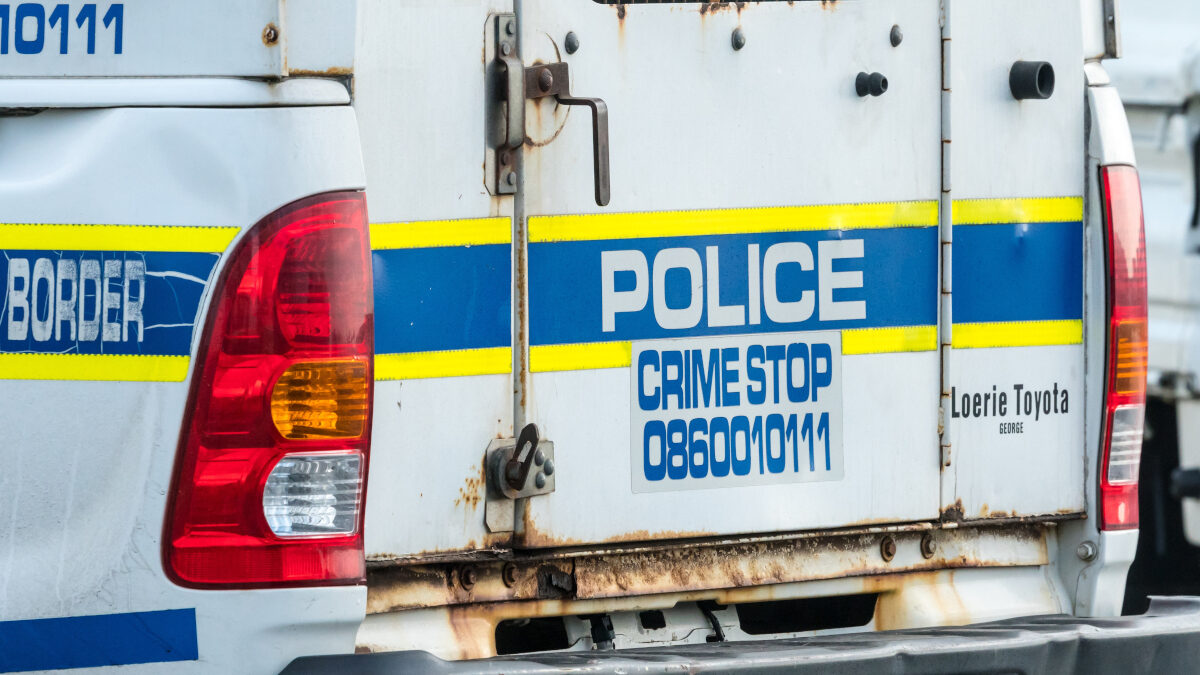
The illicit economy drains billions from South Africa every year, with some groups estimating the cost to the country’s GDP over R84 billion.
Research commissioned by the CGCSA estimates the cost of illegal trade to the country’s economy at roughly R68 billion.
A previous study by Frans Cronje Private Clients, titled Shadow State Rising, placed the economic impact of illicit activities closer to R84.6 billion.
This amount would be the equivalent of approximately 1% of South Africa’s GDP and 3.9% of total government revenue.
While the CGCSA tracked losses across 11 key sectors, Shadow State Rising found that a majority of losses occurred in three sectors.
These included tobacco, illegal mining, and alcohol, which accounted for roughly 90% of illegal activity, costing South Africa’s economy billions.
The study argued that illegal activities had formed a “shadow state” which had its own revenues, workforce, and distribution channels.
It described illegal activities as a “parallel economy that generates income and employment but evades tax, safety, and oversight”.
“The illicit economy shrinks the tax base, raises borrowing and taxes on the compliant, and worsens debt dynamics.”
Similar to calls from the CGCSA, Frans Cronje Private Clients’ study said that stronger collaboration between the public and private sectors was crucial to combating the illicit economy.
It said this collaboration should be a task force comprising public enforcement agencies, including the South African Revenue Service (SARS), the National Prosecuting Authority (NPA), and the South African Police Service (SAPS).
The task force would also feature private-sector observers and advisers to ensure effectiveness and rebuild trust in public authorities.
“Recovering even a portion of R84.6 billion could trim the deficit without raising taxes or cutting core services,” the study said.
Tyikwe emphasised that multi-organisation collaboration was necessary for addressing the illicit economy.
“Success will depend on sustained partnerships between business, government, law enforcement, communities and civil society,” she said.














 Loading ...