

New R582 tax for solar users in South Africa who aren’t connected to the grid


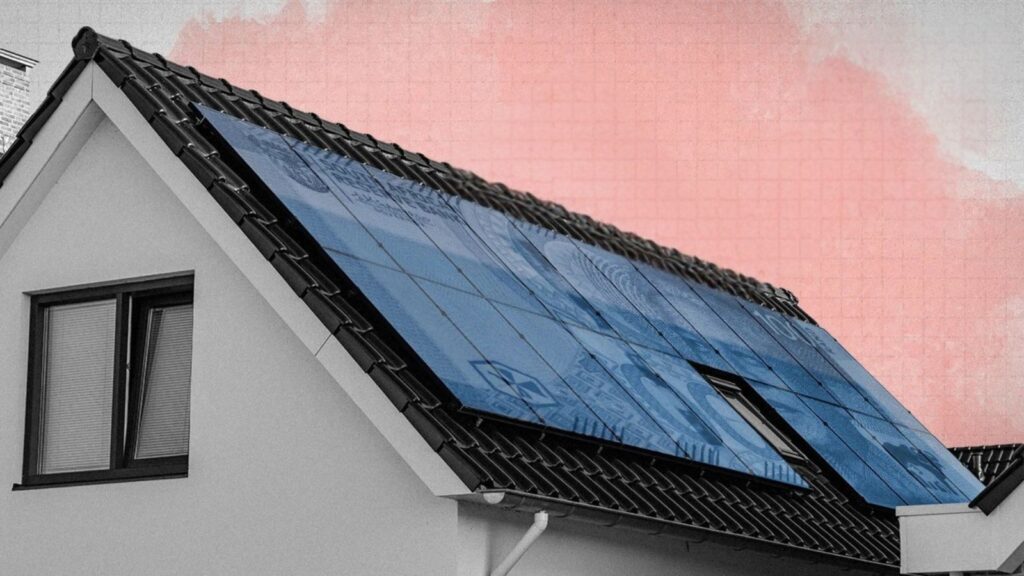
Civil action group AfriForum has issued a letter of demand to the Thaba Chweu Local Municipality and the National Energy Regulator of South Africa (Nersa) over a new levy being charged to solar users in the region.
Thaba Chweu Municipality is located in the northern region of Mpumalanga, with the town of Lydenburg as its seat.
According to Nersa, the municipality has a total of 19,294 customers, with residential customers accounting for 53.63% of electricity sales.
In the regulator’s Reasons for Decision document related to the municipality’s electricity tariff application for 2026, the regulator approved the introduction of a new R582.64 levy on “networks that are available but not connected”.
Utilities have repeatedly noted that they must provision electricity capacity for all users connected to the grid, even if they are not consuming that power.
This has led to fixed ‘capacity charges’ cropping up on bills.
These charges exist because most grid-tied self-generation systems, such as solar panels, still rely on the grid as a backup when their own networks are unavailable or batteries are depleted.
Thaba Chweu also has these basic charges in place for small-scale embedded generation (SSEG) customers, who have to pay the basic fee of R321.11 per month, along with a R10.92 access charge.
These fees were also implemented in July 2026.
However, AfriForum flagged the R582.64 levy in July, raising concerns that it was being charged to properties that rely solely on their own generation and are not connected to the grid at all.
This means these households are being forced to pay for the provision of services they will never use, which the group said is unlawful, irrational, and unreasonable, and amounts to a “tax for using the sun”.
“AfriForum maintains that this levy may amount to an unlawful tax and that there is no evidence that this levy was preceded by a lawful and transparent public participation process,” it said.
“Questions also remain about whether the tariffs are supported by an appropriate cost-of-supply study and whether their adoption and approval complied with applicable municipal and electricity legislation.”
The group said that it is becoming increasingly apparent that financially distressed municipalities view rooftop solar users as a convenient source of additional revenue.
AfriForum has taken on several municipalities, including major metropolitan cities, over levies and charges, and has successfully taken Nersa to task, in particular over cost-of-supply studies.
However, the group said that the latest solar tax is about more than disputed charges.
“It concerns the fundamental principle that municipalities may levy only lawful, rational and properly approved tariffs,” it said.
“Thaba Chweu and Nersa must account for these charges, particularly where residents who are completely disconnected from the electricity grid are expected to pay for a service they do not receive.”
Energy losses of 53.16%

AfriForum previously stated that municipalities have the right to recover legitimate electricity network costs, but any new charges must be lawful, transparent, cost-reflective and properly authorised.
“Residents cannot simply become the financial lifeline for municipalities that have failed to manage their finances responsibly.”
Apropos, in Nersa’s own RfD related to Thaba Chweu, it flagged repeated technical and financial performance failures that have led to the municipality needing to raise prices.
Among others, it noted high energy losses of 53.16%, “which significantly undermines [the municipality’s] financial sustainability”.
The municipality’s electricity business recorded a decrease in percentage deficit from -108.80% in the 2023/24 financial year to -50.27% in the 2024/25 financial year, but it will still be out of pocket.
Bulk electricity purchases amounted to R393.2 million, but electricity sales revenue was only R360.2 million, resulting in about R33 million in cost not recovered.
“If losses were capped at 12%, the municipality would improve net profit by approximately R25.7 million, reduce the deficit from -50.27% to -4.86%, and generate additional revenue of R194 million,” Nersa said.
Nevertheless, the regulator noted that the municipality was in the midst of a four-year plan to phase in tariffs and progressively align them with the cost of supply.
AfriForum said it initially wrote to the municipal manager on 20 July, requesting documentary proof of the process followed in adopting the tariffs.
This included copies of the relevant cost-of-supply study, public notices, council resolutions, comments received from the public and records showing how those comments were considered.
It has now sent a legal letter of demand, giving the municipality and Nersa 10 days to provide “satisfactory explanations and supporting information”.
If they fail to do so, the group said it intends to approach the High Court for appropriate relief.














 Loading ...