

How much more you’ll pay on your bond after the latest interest rate hike


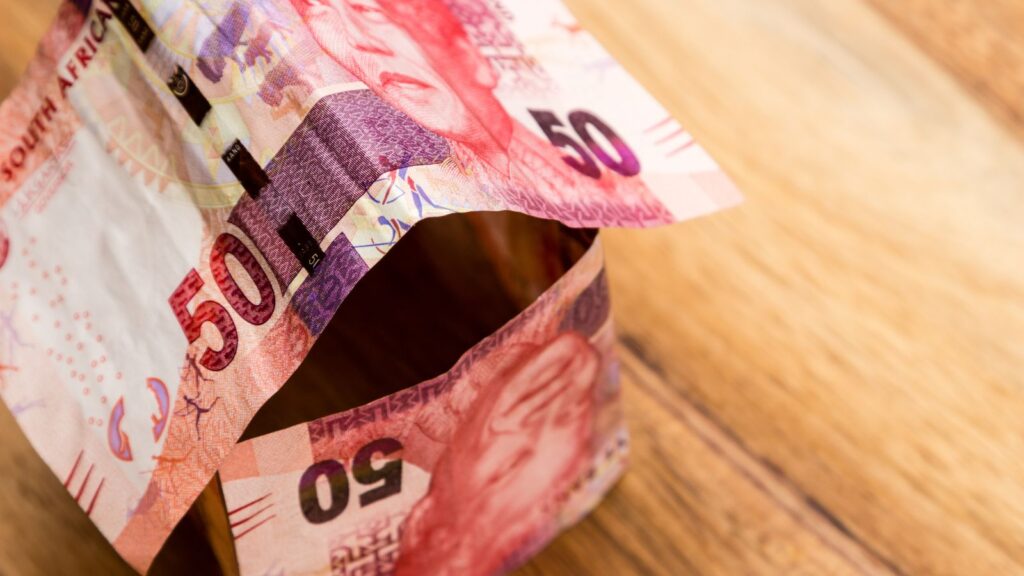
The South African Reserve Bank’s Monetary Policy Committee unanimously voted to increase the repo rate by 25 basis points to 7.25%, taking the prime lending rate to 10.75%.
Reserve Bank governor Lesetja Kganyago said global growth was under pressure from energy shocks, while South Africa’s economy contracted by 0.2% in the second quarter.
“Shocks are multiplying, and vulnerabilities are increasing. The global economy is not in a healthy space,” he said.
Kganyago also warned that inflation is likely to rise above 5% later this year and early next year, largely because of higher fuel prices, before returning towards the 3% target by the end of 2027.
Seeff Property Group chairman Samuel Seeff said the rate increase was “another blow to consumers and the struggling economy”.
He argued that the current inflation spike was driven by external factors, such as oil prices, rather than by strong domestic demand.
“The higher interest rate will do little to mitigate external cost shocks but will inflict real financial pain on households and businesses,” he said.
Seeff said higher borrowing costs could further weaken consumer confidence and property market activity, while increasing monthly bond repayments and affordability pressures for first-time buyers.
Pam Golding Property chief executive Andrew Golding said the rate increase would place “additional pressure on prospective homeowners”, particularly first-time buyers who are more sensitive to monthly repayments.
However, he said banks were continuing to support the market through competitive lending products, including zero-deposit and cost-inclusive home loans.
According to ooba Home Loans data cited by Golding, the share of first-time buyer applications for cost-inclusive loans increased from about 3% in 2021 to nearly 16% in early 2026, while approval rates reached 88.8%.
Lew Geffen Sotheby’s International Realty CEO Yael Geffen said the rate increase would reduce what some buyers can afford and could reduce the number of buyers competing for properties.
“A quarter of a percentage point increase may look small on paper, but property affordability is determined at the household level,” she said.
Geffen said some buyers could move to cheaper properties or different locations, negotiate more aggressively, or delay purchases, while buyers with stronger finances may continue to transact.
At the luxury end, she said the impact was more likely to affect how buyers allocate their capital than to determine whether they could afford a property.
“A 0.25 percentage-point rate increase isn’t necessarily going to make someone walk away from a R20 million home, but it may make them question whether they want to spend up to R50,000 a year more on the home loan repayment,” she said.
Extra cost on your bond

As noted by the property experts, the 25bps provides tangible pressure of at least R143 at the lower end.
A 25-basis-point increase translates to an extra monthly cost of R168 on a R1 million bond and R337 on a R2 million bond.
The latest oobarometer report highlighted that the average home price in South Africa has climbed to R1,695,257. This means the 0.25% hike in interest rates will have a notable impact on homeowners.
For the average South African home priced at R1.695 million, the monthly repayment increases by R286, adding more financial pressure to households.
The extra costs on bonds for property prices between R850,000 and R5 million can be found below.
| Bond value | July 2026 (10.50%) | September 2026 (10.75%) | Extra |
|---|---|---|---|
| R850,000 | R8,486 | R8,629 | +R143 |
| R1,000,000 | R9,984 | R10,152 | +R168 |
| R1,500,000 | R14,976 | R15,228 | +R252 |
| R1,695,257 | R16,925 | R17,211 | +R286 |
| R2,000,000 | R19,968 | R20,305 | +R337 |
| R2,500,000 | R24,960 | R25,381 | +R421 |
| R3,000,000 | R29,951 | R30,457 | +R506 |
| R3,500,000 | R34,943 | R35,533 | +R590 |
| R4,000,000 | R39,935 | R40,609 | +R674 |
| R4,500,000 | R44,927 | R45,685 | +R758 |
| R5,000,000 | R49,919 | R50,761 | +R842 |













 Loading ...