

Inflation surprise for South Africa


Annual consumer price inflation rose only marginally in August 2026, with Stats SA recording the figure at 4.4%, up 0.1 percentage point from 4.3% in July 2026.
This was a surprising result, with economists and analysts anticipating a steeper jump to around 5.0% for the month.
According to Dr Elna Moolman, Standard Bank Group Head of South Africa Macroeconomic Research, the lower figure was largely thanks to lower petrol prices for the month.
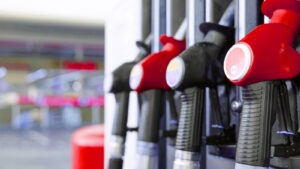
Petrol prices dropped by 52 cents per litre in August, easing the burden on consumer transport for the month.
However, producers and transporters suffered as diesel prices shot up by R1.23 per litre that month.
Moolman said that, on top of lower petrol prices, the rest of the inflation basket also showed little inflationary pressure.
“This is a welcome indication that we’re not seeing the feared second-round inflation impact of the significant increase in fuel costs this year,” she said.
However, this comes with the caveat that fuel costs in September—and now expected for October—have continued to rise.
“This means that the Reserve Bank will likely remain concerned about the second-round effects of inflation,” she said.
There is a high risk that South Africa will see a general rise in prices as a result of higher fuel costs.
Moolman said that, even with the lower-than-expected inflation print, the Reserve Bank is likely to hike interest rates by 25 basis points on Wednesday.
Positively, though, she said this could also mark the end of the hiking cycle, after which the central bank will hold rates for a while.
“We expect the SARB to deliver some interest rate relief during the course of 2027,” she said.
Petrol and diesel price adjustments since the Iran War broke out
| Month | Petrol 95 | Diesel 0.005% |
|---|---|---|
| March | +R0.20 | +R0.65 |
| April | +R3.06 | +R7.51 |
| May | +R3.27 | +R5.27 |
| June | +R1.43 | -R2.62 |
| July | -R1.96 | -R3.59 |
| August | -R0.52 | +R1.23 |
| September | +R1.34 | +R3.15 |
| Total difference | +R6.82 | +R11.60 |
If it weren’t for fuel prices, inflation would be sorted
According to Stats SA, the main contributors to the slightly higher inflation in August were housing and utilities (5.2%, contributing 1.3 percentage points) and transport (8.8%, contributing 1.2 percentage points).
Insurance and financial services were also higher but weighted less in the headline figure (5.7%, contributing 0.6 percentage points).
It is evident that fuel prices are still a major contributing factor to overall CPI, with CPI excluding fuel and
energy coming in at 3.5%—well within range of the SARB’s 3% target.
According to Investec Chief Economist, Annabel Bishop, fuel prices still remain a key driver of CPI inflation in South Africa.
The fuel price inflation rate in the CPI index is now at 20.6% year-on-year, down from 23.3% in July and 35.3% in June.
Excluding food, non-alcoholic beverages, fuel, and energy prices, the core measure of CPI inflation came in at 4.1% y/y, down from 4.2% y/y in July and 3.0% y/y in February.
Bishop noted that food and non-alcoholic beverage prices rose 0.7% y/y and 0.0% m/m, with deflation still feeding through from agricultural food production, which fell 6.6% y/y in July.
Producer prices have about a one-month lag relative to consumer prices, she said, adding that July saw grains and other crop prices fall 18.1% y/y, reflecting price deflation this year and most of last.
Notably, oil prices have not lifted South Africa’s food price inflation, and instead, food price disinflation has had a moderating effect on CPI, Bishop said.
“The MPC meeting today is likely to deliver a 25bp hike on balance, although there is just above a 50% chance of this occurring,” she said.
The finger on the scale towards a hike is that the targeted inflation measure has not spiked yet, and oil prices are very volatile, as is the situation in the Middle East.













 Loading ...