

Severe weather warning for homeowners in South Africa this week


Severe thunderstorms are expected across parts of South Africa this week, with homeowners being warned to prepare for heavy rain, damaging winds, hail, and excessive lightning.
The South African Weather Service (SAWS) issued warnings covering Gauteng, North West, parts of Mpumalanga, Limpopo, Free State and the Northern Cape.
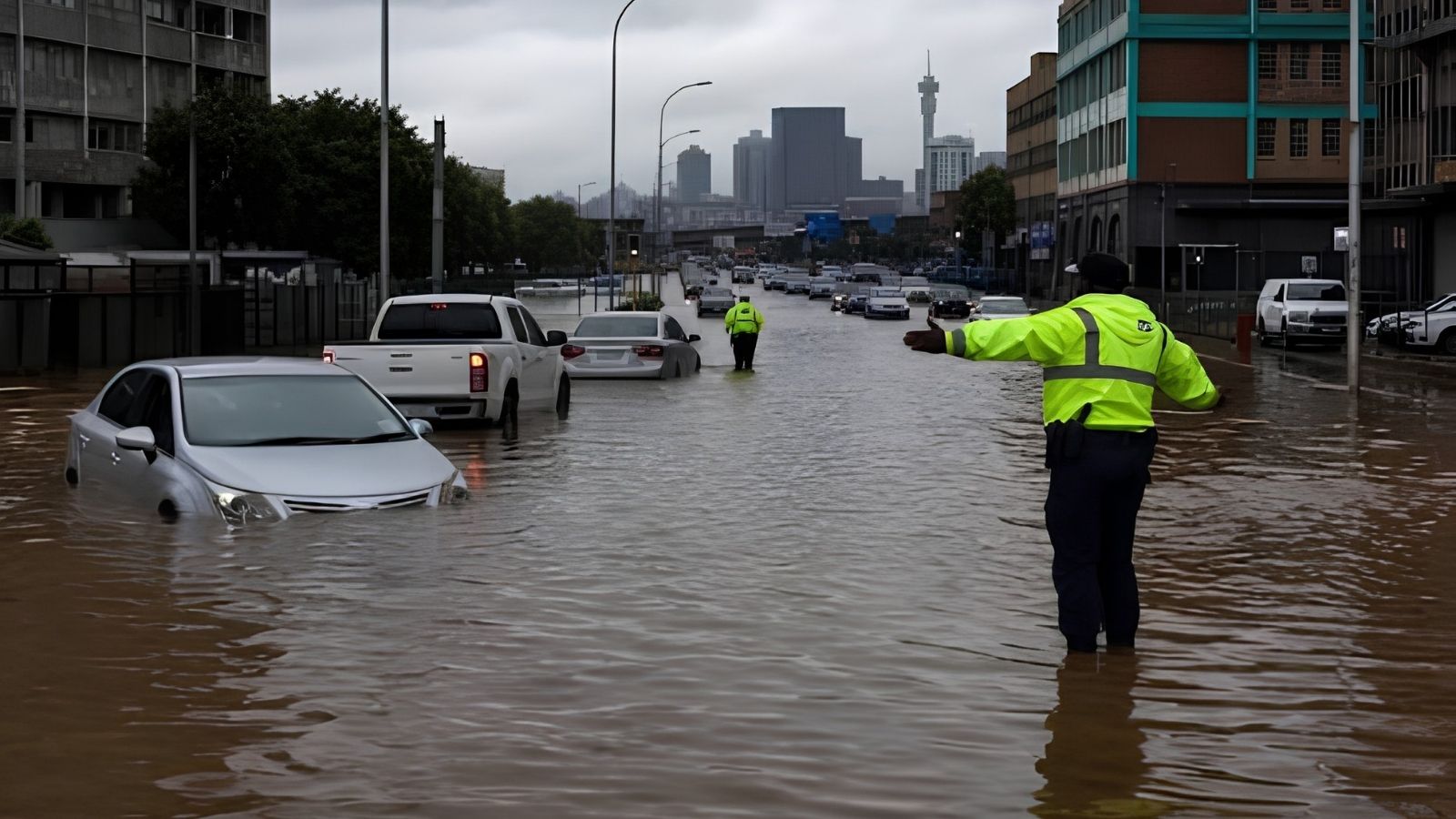
The storms could bring localised flooding, damage to homes and hazardous conditions on the roads, particularly in areas where heavy rain falls over a short period.
SAWS said partly cloudy and cool conditions are expected across much of the country, with isolated to scattered showers and thundershowers developing over the central and eastern parts.
The weather service warned that the strongest thunderstorms could produce heavy downpours, damaging winds, hail and excessive lightning.
“These conditions could lead to flooding of low-lying areas, bridges and flood-prone roads, while strong winds may topple trees and damage property,” SAWS said.
Residents have been urged to avoid crossing flooded roads and bridges, seek shelter during thunderstorms and secure loose items outside their homes. Motorists should reduce their speed and take extra care where heavy rain affects visibility.
SAWS said a surface trough will dominate the central and western interior during the week, while a surface high-pressure system is expected over eastern South Africa.
“Upper-air perturbations will increase the chance of isolated to scattered showers and thunderstorms over the central, southern and eastern parts of the country,” SAWS said.
From Tuesday, cloudy conditions are expected in the east. Elsewhere, conditions will generally be partly cloudy and cool, with isolated to scattered thunderstorms possible over the central parts of the country.
SAWS has urged residents and other stakeholders to continue monitoring its official forecasts and warnings, noting that these will be updated as the likelihood and potential severity of impacts become clearer.
The weather service also warned the public to be cautious of unauthorised or unverified information and not to share information from unreliable sources.
Be prepared
For homeowners, preparing a property before severe weather arrives can help reduce the risk of expensive damage.
Standard Bank said homeowners should conduct checks from the roof downwards, including the ceiling, walls, floors and basement where applicable.
“Prepping your home for the rainy season is important. Your checks should run from top to bottom and include your roof, ceiling, walls, floors, and, if you have one, your basement,” Standard Bank advised.
The roof should be checked for damaged or loose tiles, cracks, holes and other weaknesses that could allow water into the home. Metal roofs should also be inspected for rust and areas where water can collect.
Gutters should be cleared of leaves and other debris, while sagging, loose or leaking sections should be repaired.
Blocked gutters can cause water to overflow onto roofs, ceilings and exterior walls, potentially resulting in structural damage.
Homeowners should also look for mould, which can indicate damp or existing water damage. Dead or hanging tree branches should be removed before storms arrive, as strong winds can send them onto roofs, vehicles or windows.
Standard Bank also recommends keeping electronics and electrical equipment raised off the floor where possible, particularly in areas vulnerable to flooding.
Finally, homeowners should check their insurance policies to establish exactly what is covered in the event of storm, hail or water damage.
“Speak to your insurance broker to make sure that your home insurance policy covers you for water, hail, and storm damage,” Standard Bank said.
“As a homeowner, you must do everything you can to protect your home from flood damage, but also have the right coverage in place to protect you if there is an unavoidable disaster.”


















 Loading ...