

The Western Cape town where crime is so bad that it’s becoming known as “Crimefontein”



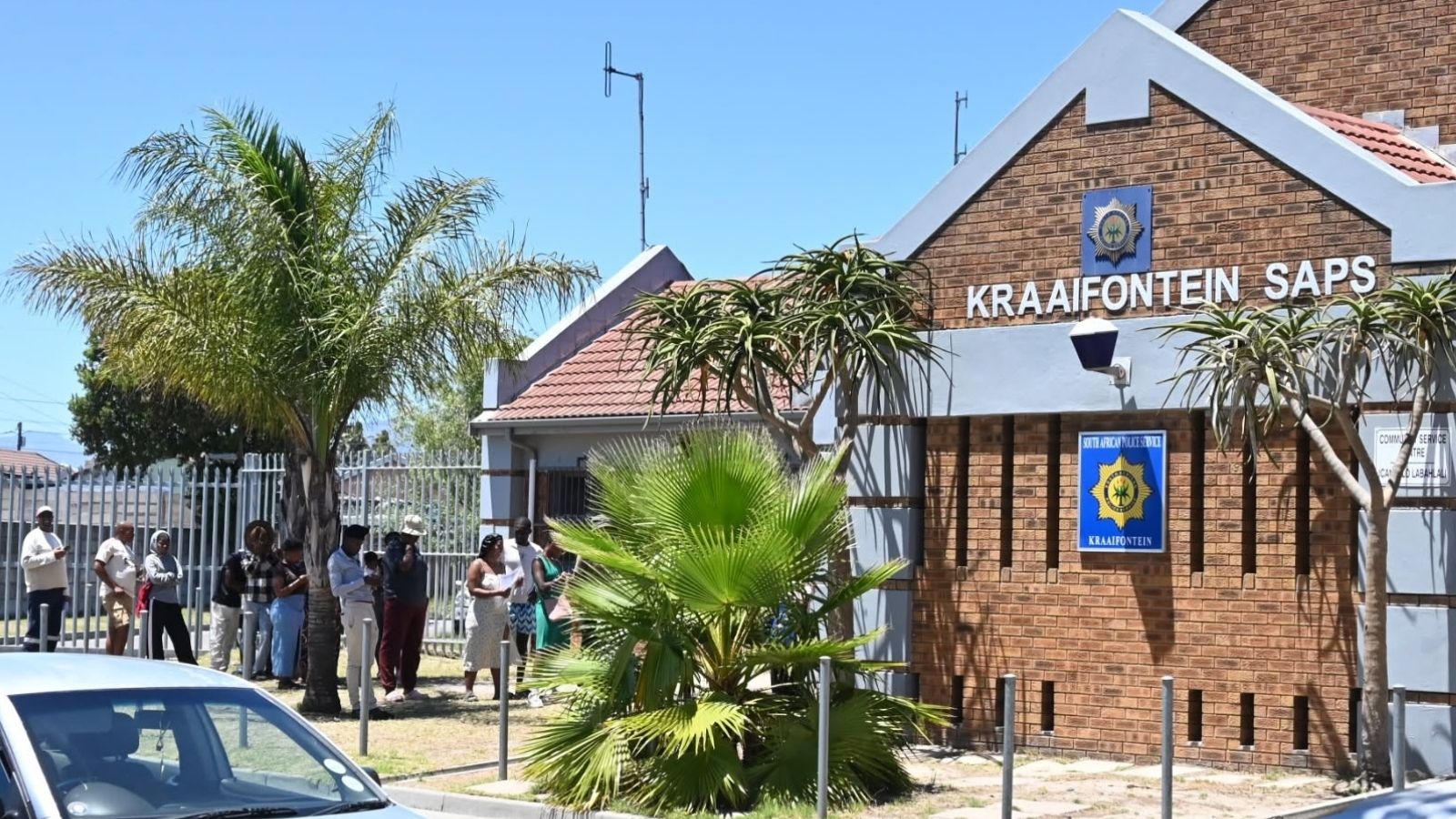
Kraaifontein is increasingly becoming referred to as ‘Crimefontein’ as repeated violent crimes, gang activity, and the involvement of young people have become part of everyday life.
The town forms part of the City of Cape Town metropolitan municipality but retains its own central business district and encompasses several residential areas.
These areas include Windsor Park, Scottsville, Peerless Park, Eikendal, Scottsdene, Bloekombos, Wallacedene, Belmont Park, Bonny Brook and Uitzicht.
A large part of Kraaifontein comprises high-density, informal township areas that account for a significant share of reported violent incidents.
Crime statistics from the South African Police Service (SAPS) and updates from local authorities have consistently placed Kraaifontein among the Western Cape’s high-volume crime precincts.
The precinct has also regularly appeared among the top stations nationally for contact and violent crime.
Around 8,900 to 9,000 crimes are reported in the precinct each year, with drug-related offences making up the largest category. These are followed by common assault, aggravated robbery and malicious damage to property.
Although the South African Police Service (SAPS)’s recent quarterly statistics have shown some year-on-year improvement in murder figures, serious violence remains a concern.
Gang-related shootings, vigilante attacks, and targeted gun violence continue to affect the community.
Gavin Riddles, acting chair of the Kraaifontein Community Policing Forum (CPF) and national chair of the Community Law and Order Foundation, said that violent crime has become normalised.
Speaking in an interview with CapeTalk, he said the community had become increasingly accustomed to murder, gang violence, and serious crimes involving young people.
However, Riddles said the problem he is concerned about is children becoming involved in crime themselves.
“I had a discussion with the crime prevention department of the Department of Health, and it was a concern for me to see that boys, nine-year-olds, 10-year-olds, up to 13, 14, are not in school,” he said.
Instead, some children were “wandering around in the streets, at street corners, begging at street corners”, he said, while not being properly reintegrated into their families.
Violent crimes are the norm
Riddles said minors were increasingly appearing as suspects in serious offences, including attempted murder and armed robbery.
“On a day-to-day basis, it’s minors, it’s children that are supposed to be in school,” he said. He also warned that repeated shootings and murders risked making violence appear normal to residents.
“For me, it seems like murders in Kraaifontein are the norm. Sometimes you see that people don’t even act or respond to that, they just take note and go to social media and speak about it,” he said.
Riddles stressed that the community should not simply accept this as an unavoidable part of life. “We must focus on what is truly important to make Kraaifontein a safer haven for everyone,” he said.
He also argued that policing alone could not prevent every violent crime, particularly where victims and alleged perpetrators knew one another.
“How can the police be there if the rape suspect is the friend of the mother?” he asked. “How can the police be there if the accused in an assault case is the husband of a woman?”
More attention was therefore needed inside homes and communities, including parenting, conflict resolution and behavioural programmes.
“We need to go back to cognitive behavioural training sessions. We have to get families involved in good parenting,” Riddles said.
He added that children and men also needed stronger messages about protecting rather than harming women and children. “They must understand their role is to protect and not to hurt and to kill,” he said.

















 Loading ...