

Warning to people buying milk off the shelves in South Africa


South African dairy farmers are warning that consumers could face higher milk prices in the long term if mounting production costs and lower prices paid to farmers force more producers to shut down their dairy operations.
André van Heerden, chief executive of dairy cooperative Samilco, said farmers were struggling to absorb the financial pressure after Lactalis, one of the country’s biggest milk buyers, reduced the price it pays producers by 70 cents per litre, or roughly 10%.
The reduction comes as farmers face rising fuel, energy, and other production costs, which have resulted in many struggling to keep their operations profitable.
“Most of these guys are running at a loss, especially when it’s a 70-cent reduction, which is a 10% reduction that you just can’t afford anymore,” van Heerden said in an interview.
Samilco represents farmers whose main operations are in the Southern Cape, from Caledon to George.
Many are small- to medium-sized producers who also operate other farming enterprises to supplement their income.
Van Heerden said milk producers had limited bargaining power when negotiating with processors like large buyers such as Lactalis.
“When dealing with milk buyers, the bargaining power is obviously on the side of the milk buyer,” he said.
Although farmers have committees through which they negotiate and communicate information about their businesses, van Heerden said producers remained price takers.
He argued that farmers needed greater transparency across the dairy supply chain, particularly regarding the costs and profitability of milk processors and retailers.
“What we hope to see is informational symmetry. In other words, the milk buyers know exactly what our cost of production is. We don’t know what the production costs are and whether the milk buyers or milk processors are profitable,” he said.
Van Heerden said that if lower prices were being imposed to address a surplus of milk, consumers should also see the benefit on supermarket shelves.
“If our price was reduced by 70 cents to remove surplus, at least you would see it on the shelves with the retail as well, and those products would start moving,” he said.
Dairy farms are closing down in South Africa
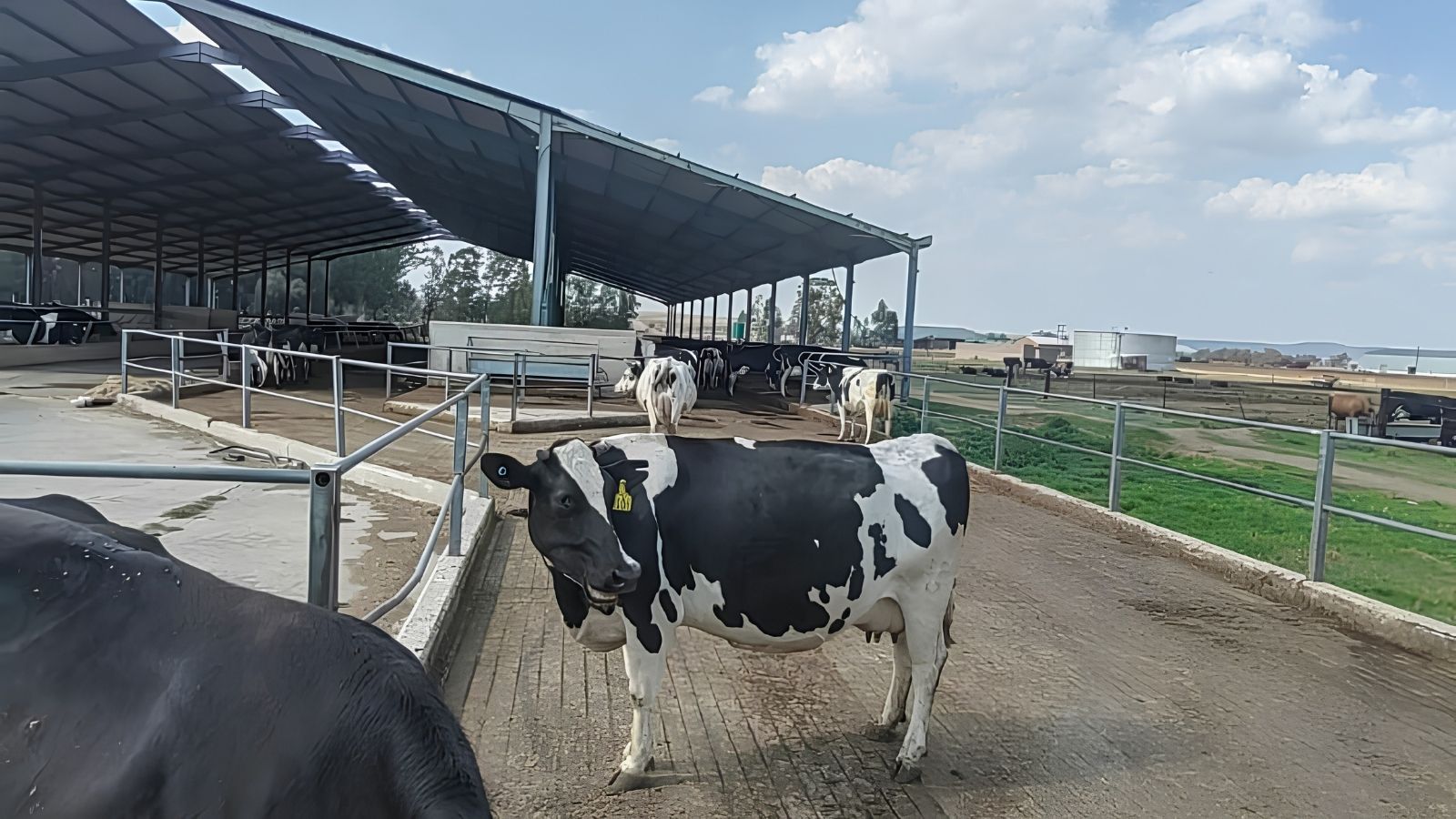
He added that rising diesel and energy costs were affecting every part of the supply chain, making it difficult to determine whether the savings achieved by processors were being passed on to consumers.
South Africa’s milk surplus is also linked to difficulties in export markets, according to van Heerden.
He said producers had lost some export contracts in the Middle East, particularly in Saudi Arabia, contributing to pressure on the domestic market.
He argued that dairy farmers had already made substantial efforts to improve efficiency and reduce costs, with the number of dairy parlours in South Africa declining from more than 200 to about 144.
Van Heerden warned that further reductions in the prices paid to farmers could force more producers to abandon dairy farming, particularly in the Southern Cape.
He said some farmers were already effectively subsidising their milk production from other farming activities because they had few profitable alternatives.
If dairy operations close on a larger scale, the consequences could eventually extend to consumers through higher prices and increased reliance on imports.
“I believe so,” van Heerden said when asked whether farm closures could affect retail milk prices.
“If you’re going to see a lot of dairy farmers shut down and then we start talking about imports, with the cost of shipping, import costs and transport, obviously it’s going to be getting more expensive for the consumer.”
Samilco has taken its concerns to the Competition Commission and is considering possible legal action under competition legislation.


















 Loading ...