

The worst news for South Africa in over two years


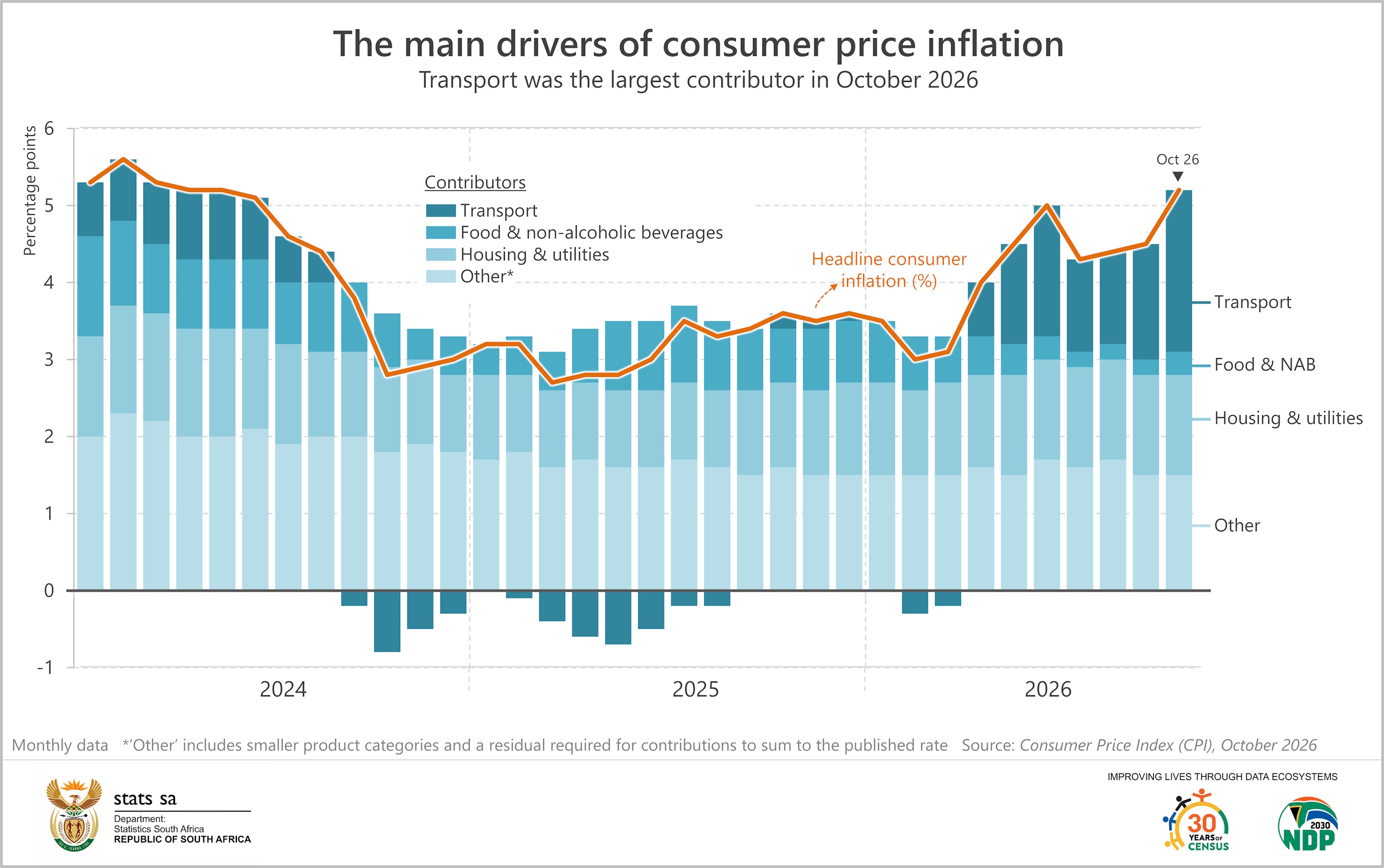
Headline consumer price inflation increased to 5.2% in October from 4.5% in September 2026. This is the highest print in almost two-and-a-half years, since May 2024, when the rate was also 5.2%.
The consumer price index (CPI) increased by 0.7% between September and October.
The annual rate for food & non-alcoholic beverages (NAB) increased for a third successive month, rising to 1.4% in October.
Categories that placed upward pressure on food inflation include fish & other seafood; vegetables; and sugar, confectionery & desserts.
Inflation for fish & other seafood has risen steadily since a recent low of 3.0% in February, reaching 8.4% in October.
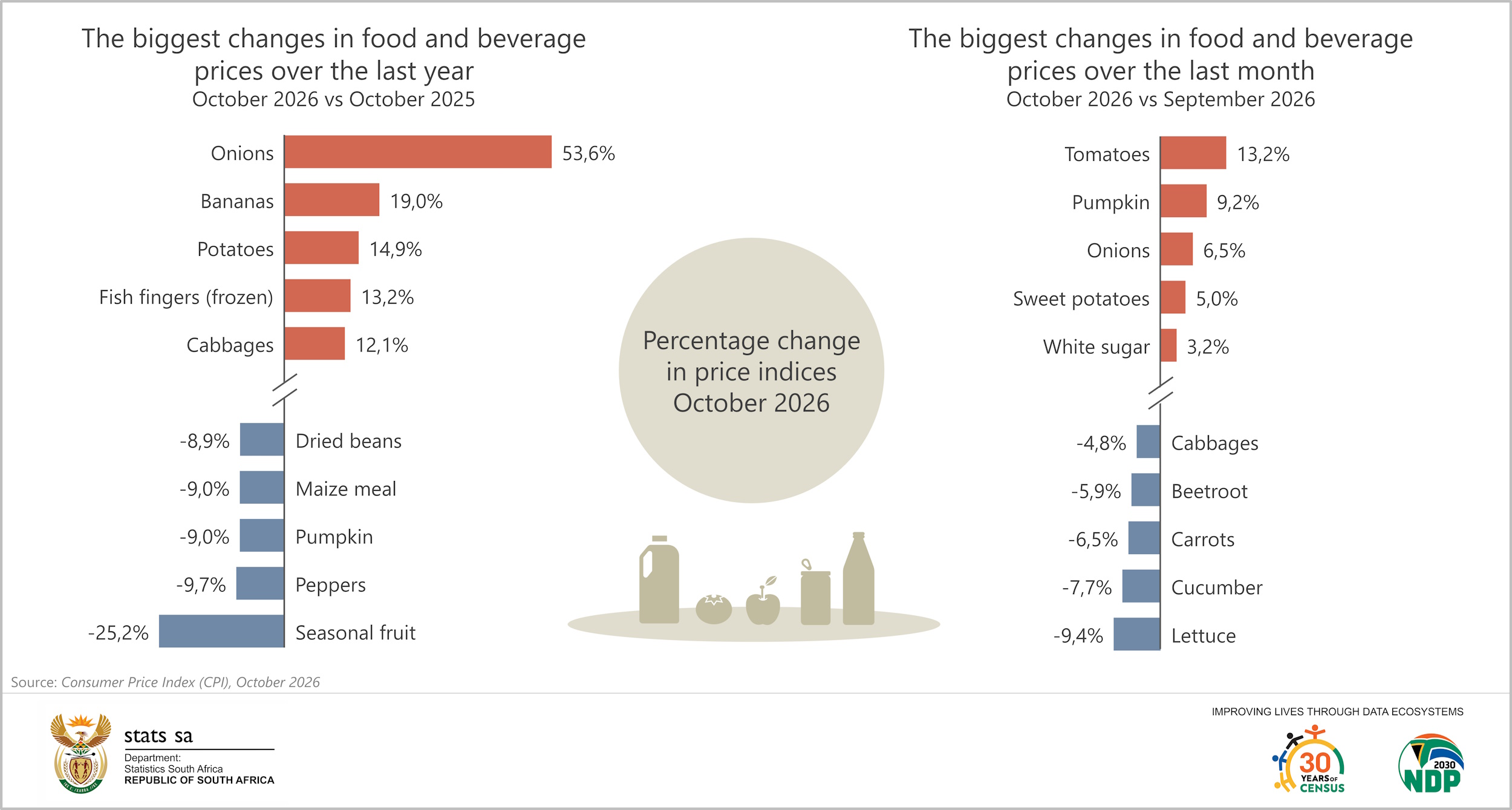
Products in this category with the largest annual increases include fish fingers (+13.2%), fresh & frozen hake (+11.2%), battered or crumbed fish (+10.1%) and canned fish (excluding tuna) (+8.2%).
Vegetables recorded an annual rate of 8.1%, up from 3.5% in September and -6.0% in May 2026. Onion prices increased by a notable 53.6% in the 12 months to October.
Potato prices rose by 14.9% and cabbage prices by 12.1% over the same period.
Tomatoes recorded the highest monthly increase in the vegetables category, rising sharply by 13.2% between September and October.
The price index for sugar, confectionery & desserts increased by 1.8% month-on-month, bringing the annual rate to 2.8%. White sugar registered a monthly rise of 3.2% and brown sugar 2.7%.
Overall, food & NAB inflation remains at low levels due to the anchoring effects of the heavily weighted cereal and meat categories.
Cereal products registered their ninth consecutive month of annual deflation at -2.0%. Lower prices were recorded for maize meal (-9.0%), white rice (‑7.3%), and brown bread (-0.8%).
Meat inflation was 0.2% in October, down from 0.7% in September. Stewing beef prices declined by 2.3% between September and October, taking the annual rate to -7.7%.
Meat bones are 6.7%, beef mince 4.5% and beef steak 4.1% cheaper than a year ago.
Annual transport inflation was 15.2% in October, contributing 2.1 percentage points to the overall headline rate of 5.2%.
The primary driver of transport inflation was fuel, which increased by 11.8% between September and October.
Annual fuel inflation is 42.9%, sharply up from September’s 27.9%. October’s fuel print is the highest since August 2022, when the rate was 43.2%.
The highest level of fuel inflation (since 2008) was 56.3% in July 2022, caused by post COVID-19 supply constraints and the Russian–Ukraine war.
In October 2026, a litre of 95-octane inland petrol was R30.25, and the average price of diesel was R35.62 per litre. In July 2022, petrol was R26.74 and diesel R26.61 per litre.
Accommodation services increased by 8.1% between September and October, taking the annual rate to 5.4%. The rise was driven by an 11.3% rise in hotel rates.

















 Loading ...