

How much taxi drivers earn a day in South Africa


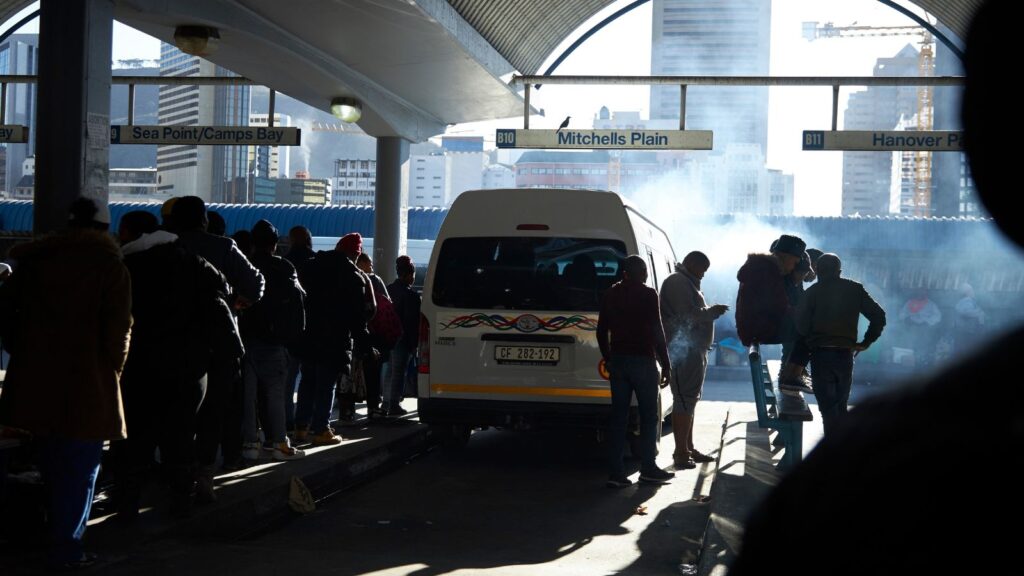
Minibus taxi drivers in South Africa typically earn between R250 and R400 a day (20 work days), or R5,000 and R8,000 per month—although those operating on busy commuter routes can take home considerably more.
According to job aggregator Indeed, the average salary for a taxi driver in South Africa was R6,369 per month in 2026.
However, reported earnings vary significantly, with some drivers earning as little as R4,800 a month, while others on lucrative routes in major cities earn more than R15,000.
How much drivers earn depends on several factors, including passenger numbers, route profitability, fuel costs, and their agreements with taxi owners.
Most minibus taxi drivers do not own the vehicles they operate. They work for an owner, who is generally affiliated with a local taxi association.
These associations regulate access to routes and manage the allocation of operating territories.
At a national level, the industry is represented by organisations such as the South African National Taxi Council (SANTACO) and the National Taxi Alliance.
Employment arrangements are often informal, with many drivers working under verbal agreements rather than formal contracts.
Drivers are commonly expected to generate a specific amount of money for the vehicle owner each day or week, keeping whatever they earn above that target.
For example, a driver may be required to generate R600 a day or R4,000 a week. Their actual earnings depend on how much revenue they collect after meeting the agreed amount.
The arrangements also differ when it comes to operating expenses.
Some drivers pay for their own fuel, while others have these costs covered by the vehicle owner, who may also be responsible for maintenance.
This makes it difficult to establish precisely how much taxi drivers earn across the country because much of the industry’s revenue is collected in cash and employment arrangements are not always formally documented.
The minibus taxi industry is South Africa’s largest public transport sector, accounting for an estimated 60% to 70% of daily commuter trips.
It generates approximately R90 billion to R100 billion in annual revenue and supports more than 600,000 direct and indirect jobs.
According to data published by The Outlier, citing the South African Reserve Bank’s (SARB) 2026 Cost of Cash Study, 98.5% of South African minibus taxi passengers pay with cash.
SARS is closing in on the taxi industry

There are around 130,000 registered minibus taxis, although SANTACO estimates that the actual number could exceed 200,000 when unregistered operators are included.
Despite its economic importance, the industry faces questions about working conditions, labour law compliance and the regulation of its operations.
Taxi drivers are subject to South African labour legislation, which includes minimum wage requirements, limits on working hours, and overtime provisions.
However, enforcement remains a challenge in a sector where informal employment arrangements are widespread.
The pressure to generate sufficient daily revenue has also been linked to dangerous driving practices, including overloading vehicles and speeding to complete more trips.
The industry’s substantial turnover has also brought its tax contributions under scrutiny.
In March 2025, Organisation Undoing Tax Abuse (Outa) chief executive Wayne Duvenage argued that formalising the sector could help broaden South Africa’s tax base.
“It’s not to punish the taxi industry. It’s to say you are formalised, you are businesses, you need to be brought into the net,” he said.
His comments followed concerns raised by the Democratic Alliance (DA), which cited a parliamentary response in 2021 indicating that the entire minibus taxi industry contributed approximately R5 million in tax.
The party argued that many operators were not declaring corporate income or paying payroll taxes for their employees.
However, SANTACO has rejected the suggestion that the industry broadly avoids paying tax, arguing that many operators run their businesses as sole proprietors and are taxed individually.
SANTACO spokesperson Mmatshikhidi Rebecca Phala told The Star that these operators receive tax clearance certificates from the South African Revenue Service (SARS), which are required when applying for or renewing operating licences.
“The taxi industry, in the main, is comprised of operators who run their businesses as sole proprietors,” she said.
“This means they operate their businesses as individuals and continue to be taxed as individuals.”
Phala acknowledged that the existing tax framework does not adequately accommodate the industry’s structure and argued that the system needs to be reconsidered.
Finance Minister Enoch Godongwana has said SARS is working to improve compliance in the informal economy, including the taxi sector.
“SARS continues to broaden the tax base by improving registration, filing and payment, where tax compliance remains low. This includes the informal economy and the taxi industry,” he said.
















 Loading ...