

More South African banks should go bankrupt


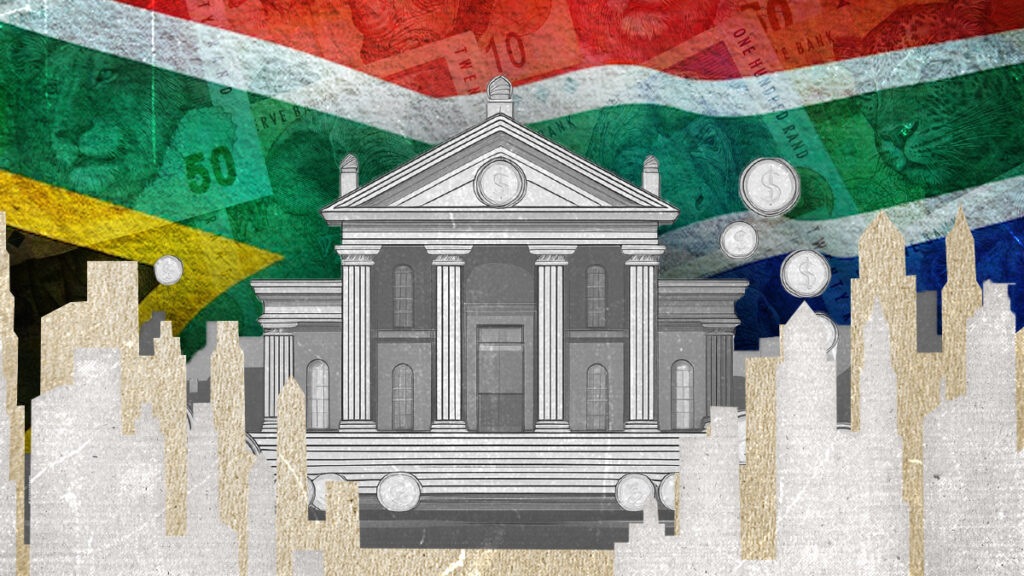
Renowned economist Dawie Roodt believes that more South African banks should go bankrupt, as it is a natural progression of a free market.
Roodt shared his views during a discussion about South Africa’s economy on The Main Stage Podcast with Aidan Brown.
South Africa’s banking system is highly regulated, which creates a very safe and protected financial system.
The South African Reserve Bank (SARB) has a system of regulations, oversight, and emergency mechanisms to prevent banks from failing.
Through its Prudential Authority (PA), the Reserve Bank supervises all South African banks to ensure they remain financially sound and operate safely.
The Prudential Authority enforces rules on capital adequacy, liquidity, and risk management through the Banks Act and Financial Sector Regulation Act.
Banks must maintain capital buffers and liquidity coverage ratios to meet withdrawals, and regular stress testing is done to simulate severe economic conditions.
If a South African bank faces a temporary liquidity crunch, the Reserve Bank can step in to provide emergency loans or liquidity to keep the bank solvent.
The Corporation for Deposit Insurance (CODI), which became operational on 1 April 2024, protects South Africans in case of a bank failing.
CODI manages the Deposit Insurance Fund (DIF) which will give depositors with positive balances up to R100,000 if their bank fails.
The Reserve Bank can also manage the situation of a South African bank gets into serious trouble to protect depositors and the financial system.
It also continually monitors risks to the whole financial system, including systemic risks like credit bubbles, currency shocks, or excessive household debt.
This system creates a stable and reliable banking system which South Africa has become known for.
More South African banks should shut down – Dawie Roodt

Efficient Group chief economist Dawie Roodt argues that South Africa should allow more local banks to fail and shut down.
Roodt is well positioned to comment on these matters. Apart from being an award-winning economist, he also worked at the SA Reserve Bank for nine years.
He said his time at the Reserve Bank provided him with a strong foundation to analyze fiscal accounts and learn more about monetary policy.
Roodt said the SA Reserve Bank is doing a fantastic job. However, his one criticism is that they over-control the South African banking system.
“I would like to see more banks going bankrupt,” Roodt said. “I would even want to see more businesses going bankrupt.”
He explained that South African banks are very well capitalized, highly liquid, and adhere to high standards.
“Nothing is going to go wrong with our banking system in South Africa. However, that is not good,” Roodt said.
He explained that it is a bad thing that nothing will go wrong, because it makes banking in South Africa expensive.
The strict standards make it difficult to run a bank in South Africa, which created an oligopoly of five dominant banks in the country.
Roodt would like relaxed regulations which will allow for more local banks to go bankrupt and shut their doors.
“The responsibility should be on South Africans to pick banks which are financially stable and well run,” he said.
“We currently select our banks in a different way because we know the SA Reserve Bank is doing the job of ensuring they are well run for us.”
“It should be people’s personal responsibility to shop around and select a bank which is well managed.”
The foundation of a free market system

Roodt said the reason why he would like to see more South African banks fail is because it forms part of how a free-market system works.
“In a free market system, we continually create and try new things. It also means that we have to continually get rid of bad things,” he said.
“It is a process of creation and destruction. That is why a free-market system is vibrant and energetic.”
When a badly run bank goes bankrupt, it means that the capital will be available for a new, better-run bank to use.
“We need to create an environment where we can continually create new businesses, including banks.”
Roodt explained that this is why he is opposed to business rescue practitioners trying to keep struggling businesses alive.
“Get rid of the zombie companies and make it easier for new companies to be created in South Africa,” Roodt said.

















 Loading ...