

South Africans saying goodbye to ATMs


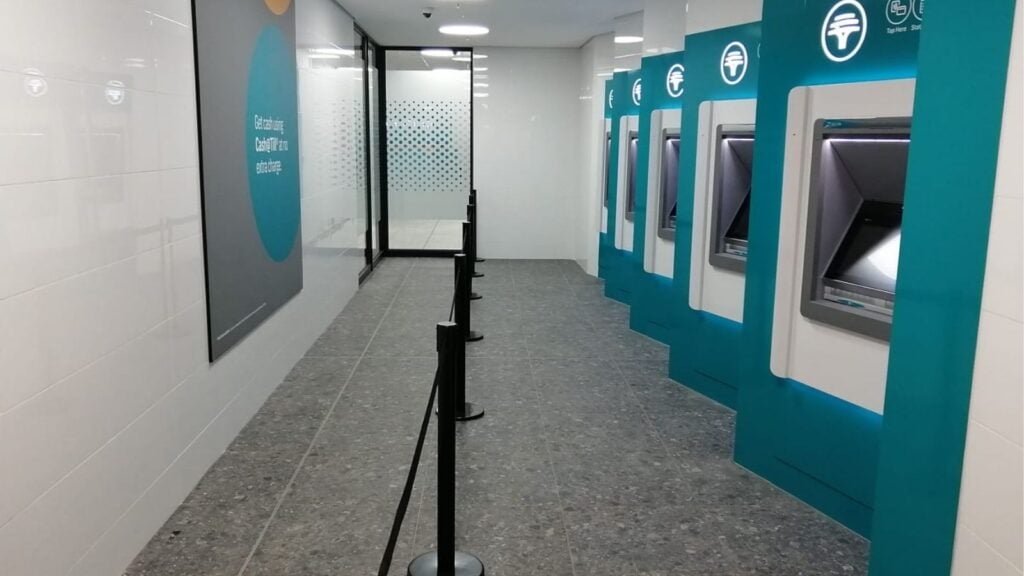
South Africans are turning away from traditional ATMs as high fees, long queues, travel costs, and limited access make supermarket tills a more attractive option for getting cash.
This was highlighted in the South African Reserve Bank’s (SARB) Cost of Cash Industry Report 2026.
The report found that retail tills process around R326 billion in cash-back withdrawals each year across 663 million transactions. The average withdrawal is R492.
Cash-back at point-of-sale (POS) facilities costs about 12 cents per R100 handled, compared with 68 cents per R100 at ATMs and R1.53 per R100 at bank branches.
The SARB described POS cash-back as “the most cost-efficient channel due to leveraging existing retail infrastructure and high-transaction volumes.”
This means supermarkets and other retailers play an increasingly important role in the country’s cash ecosystem as consumers continue to need physical cash for everyday purchases.
One advantage of retail tills is that they can provide denominations that ATMs cannot. ATMs generally dispense larger notes, such as R100 and R200 notes, and cannot dispense coins.
This can create problems for consumers who need smaller denominations for taxi fares, informal traders, and other daily transactions.
The report’s township field research found that consumers often use retailers as informal cash points to solve this problem.
“It is difficult to conjure up a R10 note from an ATM (banks favour high-value notes) and impossible to withdraw coins. The answer is: from formal and informal retailers,” the report said.
Consumers can also deliberately use purchases to obtain change. “The more conventional approach is to buy bread and Coke and then present a R100 or R200 note as payment, allowing shoppers to obtain smaller notes and coins as change,” the report said.
The Reserve Bank also noted that the continued operation of ATMs comes with substantial costs. South Africa has about 30,634 ATMs, including 21,443 operated by commercial banks and around 9,200 operated by independent ATM deployers.
POS offers the lowest unit cost of cash

The average annual operating cost of an ATM is approximately R307,590. While this is considerably lower than the estimated annual cost of R1.4 million to operate a bank branch, it becomes significant when spread across thousands of machines.
South Africans pay approximately R17.7 billion a year in cash withdrawal fees. A further R13.3 billion is paid in cash deposit charges, putting total direct banking fees at R31 billion annually.
Consumers also spend an estimated R12.5 billion on taxi fares and fuel to travel to ATMs and bank branches.
The report estimated another R19.5 billion in lost productivity from queuing and R8.3 billion from travelling to cash access points.
Physical cash also carries a security cost, with cash-related crime accounting for an estimated R12 billion in annual losses.
“Cash-back at POS offers the lowest unit cost of cash, making it essential for regulators and industry to incentivise and expand these services,” the report said.
Retailers can also recycle cash generated through their businesses rather than sending it back through the banking system.
According to the SARB, retailers with a high cash turnover can recycle cash efficiently and reduce both bank and CIT charges.
The central bank also sees POS cash-back as a way of improving access to cash in underserved areas, where installing and maintaining an ATM may not be economically viable.
“Wider adoption, especially among informal traders through partnerships with banks and fintechs, would cut handling costs and improve consumer access,” it said.














 Loading ...