

There is no easy out for South Africa


As South Africa continues to be punished by international markets, politicians are scrambling to own the narrative ahead of the 2024 national elections – which means greater uncertainty for investors as they try to parse reality from the noise.
According to Intellidex analyst Peter Attard Montalto, the negative sentiment towards South Africa is currently driven by persistent uncertainty around South Africa’s way out of its many crises.
Exacerbating this uncertainty is a strong PR push from politicians to control the narrative and play the blame game over the issues at hand.
For example, the most apparent crisis dominating all aspects of the country is load shedding and prevailing power issues. By any measure, the crisis results from decades of government failure, and the blame should squarely be at the feet of those in charge of equipping the country’s grid and procurement strategies for future energy needs.
However, no one has taken the blame or accountability for the mess so far. Instead, the crisis has been characterised as a historic and collective problem where everyone is to blame, and all need to work together to resolve it.
“Everyone, from the president down, has uttered that the population should understand that load-shedding is simply the result of too much demand from too much good electrification work the ANC government has done in the past 25 years,” Attard Montalto said.
“If this were true, it would mean that there would be no role for the government in planning to meet demand and that having such a policy role in thinking about supply is not their job. It would also mean that the responsibility should be on the electorate to cut back on usage.”
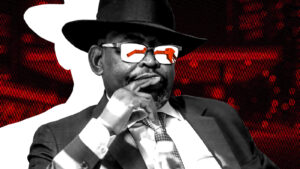
This line of reasoning – which Attard Montalto calls “preposterous” – is littered throughout South Africa’s policies and was again demonstrated when Mineral Resources and Energy Minister, Gwede Mantashe, said that the country’s declining reputation as a mining destination had nothing to do with his department – the department in charge of mining.
“The reality is more mundane: the department creates the environment, which affects the sentiment that appears in the survey. The minister’s line, however, is just one of many glimpses emerging of where the narrative and communications lines will focus before next year’s elections: others must be blamed,” Attard Montalto said.
With the national elections looming in 2024, there is a clear push to pass electorate-friendly items through government – regardless of their untested legality. The analyst noted the recent passing of the National Health Insurance (NHI) bill by the portfolio committee on health is a clear example of this.
“(The NHI bill) will become unstuck as many legal challenge mount after it is eventually passed. The ability to pass legislation that is likely to be so fraught with legal issues regarding constitutional powers and the effects on individuals such as medical aid holders is quite something,” he said.
Similarly, the Electoral Amendment Bill also faces similar issues, he noted.
The problem for South Africa is that the narratives around these issues – and the lack of accountability – are adding to the noise in South Africa as it juggles negative perceptions around its ties to Russia, winter load shedding, and macroeconomic indicators like inflation, interest rates and economic growth.
The noise makes it difficult for investors to see a clear path out for the country. This adds to South Africa’s risk premium and deters investment.
As noted by Investec chief economist Annabel Bishop this week, South Africa has already seen R20.3 billion in foreign investment go out the door as investors look elsewhere.
According to Attard Montalto, while some calm voices are in the noise – such as indicators from Operation Vulindlela – uncertainty will likely persist until after the 2024 elections.
“A ‘simple’ 2022 had given way to a more contested 2023, and indeed that contested 2023 might give way to a fraught, desperate and noisy 2024 as layers of PR and spin have to be cut away from all sides to see what is going on underneath.
“This morass – for at least a year longer – is what is keeping markets negative here. There is not an easy endpoint or off-ramp.
“All of this suggests that things remain uncertain until there is clarity. Such clarity won’t be helped by the noise to come,” he said.
Read: Petrol prices could have dropped by R1.25 a litre this month – if it wasn’t for government












 Loading ...