

South Africa not out of the woods


Despite hopes that the United States and Iran are moving towards an end to their conflict, South African consumers remain under severe strain.
The United States and Israel launched attacks on Iran in late February, with the Persian nation then responding by closing off the region’s oil supply, specifically the Strait of Hormuz.
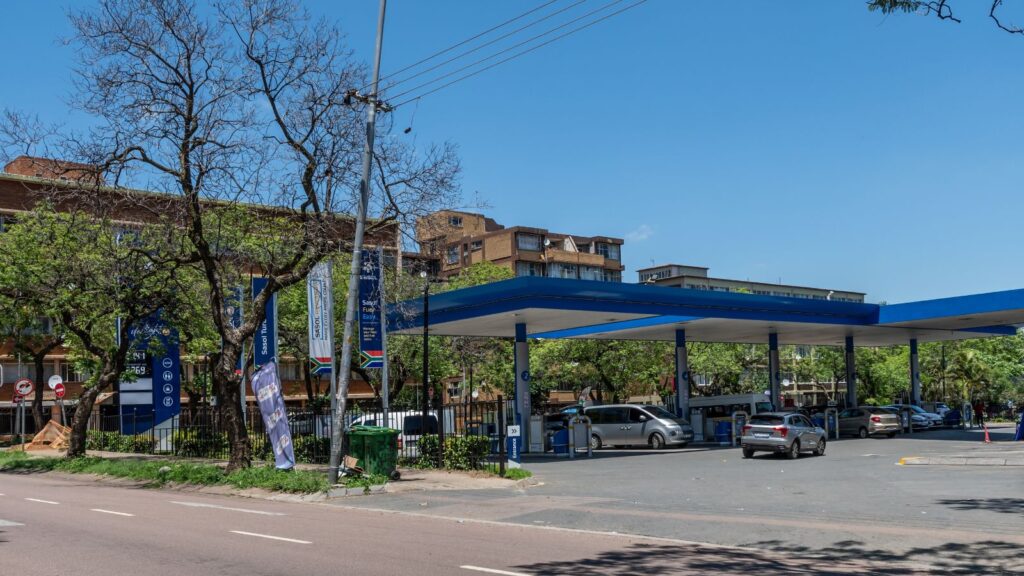
The war led to oil prices and, in turn, petrol prices in South Africa to skyrocket. Inflation then reached 4.0% in April and 4.5% in May.
This caused the South African Reserve Bank (SARB) to hike rates by 25 basis points in May, increasing the repo rate to 7.0%.
The new 60-day peace deal between the United States and Iran has brought relief to many in the global economy, but economist Elize Kruger said that signs of pressure are still likely.
“While the signing of a peace framework between the United States and Iran in June has helped ease some global tensions, uncertainty continues to weigh on business and consumer confidence,” said Kruger.
Although oil prices have started to ease to around US$72/bbl, daily over-recoveries at the pump have narrowed to below R1/litre for both petrol and diesel.
“This suggests that any fuel price reduction in early August may be limited, unless the rand strengthens further or oil prices decline more meaningfully during the month,” said Kruger.
“Together with weaker confidence, these pressures are likely to weigh on economic activity in the months ahead.”
If fuel prices remain high, heightened inflation will also limit the SARB’s ability to cut or keep rates on hold.
Economic indicators show a mixed bag

The effects of the conflict could be seen in June’s economic indicators, with consumers and businesses delaying spending and investment decisions.
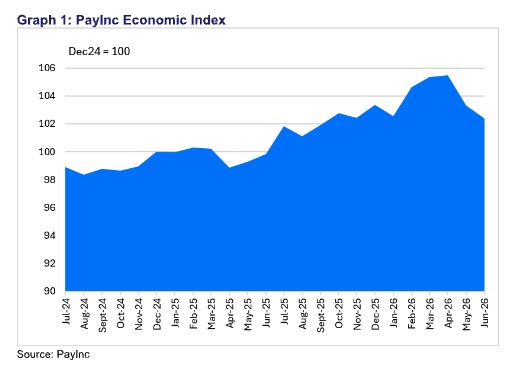
The PayInc Economic Index, which measures the real value of all electronic transactions cleared through PayInc, declined by 0.9% every month, following a 2.0% drop in May.
“At 102.4, the PayInc Economic Index reached its lowest level since November 2025, although it remained 2.5% higher than a year earlier,” said PayInc’s Shergeran Naidoo.
“Despite both the volume and value of electronic transactions recovering moderately during June, the index was weighed down by higher inflation, mostly driven by elevated fuel prices,” noted Kruger.
Other indicators in June also revealed a mixed picture. The S&P Global South Africa PMI rose slightly to 50.5, signalling modest expansion in the private sector.
Naamsa also reported strong vehicle sales growth of 15.3% year-on-year. However, the Absa PMI declined to 47.3, reflecting continued weakness in domestic demand for the manufacturing sector.
“The second quarter has demonstrated just how quickly confidence can shift in response to global and domestic developments,” said Kruger.
Despite the softer economic environment, PayInc said payment activity remained resilient in June. A total of 186.8 million transactions were processed through PayInc in June, up 11.6% year over year.
Naidoo added that the nominal value of electronic transactions increased from R1.369 trillion in May to R1.427 trillion.
For the first half of 2026, transaction volumes rose 11.2% year over year, highlighting the continued shift to electronic payments.
“While electronic payment activity remains resilient, the broader economic picture suggests that growth is likely to remain subdued until inflationary pressures ease and confidence returns meaningfully,” said Kruger.
















 Loading ...