

‘Hidden money’ behind national shutdown in South Africa


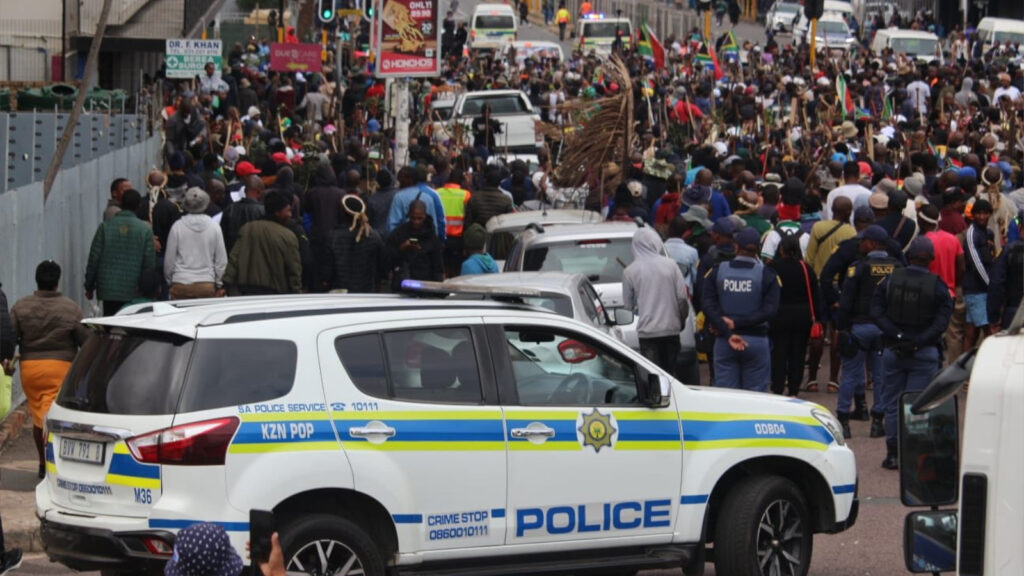
Former president Thabo Mbeki says that there is hidden funding behind the recent push against foreign nationals in South Africa that led to a national shutdown in June, with threats of more to come.
Speaking in an NDR seminar, Mbeki commented on “counter-revolutionary” forces at play in South Africa, which he said are playing out in the wave of anti-foreigner sentiment.
Tensions against illegal immigrants in South Africa have been escalating over the past 12 months, led by protest groups like March and March, headed by Jacinta Ngobese-Zuma.
The group emerged in early 2025 and has been staging protests across the country since.
This culminated in a demand for all illegal immigrants to leave the country by 30 June 2026, which was also a date set for a national shutdown—simultaneous protests in all provinces.
Responding to the growing anger and wanting to avoid an escalation into riots similar to those in July 2021, President Cyril Ramaphosa put the country’s security forces on high alert.
The government’s security cluster budgeted R600 million to increase police and military deployments to hotspot areas.
Ramaphosa, meanwhile, met with community leaders, royals and the protest groups themselves to try and keep a lid on the demonstrations.
While the 30 June protests were not as impactful as many had feared—and the country avoided the marches escalating into riots—damage was done, lives were lost, and businesses were affected.
Following the protests, Ngobese-Zuma said that the 30 June deadline wasn’t supposed to be a “national shutdown”, but promised that a ‘real shutdown’ would come.
The protest groups are currently holding weekly demonstrations, having given the national government three months to clamp down on illegal foreign nationals.
Addressing protestors in Zulu on 30 June, Ngobese-Zuma said if “the government doesn’t answer us, [then] there will be a shutdown”.
She added this looming national shutdown would be “where nothing will move”, and alluded to the three months of protests being the movement “asking our government nicely, while we are still asking.”
Mbeki’s views on anti-foreigner protests
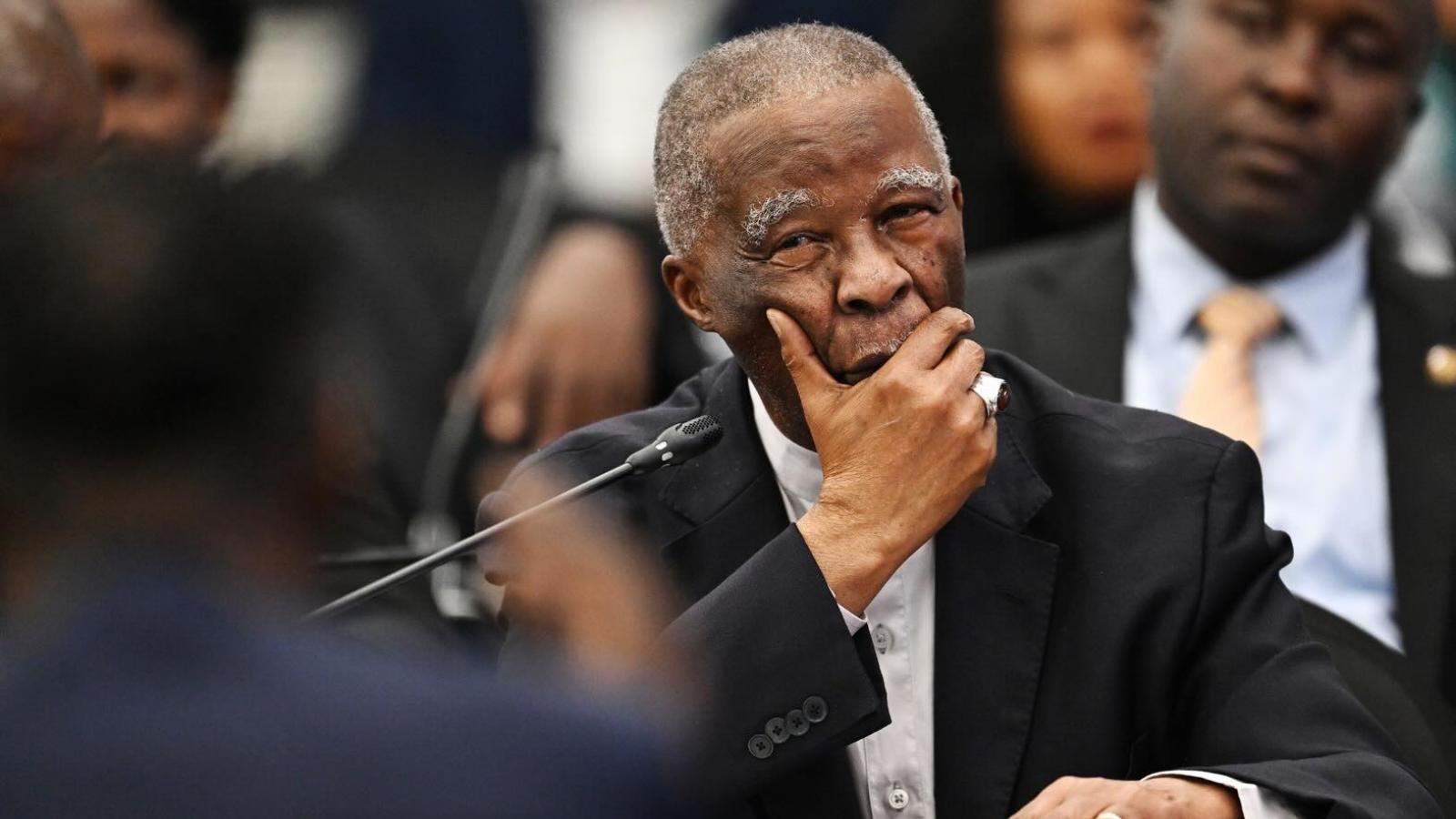
According to Mbeki, the push against foreign nationals is part of a wider “counter-revolution” that is happening in South Africa, warning that it plays into the hands of hidden powers.
“This mobilisation now against so-called undocumented Africans—comrade [Zwelinzima Vavi] was correct: there’s money behind it, there’s purpose behind it, it’s organised. It’s not spontaneous,” he said.
“It doesn’t come from the masses of the people. It comes from somebody who wants to mobilise.”
Mbeki said the result of this hidden objective becomes apparent when looking at the animosity it has bred towards South Africa.
He noted that in the 2026 FIFA World Cup, South Africa played Mexico in the opening match, with other African countries rallying behind the continental players.
“Look at these Africans when we’re playing Mexico—who supported Mexico against South Africa? You can see a lot of the noise around the continent, a lot of it is based on wrong information,” he said.
“Gradually, you are seeing this marginalisation of South Africa from the rest of the continent, which counter-revolution wants. And there are people who are mobilising today to achieve that objective.”
Mbeki’s views were tacitly echoed by the office of the Presidency, with presidential spokesperson Vincent Magwenya pointing to a “sustained misinformation campaign” trying to portray South Africa as isolated from the continent.
Magwenya said the campaign sought to paint South Africa as a “pariah state”, despite the government’s repeated condemnation of vigilantism against foreign nationals and its commitment to enforcing immigration laws within the Constitution.
“Over the last two months, we have observed a sustained campaign that seeks to isolate South Africa from the rest of the African continent, under the guise of protesting against the recent wave of anti-illegal migration protests that we have recently experienced here in South Africa.
“This campaign has sought to create an impression that South Africa is now a pariah state, which must be referred to international courts,” he said.
He said recent diplomatic engagements demonstrate that South Africa continues to enjoy strong relations both on the continent and internationally.












 Loading ...