

Private companies quietly replacing one of the most important government jobs in South Africa


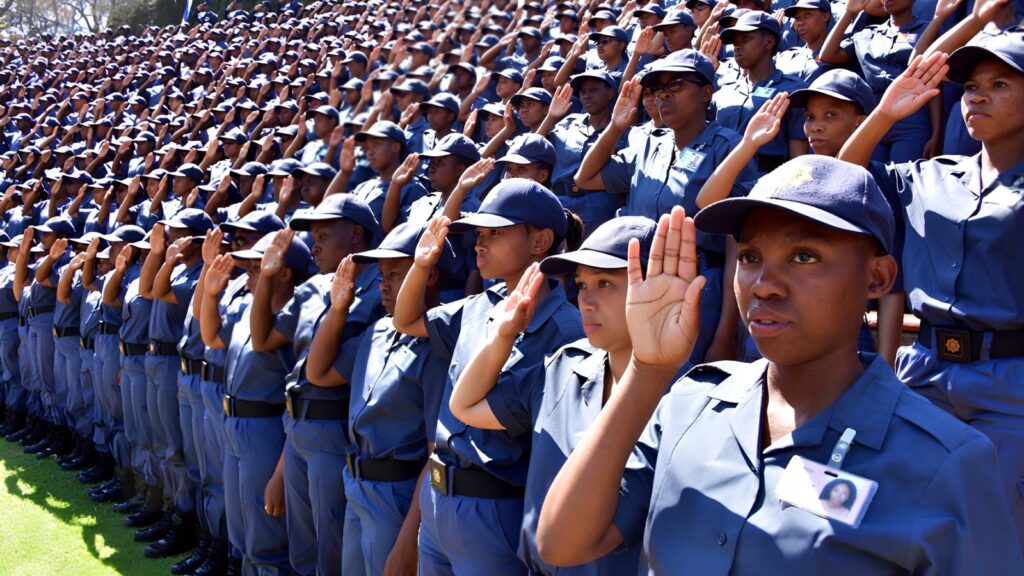
Private security companies are quietly filling critical gaps in South Africa’s fight against crime as police face persistent staff shortages and limited resources.
Industry leaders argue that closer cooperation between the public and private sectors is now essential.
This is according to Henk van Bemmelen, CEO of Blue Security, who said private security has become an important “force multiplier” for the South African Police Service (SAPS).
He noted that private security is now extending policing capacity in communities where officers are stretched too thin.
Van Bemmelen noted that it is not the intention of private security firms to displace the SAPS. However, he added that the sector is closing operational gaps by extending coverage.
This is done by sharpening local intelligence, increasing visibility, and providing faster initial response where SAPS cannot maintain sufficient saturation.
The latest statistics show that South Africa’s private security industry has grown to dwarf the country’s police service.
Data from the Private Security Industry Regulatory Authority (PSIRA) shows there are now more than 650,000 active registered security officers, compared with just over 153,000 police officials across all levels of SAPS.
That means there are roughly four private security officers for every police officer in the country.
Van Bemmelen said this additional capacity is becoming increasingly important as South Africa continues to battle some of the world’s highest levels of violent crime.
SAPS crime statistics for the first three months of the year recorded 5,181 murders, 6,916 attempted murders, 12,590 sexual offences, 37,289 common and aggravated robberies, and 92,291 assaults.
He said police shortages limit officers’ ability to patrol consistently, respond rapidly, investigate crimes thoroughly and maintain a visible presence in high-risk areas.
Private security companies can provide regular patrols, respond quickly to alarms, identify suspicious activity, and secure crime scenes, while police officers focus on responsibilities that require legal policing powers.
The country’s public and private safety resources must be integrated

In KwaZulu-Natal, for example, Blue Security deploys hundreds of officers across neighbourhoods every day.
Their duties include street patrols, responding to alarms, searching for suspects, and preserving crime scenes until SAPS arrives.
While private security officers protect evidence, maintain perimeters and share local intelligence, SAPS officers remain responsible for arrests, criminal investigations and other functions that require statutory authority.
Van Bemmelen stressed that stronger partnerships between the police and private security are already recognised by SAPS as necessary, particularly in rural areas where police numbers are especially limited.
Community policing forums and police reservists are also regarded as force multipliers. However, he argued that existing cooperation remains too fragmented.
“Without that structure, two safety systems can arrive at the same incident working from different intelligence and priorities under separate chains of command,” he said.
According to Van Bemmelen, this can result in duplicated patrols, poor information sharing and uncertainty over who controls a crime scene or how evidence and suspects should be handed over.
Delays caused by this lack of coordination can weaken crime responses when every minute matters.
He believes a formal public-private partnership would allow SAPS to retain full constitutional authority over arrests, investigations, warrants and criminal prosecutions.
However, private security companies should strengthen the front line through visible patrols, rapid reporting, local intelligence gathering and scene preservation.
“South Africans already fund two vast safety systems: one through taxation and the other through private contracts,” said Van Bemmelen.
“A national framework under clear SAPS command would allow those investments to reinforce one another.”
He argued that integrating the country’s public and private safety resources would give South Africans greater protection at a time when crime remains one of the country’s most pressing challenges.

















 Loading ...