

South Africa sitting on a R3 billion goldmine ready to be tapped


South Africa aims to establish a multibillion-rand pistachio industry, targeting an annual production of up to 60,000 tonnes.
The goal is to capture 5–8% of the global market within the next decade, positioning the country to become one of the top six or seven pistachio producers in the world.
In the recent growers conference in Prieska, Northern Cape, Karoo Pistachios and Fedgroup hosted stakeholders from the agricultural and financial sectors to assess the progress and expansion plans of pistachio production.
“Global pistachio production is concentrated in northern hemisphere countries, and many of those regions face water constraints, climate pressures or political risks, and that opens up a clear opportunity for us to enter into this market,” Karoo Pistachios CEO David Muller told Moneyweb.
Muller said the global pistachio market faces constrained supply and rising demand, making the Northern Cape of South Africa an ideal region for cultivating high-quality, premium pistachio nuts.
The pistachio industry in South Africa is still small, as there are only about ten hectares of producing orchards, which are considered pilot sites.
However, Muller confirmed that there are currently 200 to 300 newly established hectares for pistachio nut production.
Despite the industry’s small size, Muller said that their knowledge and experience far exceed those of many larger South African industries.
“We have about 20-30 years of experience with pistachios, during which we learned most of its unique peculiarities or challenges which we have overcome and found the answers to,” said Muller.
“In a sense, it’s a new industry, but it’s almost like a young person with an old soul.”
Pistachios, which require very specific conditions to grow, could lead to an export industry worth R2 billion to R3 billion, depending on the value-out component.
The Northern Cape is known for farming crops such as corn and wheat, mainly as row crops (agricultural crops planted in spaced rows).
Muller said that converting the Northern Cape’s current crops to pistachios could quadruple revenue, increase profitability eightfold, and create 30 times as many jobs.
He said the pistachio industry could create 2,000 to 3,000 jobs in the Northern Cape over the next three years.
Pistachio farming in South Africa
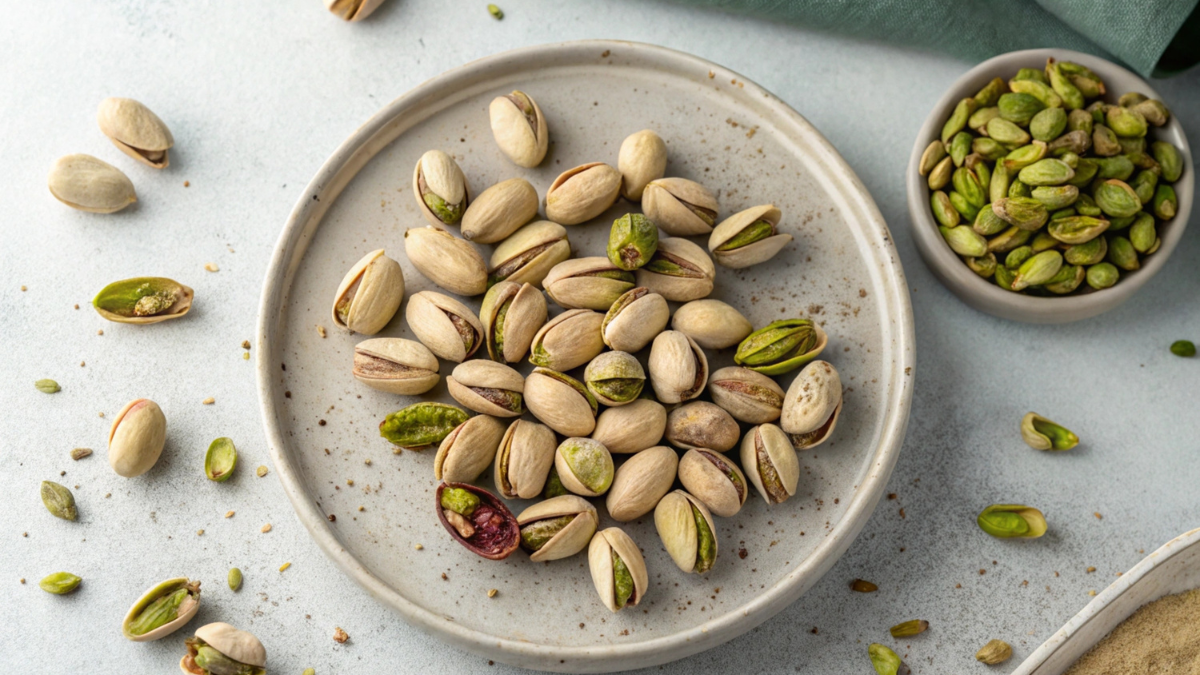
The project initiated by the Industrial Development Corporation (IDC) in the 1990s aimed to position South Africa on the global pistachio stage.
The IDC chose Prieska in the Northern Cape for its optimal climate and access to water from the Orange River, investing R130 million in the Green Valley Nuts project.
The plan was to create 1,000 hectares of orchards, with local farmers managing 200 hectares each, and to build South Africa’s first large-scale pistachio processing plant, with a budget of R15 million.
The goal was to create jobs, boost exports, and develop a sustainable industry, targeting markets such as the US and Iran, with expected exports of 2,500 to 3,000 tons annually.
However, by the late 2000s, the project faced significant challenges, leading the IDC to bring in international experts.
By 2011, the IDC declared the project “null and void,” leaving farmers with thousands of trees and an uncertain future, while selling off equipment from the processing facility.
Of the original 10 outgrowers, only two had the proper varieties for successful pollination. Despite the IDC’s withdrawal, two family farms, Wercon Boerdery (the Coetzees) and Uitdraai Boerdery (the Mullers), persevered.
The Mullers tackled issues with bloom synchronisation essential for pollination and co-founded the Pistachio Nut Company to establish a nursery and supply trees, even employing former IDC staff.
They also launched the Karoo Pistachios brand, focusing on production and reputation building.
Wercon Boerdery also has its own brand, Senqu River Pistachios, which focuses on a local niche with small-batch processing and a refined drying and baking method.
The Pistachio Growers Association, founded in 2019, supports the growing industry.

















 Loading ...