

Old Mutual sends warning about new retirement system in South Africa


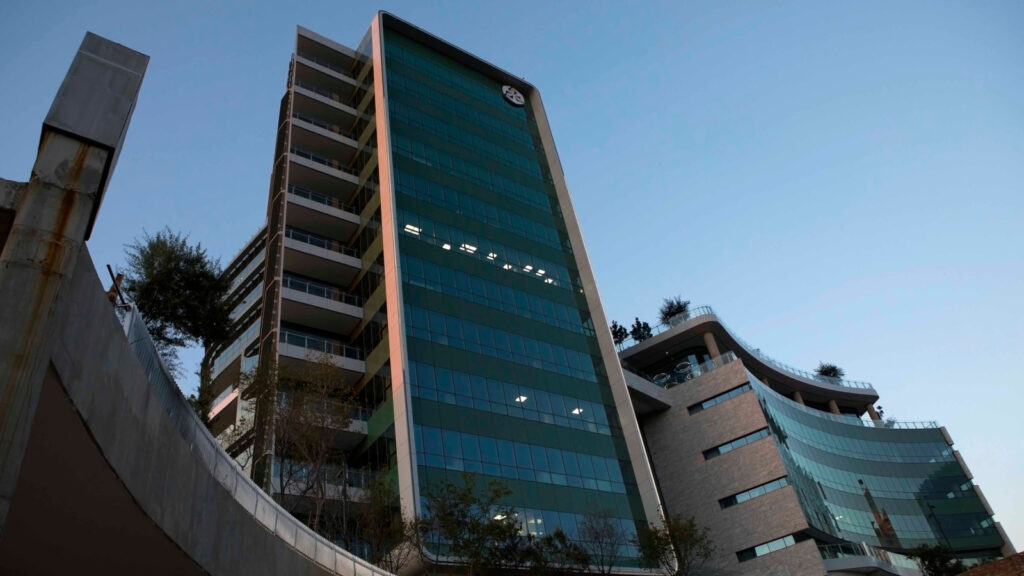
Old Mutual has noted that South Africans are accessing their retirement funds following the implementation of the two-pot system, but many are doing so for non-emergencies.
The two-pot system came into effect in September 2024, requiring South African retirement funds to be split into two pots.
This included the savings pot, which holds one-third of retirement funds and allows limited access.
The retirement pot holds the remaining two-thirds of retirement funds and is only accessible at retirement.
However, Old Mutual said that a growing behavioural trend under the two-pot system poses a serious risk to long-term financial security.
Although the system was designed to provide limited relief in times of genuine financial distress, many individuals are accessing their savings pot for reasons that fall far outside its intended purpose.
The financial services provider is seeing withdrawals used for discretionary spending, such as Black Friday purchases, holidays, and upgrades to cars and electronics.
In many cases, this withdrawal is premeditated, with individuals planning at the start of the year to use their savings pot for such expenses.
“As a result, many choose to proceed without consulting their financial advisers because they are fully aware that the decision is not financially sound,” says Sean van Zyl, a financial planner with Old Mutual.
The behaviour is closely linked to a broader issue: many people avoid confronting the true state of their finances.
Van Zyl said that accessing a savings pot creates a false sense of comfort and supports the illusion that everything is under control, even when underlying financial health may be deteriorating.
Facing the truths of one’s financial position is key, as individuals can make informed decisions that would lead to meaningful improvement. Avoidance just makes matters worse.
A common justification for early withdrawals is the belief that the shortfall will be made up later. However, this thinking is seriously flawed.
“In practice, it rarely happens. Instead, individuals give themselves false hope and effectively gamble with their retirement prospects,” said Van Zyl.
Tax problems from withdrawing

Another concern is the disregard for the tax implications of withdrawals. For many, the urgent need for cash outweighs any consideration of cost.
This approach can be particularly dangerous when dealing with retirement savings, where the long-term consequences are significant and often irreversible.
“The tax consequences alone should give people pause, but too often we see individuals accessing these funds without fully understanding or even considering the cost,” added van Zyl.
Accessing the savings pot leads to a spike in income and results in additional income tax to be paid, which makes the withdrawal less attractive.
For instance, if one withdraws R30,000 from their savings pot, SARS may recover tax of up to 45% on the withdrawal. For this reason, the savings pot should be seen as a last resort.
The savings pot is designed to address genuine needs when one is under considerable financial pressure, not discretionary wants.
To illustrate the real cost of early withdrawals, Old Mutual Personal Finance highlighted their impact:
On 1 September, investors A and B both have R250,000 in their retirement funds, with R25,000 going to seed the savings pot. Each member contributes R2,000 per month to their retirement fund.
A withdraws the full savings pot balance each year from 2025 to 2029, while B makes no withdrawals and remains fully invested.
Even if A makes no further withdrawals from 2030 until retirement in 2040, their retirement funds would sit at R1,214,000, while B would reach about R1,386,000, assuming 6.5% annual growth.
“The difference of roughly R170,000 is driven purely by behaviour, despite identical contributions, returns and fees,” Van Zyl noted.
“The real risk is not the withdrawal itself, but the interruption of compounding at the most critical stage. That is where the lasting damage is done.”














 Loading ...