

R1.8 billion in pension funds invested in a company now in business rescue, with only R15,000 left


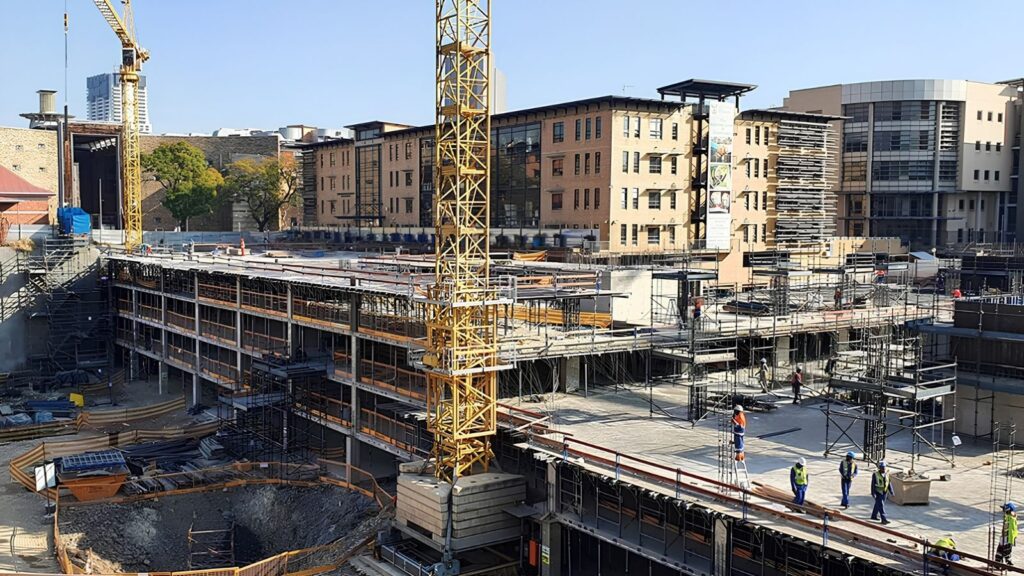
Construction company Concor is in financial distress and has filed for voluntary business rescue, with up to 3,400 jobs on the line.
Concor is 100% owned by the Government Employees Pension Fund (GEPF) and the Unemployment Insurance Fund (UIF).
Concor has just R15,000 in immediately available cash and receivables, despite receiving approximately R1.87 billion in funding from the Public Investment Corporation (PIC).
The business rescue proceedings cover Concor’s civil engineering, infrastructure, building and mining operations across Southern Africa and the United Arab Emirates.
In October 2026, the company announced that the boards of Concor (Pty) Ltd, Concor Holdings, Concor Mining Services, and Concor Construction had resolved to voluntarily enter business rescue in terms of Section 129(1) of the Companies Act.
“The BRPs have assumed full management control of the Companies in substitution for their respective boards and pre-existing management, subject to the provisions of the Act,” the company said.
Nndingeni Moses Singo and Paula Anna-Mart Müller were appointed as joint business rescue practitioners to oversee the process.
Concor’s current position is a significant blow for an investment that was initially intended to establish a major black-owned construction and infrastructure group.
Founded in Johannesburg on 28 April 1948 as the Construction Corporation, Concor was established by Italian engineer Fernando Piccinini and four partners.
Over the decades, it became involved in several major South African infrastructure projects, including the Rand Sports Stadium and the Storms River Bridge.
The company eventually listed on the Johannesburg Stock Exchange (JSE) before industrial group Murray & Roberts acquired 100% of its share capital for R314 million in June 2006 and delisted it.
However, Murray & Roberts later decided to withdraw from the capital-intensive domestic civil engineering sector.
In 2017, a black-owned investment consortium led by Southern Palace Group agreed to acquire Murray & Roberts’ construction assets, with the PIC providing substantial financial backing through pension fund investments.
The transaction was intended to create a major black-owned infrastructure business, and the Concor brand was revived in May 2017.
PIC intervention

However, the investment experienced serious difficulties as the company struggled with legacy contracts and mounting debt.
By 2022, Concor was reportedly defaulting on substantial loan obligations to the GEPF, while Southern Palace Group itself entered business rescue.
The PIC subsequently intervened to protect its investment and prevent an immediate collapse.
Its financial support included approximately R277 million in initial funding for the 2017 transaction and a further R692.6 million in distressed-asset funding and emergency financial support between 2022 and 2024.
In May 2025, a further R1.18 billion in accumulated shareholder debt was converted into preference equity.
This restructuring resulted in the GEPF holding an 81.25% stake in Concor, with the UIF owning the remaining 18.75%.
Despite this substantial support, Concor’s financial position deteriorated further, with the company facing significant liabilities linked to performance guarantees on legacy projects.
One of the major problems involved joint ventures on large infrastructure projects, including the R1.65 billion Msikaba Bridge and the Wolf Wind Farm project.
Concor’s former parent, Murray & Roberts, and its OptiPower division were involved in some of these projects.
Their financial difficulties and subsequent defaults reportedly exposed Concor to substantial additional liabilities and project penalties.
The company also suffered a significant legal setback after attempting to prevent financial institutions from calling in performance guarantees linked to the Wolf Wind Farm project.
The High Court ruled against Concor, allowing the guarantees to be called. This ruling left the company with virtually no available liquidity.
According to the financial position outlined in the business rescue information, Concor had approximately R4,000 in its bank accounts and another R11,000 in trade receivables.














 Loading ...