

Here is the expected petrol price for May


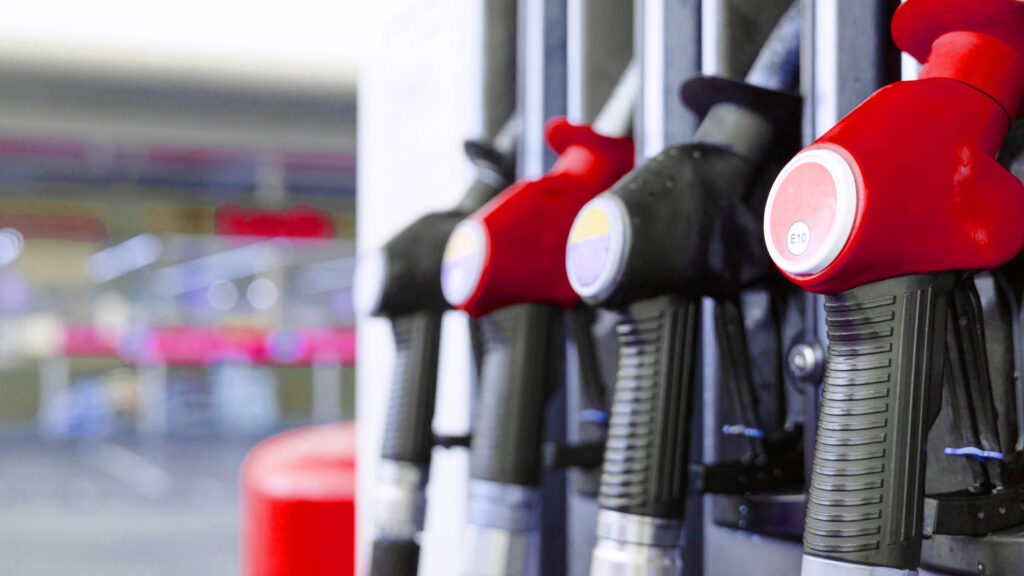
Mid-month projections from the Central Energy Fund (CEF) show that motorists and other fuel users are in for more pain in May.
The latest data shows that petrol prices are building an under-recovery of between R2.62 and R2.99 per litre, while diesel is showing an under-recovery of between R9.05 and R9.07 per litre.
While these under-recoveries are much lower than where they started at the beginning of the month (R8 and R17 per litre for petrol and diesel, respectively), they remain significant.
Specifically, a R9-per-litre hike in diesel prices would push the wholesale price above R35 per litre in May, shattering the record set in April 2026.
Wholesale diesel prices climbed to R26.11 (0.005%, inland) in April, beating the previous record of R25.53 in July 2022.
While petrol avoided hitting its highest-ever point—reaching R23.36, versus R26.74 per litre in July 2022 (petrol 95)—the current projection is for it to land close to that point.
If the National Treasury reintroduces the R3.00 per litre fuel levies in May, it will push petrol well past R30.00 a litre and diesel closer to R40.00 a litre.
These are the projected levels at mid-month:
- Petrol 93: increase of 262 cents per litre
- Petrol 95: increase of 299 cents per litre
- Diesel 0.05% (wholesale): increase of 905 cents per litre
- Diesel 0.005% (wholesale): increase of 907 cents per litre
- Illuminating paraffin: increase of 717 cents per litre
The CEF does not provide daily snapshot data for LP Gas, so it is not currently possible to provide an expected price for the coming month.
The daily snapshots from the CEF are also not entirely predictive of the final fuel price adjustments, and the numbers may change by the end of the month.
The Department of Petroleum and Mineral Resources only announces the final price a few days before the implementation date.
However, the data provides a strong indication of where prices are headed and reflects current market trends for the first half of the month.
It does not factor in external interventions, such as the government’s April fuel levy cut or the possible reintroduction of the levy in May.

Oil prices are still hitting hard
The key contributor to the under-recovery is the global oil price, which accounts for the bulk of the projection.
While the rand is trading relatively weaker to the US dollar, its contribution to the under-recovery is much smaller, at between 13 and 23 cents per litre.
The rand saw a large swing before and after the US war in Iran, trading below R16/$ amid a shift in global sentiment and more risk-on behaviour.
However, after the bombings at the end of February, the local unit crumbled to over R17/$ in the market chaos that followed.
More recently, as the United States and Iran have at least moved towards peace talks and resolution, the rand has stabilised somewhat, though at a higher point than before the war.
The rand is currently trading around R16.30/$, having depreciated overall, hence the under-recovery.
Oil prices have been the real shock. Before the war, oil was facing a year of oversupply and growing, but stable demand, selling at under $60 a barrel.
Following the United States’ actions, prices surged to over $110 a barrel, with supply chains and logistics heavily disrupted.
The surge in prices in March led to hefty fuel price hikes in April, and trade in April has been volatile, with the disruptions baked into May’s recoveries.
According to Investec Chief Economist, Annabel Bishop, energy prices have been lower since the start of the month, with hopes rising for a full opening of the Strait of Hormuz.
Oil has dropped back to around $95 a barrel—but this position is shaky and subject to change as conditions in the Middle East do.
If the conflict can be resolved more quickly, restoring stability and confidence in the markets, local under-recoveries could ease—though it is highly unlikely to swing into positive territory.
However, should conditions deteriorate and tensions flare, prices could easily move in the opposite direction, pushing oil higher once again.

Fuel taxes still a concern
Regardless of markets, a key test for South Africa will be how the National Treasury and the Department of Petroleum and Mineral Resources handle the reintroduction of fuel levies.
Treasury cut fuel levies by R3.00 per litre in April, a move set to expire in May.
Finance minister Enoch Godongwana made it clear that the intervention, which cost the fiscus R6 billion, would have to be budget neutral and recovered in the future.
If this is recovered immediately, fuel users could see May’s prices shoot up by an additional R3/litre.
If the department opts for a staggered approach, it could see the relief extended by several months, with the levy added back in stages, as was the case in 2022.
However the taxes are reintroduced, fuel users will have to pay the price eventually, with every delay adding to more pain further down the line.
Expected petrol and diesel price changes for May
This is how the price changes are expected to reflect at the pumps (Diesel prices reflect wholesale, pump prices will differ).
Note: We have included an additional projection with the fuel levy reintroduced, though this is subject to change at the government’s discretion.
| Inland | April Official | May Expected | + R3.00 Fuel Levy |
| 93 Petrol | R23.25 | R25.87 | R28.87 |
| 95 Petrol | R23.36 | R26.35 | R29.35 |
| Diesel 0.05% (wholesale) | R25.90 | R34.95 | R37.95 |
| Diesel 0.005% (wholesale) | R26.11 | R35.18 | R38.18 |
| Illuminating Paraffin | R24.21 | R31.38 | – |
| Coastal | April Official | May Expected | + R3.00 Fuel Levy |
| 93 Petrol | R22.46 | R25.08 | R28.08 |
| 95 Petrol | R22.53 | R25.52 | R28.52 |
| Diesel 0.05% (wholesale) | R25.07 | R34.12 | R37.12 |
| Diesel 0.005% (wholesale) | R25.35 | R34.42 | R37.42 |
| Illuminating Paraffin | R23.19 | R30.36 | – |















 Loading ...