

Plan to cut petrol prices by 22% in South Africa


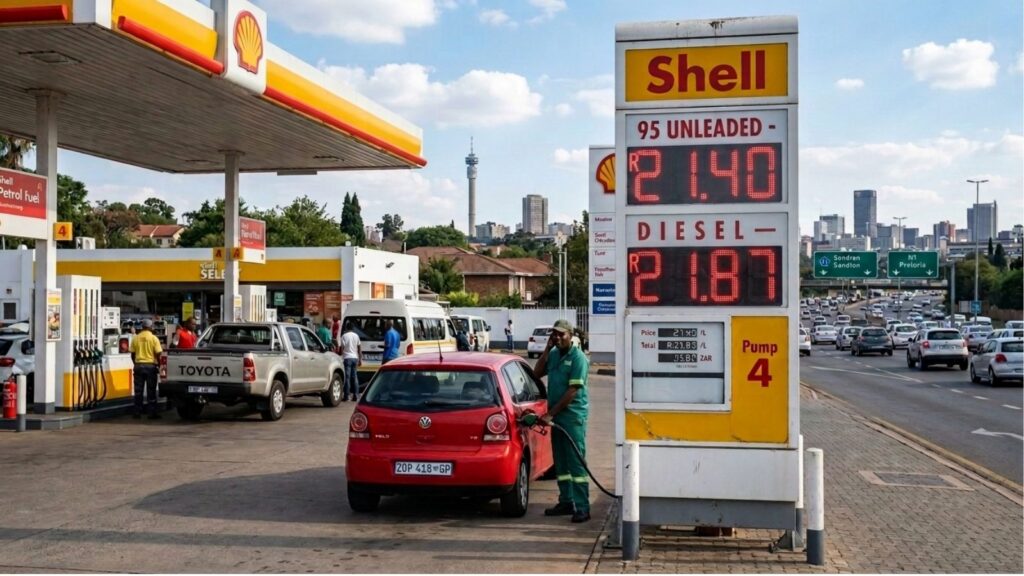
The Automobile Association has thrown its weight behind Finance Minister Enoch Godongwana’s plan to phase out fuel taxes in South Africa, saying it is long overdue.
The group was responding to a recent interview on 702, where the minister said the country needs to “find a way of phasing out” the general fuel levy and Road Accident Fund (RAF) levy in petrol prices.
Godongwana said that the fuel levy brings in approximately R80 billion, while the RAF levy is funding the struggling insurance model.
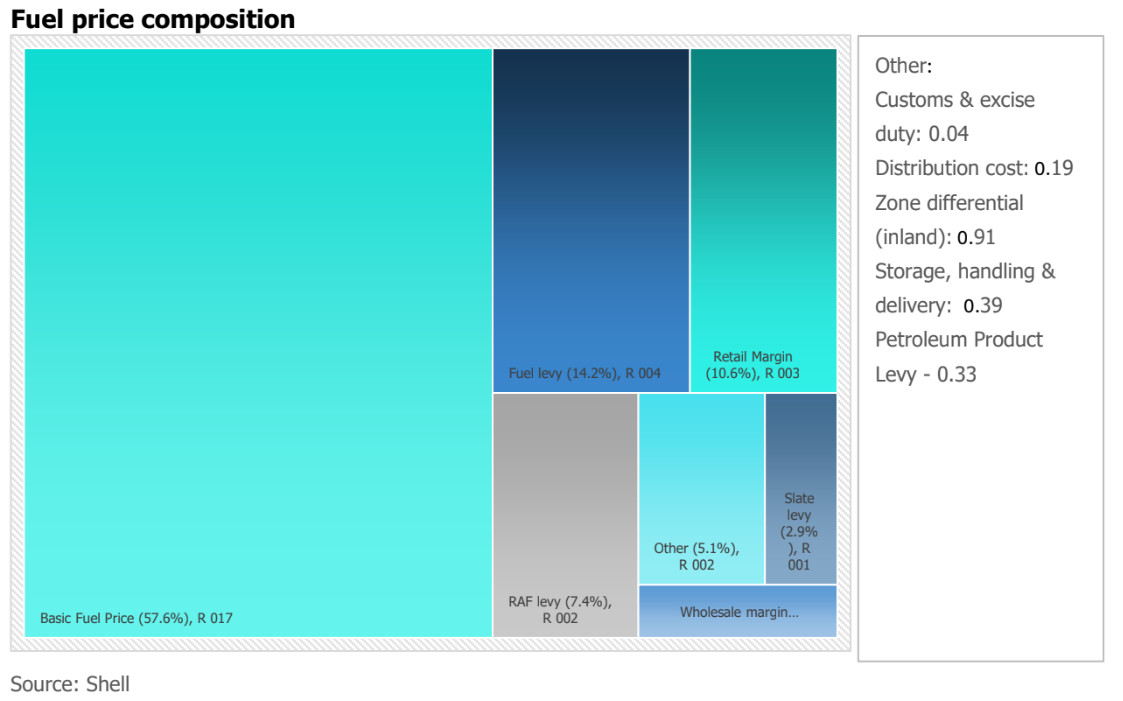
Fuel prices in South Africa comprise the basic price—around 58% of the total at current inflated rates—while taxes make up the remaining 42%.
At R4.16/R4.29 and R2.25, respectively, the general fuel (diesel/petrol) and RAF levies add a combined R6.41/R6.54 to a litre of diesel and petrol, accounting for around 22% of the total price.
The AA noted that a motorist filling a 50-litre tank pays about R329 in levies. A company running 100 petrol vehicles, each refuelled once a week, pays about R1.7 million a year.
The intention to phase out these two levies “is a long overdue and welcome call,” said Bobby Ramagwede, CEO of the AA.
“Fuel taxes land on everyone who moves: the commuter in a taxi, the business running a fleet, and the worker who pays to get to the job that pays for the journey.”
However, he said the government needs to do much more and go much further in reviewing its pricing strategy.
Specifically, he said the basic fuel price needs the same scrutiny as the levies.
“The basic fuel price is the biggest single part of what motorists pay. It reflects what it would cost to buy fuel on international markets and ship it to South Africa,” he said.
“The government should remove the levies the minister has named, and review the basic fuel price formula in public.”
More needs to be done
The National Treasury previously noted that the fuel composition formula was being reviewed as a longer-term strategy to counter rising fuel prices.
However, this would be looking at retailer and wholesaler margins and other smaller levies, not the basic fuel price formula itself.
The Department of Mineral and Petroleum Resources, not Treasury, sets the basic fuel price through a formula.
The AA said there should be a public review of this formula to ensure it is up to date and suited to the country’s needs.
The group also acknowledged the glaring problem with getting rid of the taxes or fiddling with the levy structures.
Godongwana said that phasing out the general fuel levy would leave a gap of about R80 billion, which would have to be closed.
This would imply the need to collect revenue elsewhere.
This has been demonstrated by the Department of Transport’s investigation into applying the RAF levy in more places to counter declines in fuel collections.
However, the AA said that South Africa’s problem isn’t in revenue collection.
“I have long held the view that the problem is. expense management and budget allocation,” said Ramagwede.
“Our fiscus is porous. That needs to be fixed if we want interventions like this one to succeed.”
The AA head said that the RAF itself is an unnecessary burden, and that South Africa does not need a central fund to cater for road injuries.
“We need to deal with the root causes: poor road user behaviour, decaying infrastructure and questionable vehicles,” he said.
“Improve those, and the state carries less of the cost of compensating the people hurt in crashes.”
He said that South Africa should adopt the model of compulsory third-party insurance to resolve the issue, as has been implemented in developed economies.















 Loading ...