

‘Bubble’ warning for the rand


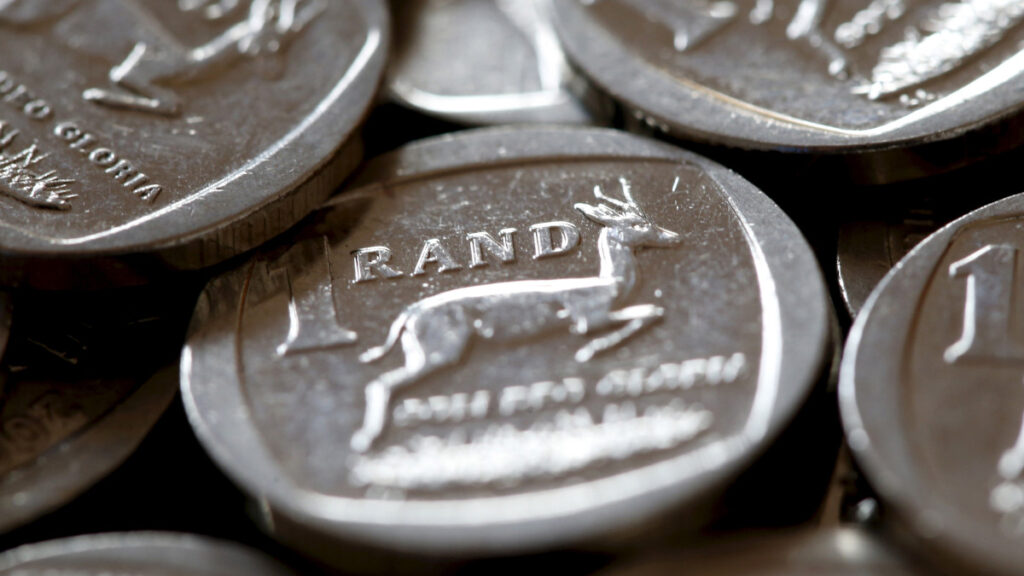
The rand has lost ground over the past week, with markets worried about AI tech stocks being in bubble territory, leading to some risk aversion.
This has placed the rand on the back foot in the new week, despite positive signals from ratings firm Moody’s about South Africa’s economy.
On Monday, 26 October, the rand was trading at R16.66 against the US dollar, weaker than its close on Friday following a well-received MTBPS.
According to Investec Chief Economist, Annabel Bishop, the rand is weaker due to a stronger dollar, which has strengthened amid risk aversion.
At the same time, gold—a key export for South Africa—has also dropped sharply, adding to the pain caused by continued pressure from global oil prices.
The risk aversion comes amid worries over a bubble in the tech sector.
Strategists warn that declines in shares of AI cloud computing providers will spill over into other corners of the tech sector, potentially dragging markets down.
While analysts are trying to wave off worries over a bubble in AI tech, markets cannot shake the concerns.
Investors are concerned about the amount of debt companies involved in the AI build-out have borrowed and are worried about how much more they’ll take on after reporting earnings.
These fears pushed credit risk measures for some of the biggest technology companies spending on AI development to new highs last week.
Bloomberg reports pointed to AI-linked equities baskets tanking 4.9% as investors pushed into more stable treasuries.
At the same time, the gold price has returned to $4,016/oz, the same level in July this year and October last year, putting pressure on South Africa from this end.
“The drop in the gold price has come on the back of the jump in oil prices, to over US$115 a barrel for Brent crude and worries over higher interest rates,” Bishop noted.
She added that oil prices are rising as Iran intensifies strikes on oil tankers and the Strait of Hormuz experiences a sharp drop in tanker traffic.
The severity of the problem has prompted the US to consider lifting sanctions on Russian oil tankers, but not on Russian oil, she said.
Adding to the mix, the Northern Hemisphere winter is approaching, with oil used for heating.
“While the global El Niño weather phenomenon is expected to reduce demand for heating oil, along with high prices, there is no absolute certainty in weather predictions,” she said.
Good news from Moody’s not doing much

The weaker rand comes despite a positive Medium Term Budget Policy Statement (MTBPS) review from ratings firm Moody’s.
In a post-MTBPS note, the rating agency said that the mid-term budget from the Treasury was credit positive for the country.
This was driven by fiscal consolidation despite monetary policy tightening, while weaker nominal GDP affected fiscal ratios.
“The credit rating agency, one of the key three, together with Fitch and S&P, expects debt to reach 84.9% of GDP in two years’ time from 86.8% of GDP last year, on a peaking in the country’s debt ratios to GDP,” Bishop said.
In addition, the MTBPS projections show a rising consolidated primary surplus even with increased infrastructure spending planned, which Moody’s evidences as a particularly notable commitment to fiscal consolidation.
There are also upside risks to tax collections, a key driver of fiscal consolidation.
“Elevated debt service costs are the biggest binding constraint on the state, and so on fiscal consolidation,” Bishop said.
Moody’s added that interest payments as a percentage of revenue are higher for South Africa than for most of its rating peers.
Moody’s previously indicated that South Africa is in line for a credit rating upgrade, having revised the outlook to positive in May this year.
While no rating action took place, South Africa’s rating was affirmed at BB, with an upgrade likely in around eighteen months, Bishop said.


















 Loading ...