

30% of SA municipal income is from electricity sales


Acting Eskom CEO Brian Molefe recently said that he has discussed the idea of bypassing municipalities as electricity distributors in future.
Molefe told MPs that municipalities which were not paying Eskom could be bypassed as distributors. Instead, the households – and businesses – could in future be supplied directly by Eskom.
How would municipalities be affected if this proposal is adopted? Approximately half of the country’s 283 municipalities who distribute electricity for Eskom and derive a considerable portion of their revenue base from extra levies charged for power provision.
According to StasSA, approximately 30% of total municipal income was earned from sales of electricity during the 2012/13 financial year. That is R77.2 billion out of a total income of R258 billion.
“The financial viability of many municipalities could be tenuous if they were no longer able to trade economic services, such as electricity,” the stats body said.
In the major economic hubs, 37.1% of income in Gauteng municipalities, is earned from electricity sales, followed by Western Cape at 31.1%.
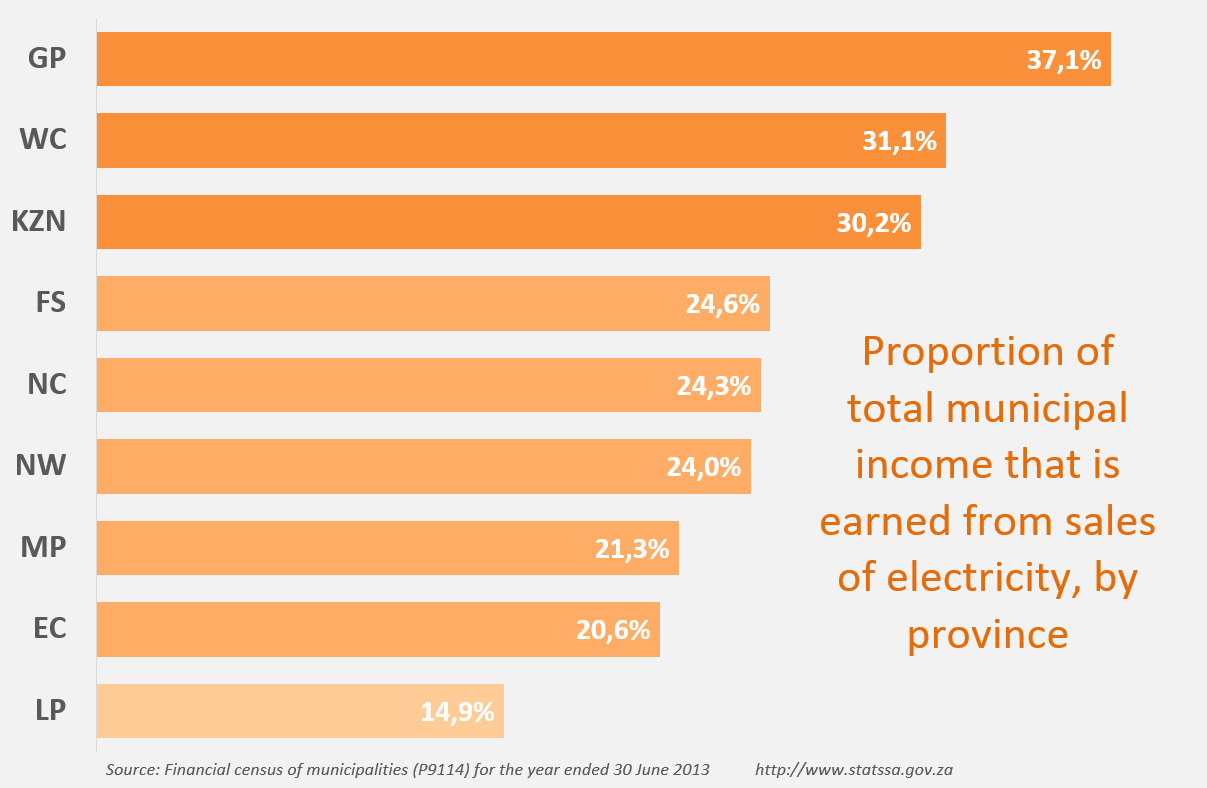
Portion of municipal income earned from electricity sales
A host of municipalities earned more than 40% of their income from electricity sales in 2012/13, with sales at uMhlathuze (Empangeni and Richards Bay) accounting for 53.5%, StatsSA noted.
One metropolitan council appeared in the list: Ekurhuleni (42.1%), placing 10th overall.
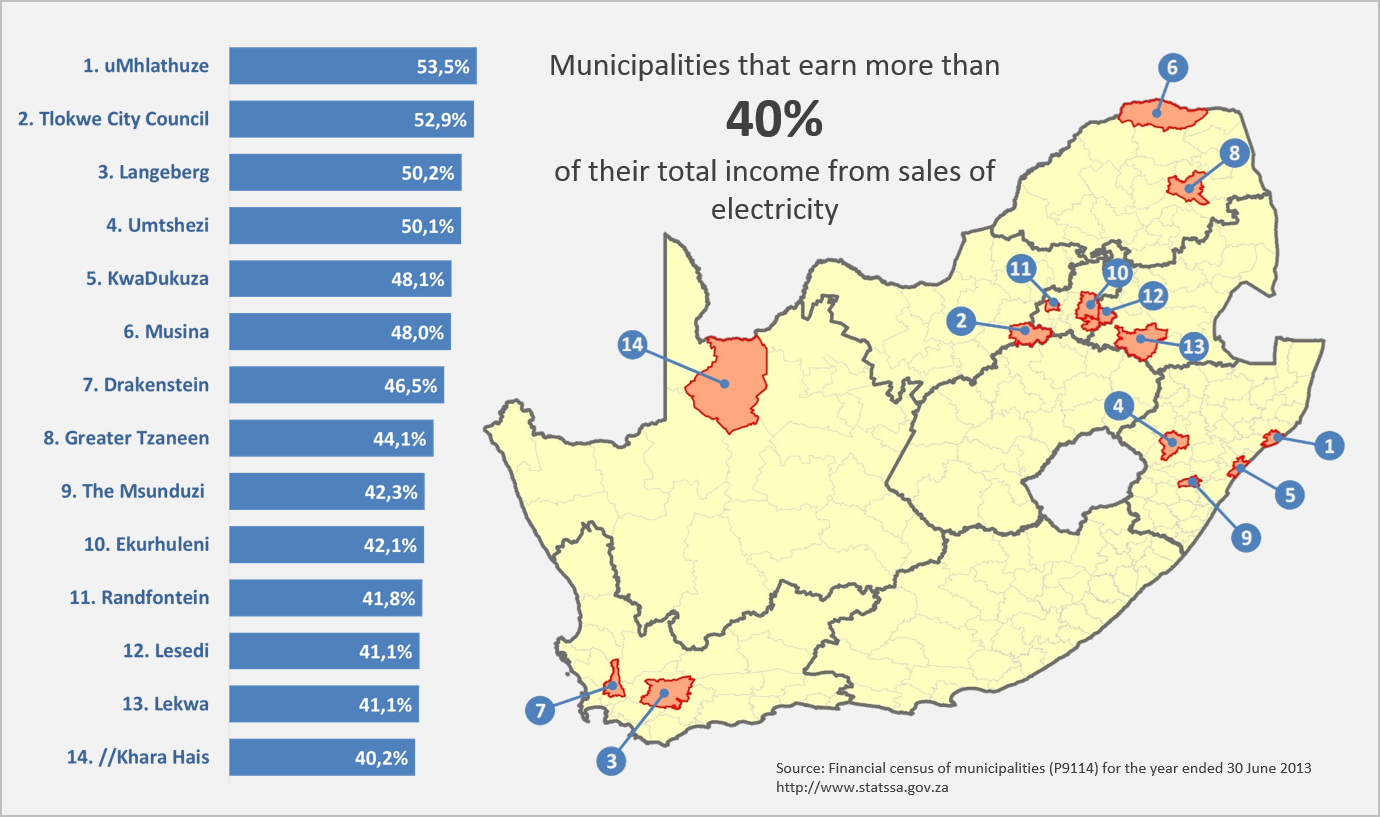
Municipalities that earn more than 40 from electricity sales
More on Municipalities and Eskom
How Molefe plans to pull Eskom out of its financial mess
Eskom non-payers get cut from funding






 Loading ...