

Trump may force South Africa to make a difficult choice: Dawie Roodt


US president Donald Trump has pulled out of a deal with Iran and chosen to re-impose sanctions on the country – which may put South Africa in an awkward position in the future.
On 8 May 2018 the US announced its decision to withdraw from the Joint Comprehensive Plan of Action (JCPOA) agreement and to re-impose economic sanctions against Iran.
Under the terms of the 2015 agreement, sanctions imposed on Iran by the United States, European Union and United Nations would be lifted in return for the country agreeing to long-term curbs on a nuclear programme that western nations believed was aimed at creating a nuclear bomb.
However, Trump called it a ‘rotten deal’ and said instead that stronger restrictions on Iran were needed.
“We will not allow American cities to be threatened with destruction and we will not allow a regime that chants ‘Death to America’ to gain access to the most deadly weapons on Earth.”
According to chief economist of the Efficient Group, Dawie Roodt, while the economic impact of Trump’s move will undoubtedly reverberate across the tightly-knit global markets – the political implications – even for South Africa – are a major concern.
In the short term, Roodt said that the telco sector will be the hardest hit, mainly due to mobile operator MTN’s presence in Iran. Depending on the sanctions, MTN may be forced to play by the US’s rules in the country.
The wider South African economy will also feel the impact, as has already been seen in the further weakening of the rand, which will have the expected knock-on effects.
However, Roodt said the implications of Trump’s move will be felt in a much wider political and international relations sense.
“Trump has been pushing his ‘America first’ campaign, which has already had an impact on South Africa,” Roodt said. This was through the trade war on metals, as well as the US threat to pull out of Agoa and other agreements that would benefit South Africa in some way.
The Trump government’s threats to the UN – alluding the US may retaliate against countries that do not vote with it at the global body – has also sent a clear message: ‘play by our rules, or else’, Roodt said.
Now with the Iran deal, Trump has once again sown division, and left its former allies in the deal in a tough position – particularly the European countries.
For now, European leaders have not given much indication of what they intend to do, but analysts speaking to Bloomberg say it’s likely that Trump will get what he wants.
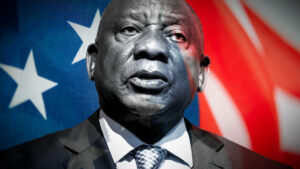
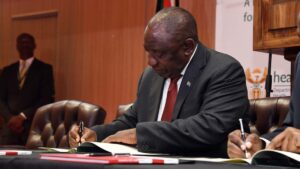
In South Africa’s case, president Cyril Ramaphosa has already expressed concern, saying that, “in the interest of regional and international peace and security”, the other parties in the deal should continue to honour their commitments under the agreement – and that the US should not try to stop them.
And herein lies the main worry, Roodt said.
For years, South Africa has taken somewhat of a middle road in its international agreements and deals – working with both the ‘west’ (US and EU) and the ‘east’ (China, Russia etc).
More recently, though, there has been a slow swing of the pendulum from west to east, Roodt said.
What the recent moves by the Trump administration is doing, is drawing a line in the sand and effectively telling countries to choose a side.
According to Roodt, the real concern is that we’re being pushed closer to the point where South Africa may ultimately be forced to make that choice – the repercussions of which will be significant.
Read: What Trump’s Iran call means for the petrol price and the rand











 Loading ...