

South Africa is holding on – for now


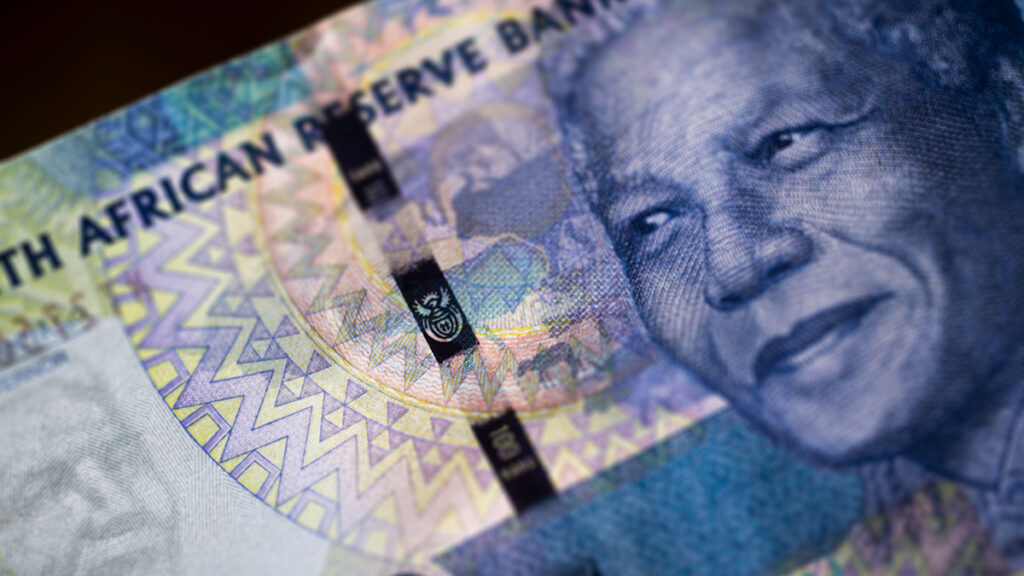
The latest BankservAfrica Economic Transactions Index (BETI) shows that South Africa’s economy is holding on despite the multiple headwinds hitting consumers and the country at large.
The index tracks the value of all electronic transactions cleared through BankservAfrica at seasonally adjusted real prices, reflecting economic activity.
The BETI score increased for the third month in a row, reaching 139.3 in July 2025, up a marginal 0.2% from June.
According to the group, this shows underlying economic resilience in the country, despite prevailing risks and financial strain.
The index is also up 1.9% year on year, showing that the uptick in economic activity in Q2 is extending to Q3, though at a reduced rate.
“The economy continues to demonstrate resilience, though significant challenges and risks persist,” BankservAfrica said.
These risks include the uncertainty and impact of the United States’ 30% tariff on South African exports and what it means for the economy.
The tariffs pose a real downside risk to growth forecasts, which some economists already expect will be sub-1% for 2025. Business confidence and investment sentiment are also angled to the downside.
South Africa’s growth rate projections remain below population growth, highlighting ongoing pressure for South Africans.
According to independent economist Elize Kruger, the 30% tariff on South Africa’s non-commodity exports will take effect around August 8.
However, despite these issues, South Africa’s economy has shown resilience, as reflected in the improved BETI over the past three months.
This is testament to corporate excellence, diversity in the economy and the power of tailwinds currently at play, Kruger said.
“Management teams in Corporate South Africa have stood the test of time, steering companies through the troubled waters of political transition, crisis periods like Covid and operating in an environment crippled by load shedding,” said Kruger.
“There’s no doubt South African companies will rise to the challenge posed by higher US tariffs, working to mitigate the impact through strategic adjustments, supported by government initiatives.”
South Africa has some armour

BankservAfrica pointed to several “local structural tailwinds” cushioning the economy against the barrage of global pressures.
Inflation remains well-contained, with June headline inflation at 3% — the bottom of the SARB’s 3–6% target band — with the 2025 average forecast tracking at around 3.5%.
The favourable inflation environment allowed the South African Reserve Bank to cut interest rates at its last Monetary Policy Committee meeting, alleviating some pressure on households and corporations.
“Furthermore, an additional perk of the low inflation environment is the key role it plays in supporting the recovery of salary earners’ purchasing power,” the group said.
“With average salary increases expected to be between 5% and 6%, 2025 will be the second consecutive year of real increases in salaries, which should support consumer spending.”
The number of transactions cleared through BankservAfrica reached an all-time high of 177.5 million in July, surpassing the previous record high of 176.3 million registered in May 2025, and up by 8.9% on a year ago.
The standardised nominal value of transactions moderated slightly to R1.338 trillion in July vs R1.361 trillion in June 2025.
All other timely economic indicators also posted stronger readings in July.
Naamsa revealed that the strong performance of the vehicle sales market continued robustly in July 2025.
Total vehicle sales showed an improvement of 15.6% y/y in July 2024, with year-to-date sales up by 13.9% compared to a year earlier, while new car sales in July grew by a notable 20.1% y/y and year-to-date were a notable 21.1% ahead.
The S&P Global South Africa Purchasing Managers’ Index (PMI) remained in expansionary territory, with an index level of 50.3 in July, slightly up from 50.1 in June.
Encouragingly, after eight consecutive months in contractionary territory, the seasonally adjusted Absa Purchasing Managers’ Index, which reflects the prospects in the manufacturing sector, also rose to 50.8 index points in July vs. 48.5 in June, the first expansion signal since October 2024.
“The improvement in economic activity during July appears to have been broad-based, with gains observed across multiple sectors. This is a positive signal for underlying economic momentum and resilience,” said Kruger.

















 Loading ...