

Reserve Bank hikes interest rates by 25 basis points


The South African Reserve Bank (SARB) has increased interest rates by 25 basis points amid rising consumer prices caused by the conflict in the Middle East.
The central bank’s Monetary Policy Committee (MPC) decided to increase the repo rate to 7.0%, with the prime rate rising to 10.50%.
Four of the six members of the MPC called for the hike, while two called for rates to remain as they are.
While South Africa was widely expected to see interest rate cuts at the start of the year as inflation was under control, the nation was dealt a blow when the USA and Israel launched attacks on Iran.
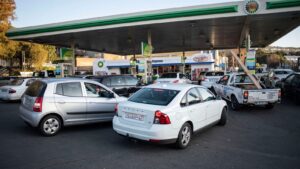
Iran’s subsequent shutdown of the Strait of Hormuz, where 20% of the world’s oil flows from, led to massive hikes in fuel prices.
With fuel prices rising 11% in April, the headline consumer inflation figure rose to 4.0%. This was at the upper end of the Reserve Bank’s one-percentage-point tolerance band for its new 3% target.
The SARB expects headline inflation averaging 4.4% in 2026 and 3.7% in 2027, before returning to the 3% target in 2027. There are, however, upside risks to the outlook.
This comes amid higher oil prices in its forecast, which have led to higher food prices due to higher transport and fertiliser costs.
On the positive side, SARB Governor Lesetja Kganyago has also said that South Africa’s economy is showing signs of life.
This includes a recent positive outlook from Moody’s, strong terms of trade, and strong reforms from the state.
Nevertheless, the SARB lowered its growth forecast for South Africa over the next two years, as the Iran war shock hit the economy while it was gaining momentum.
“However, we face a painful combination of higher global uncertainty and reduced disposable income,” Kganyago said.
“This will hit both investment and household consumption, which have been our main growth drivers.”
He also referenced the recent floods in the Western Cape, Eastern Cape and North-West provinces, which have been impacted by severe, if localised damage, highlighting the risk of climate change.
More pain incoming

The governor added that the forecast from the Quarterly Projection Model (QPM) shows one hike this quarter.
“As inflation falls later in the forecast, our model then has rates easing again, towards neutral levels,” he added.
“Real rates are lower this year, given higher inflation, so the policy stance is now less restrictive than it was in March.”
Due to the elevated uncertainty, the SARB also gave three scenarios for interest rates in the future.
One involved a prolonged Middle East crisis, leading to higher food and oil prices, plus a weaker rand.
The second involves the El Niño weather pattern, which brings drought to South Africa. The third scenario considers non-linear effects, i.e., big shocks that affect inflation.
All of these scenarios implied higher inflation and lower growth. All three scenarios showed some additional monetary policy tightening.
“The scenario with a longer Strait closure has inflation at about 5%, with two more hikes than the baseline,” said Kganyago.
“With El Niño added, rates stay high for longer. The most adverse scenario puts all the risks together, causing inflation to peak above 6%, requiring three extra hikes.”
He added that there has already been one global inflation surge this decade, and another could start soon. The central bank thus faces an uphill battle to bring inflation back to 3%.













 Loading ...