

Rand suffers major blow


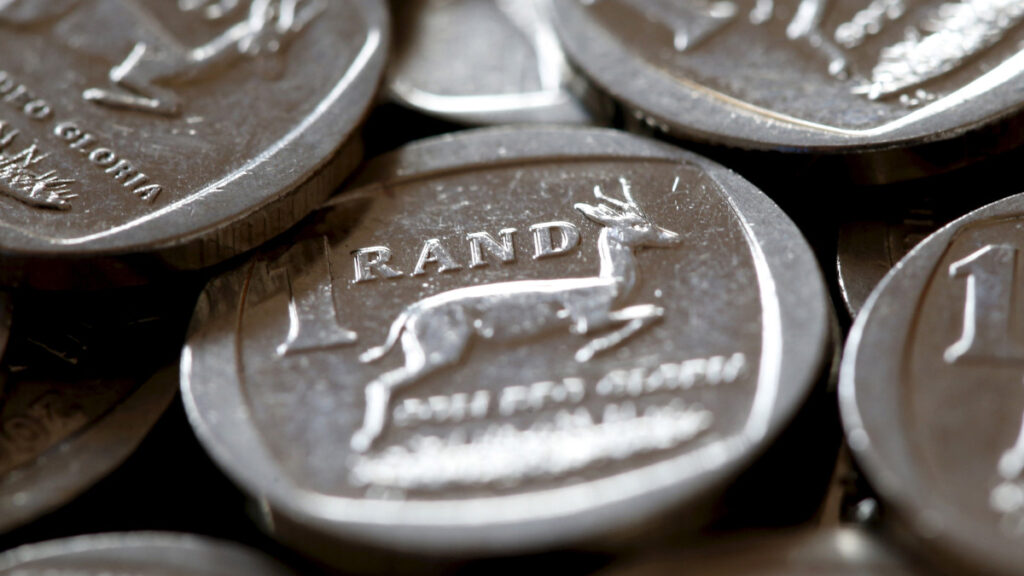
The South African Reserve Bank’s decision to hold rates has dealt a blow to the rand after markets had anticipated a hike.
While a hold on interest rates is good news for debt holders, markets had widely expected the Monetary Policy Committee (MPC) to increase policy rates by 25 basis points.
A rate hike typically boosts the rand, increasing the rate differential between South Africa and markets like the United States.
Ahead of the MPC meeting on Thursday (23 July), higher-than-expected June inflation at 5% y/y had made a hike near certain for many economists and analysts.
After the surprising move to hold—contrary to the Forward Rate Agreements view—markets have now factored out the rate hike, pushing the rand weaker.
The rand reached R16.98/$ on Friday, jumping up towards R17.00/$ and reaching its worst levels in months.
According to Investec Chief Economist Annabel Bishop, the rand’s recovery on Monday (27 July) to around R16.80 to the dollar remains driven by these local events.
However, she warned that the local unit remains vulnerable and volatile and risks further weakness—especially if global risk sentiment and appetite flip.
This would most immediately be tied to the ongoing war in the Middle East.
“The US-Iran war is on hold for a second day as the US, instead of intensifying its war against Iran, has paused,” she said.
The pause is reportedly on concerns over air defence stockpiles, including anti-missile interceptors, and the increased risk of a widening war in the Middle East.
“In addition, concerns centre over an escalating energy crisis and negative impact on the global economy, as well as the impact on US allied countries in the Gulf who have already been attacked and are particularly vulnerable,” she said.
Because of this, the rand has not yet been hit by a fresh wave of geopolitical risk sentiment, meaning the weakening is due to markets digesting the MPC’s latest move.
This included looking ahead, with the Forward Rate Agreements (FRAs) still indicating up to two further 25bp interest rate hikes this year due to higher inflation.
“Uncertainty is high, and the chances of these hikes are seen to be diminishing,” Bishop said.
“Even two [rate hikes] are likely overdone, with one at most. We expect no further hikes still—but much depends on energy prices.”
The positive side for markets and investors

While the hold on interest rates has dazed markets, the JSE lifted on the rate hold stance.
And with the MPC signalling no further hikes in the repo rate this year, and cuts overall to end 2029, prospects remain positive.
However, Bishop warned that this is likely to change as new data and developments come into view.
The MPC notes at each meeting that its rate path remains a broad policy guide and that decisions are made on a meeting-by-meeting basis, focusing on outlooks, data and the balance of risks.
“The outlook is uncertain. We see downside risks to growth. We anticipate slower growth through the second and third quarters of this year,” it said.
Consumer confidence has fallen sharply, and business confidence has also weakened. Households have suffered from higher fuel prices, while uncertainty has weighed on investment.
The SARB’s current forecast is that the economy starts to recover in the second half of 2026 as the shock of the Iran war fades. But this outlook is uncertain.
Bishop said that, overall, “financial markets have drawn comfort from what appears to be a neutral to dovish tone from the Reserve Bank.”
“As such, [there is] more support than was expected for the economic growth outlook, benefiting the investment climate.”


















 Loading ...