

R100,000 fine warning for households employing domestic workers in South Africa


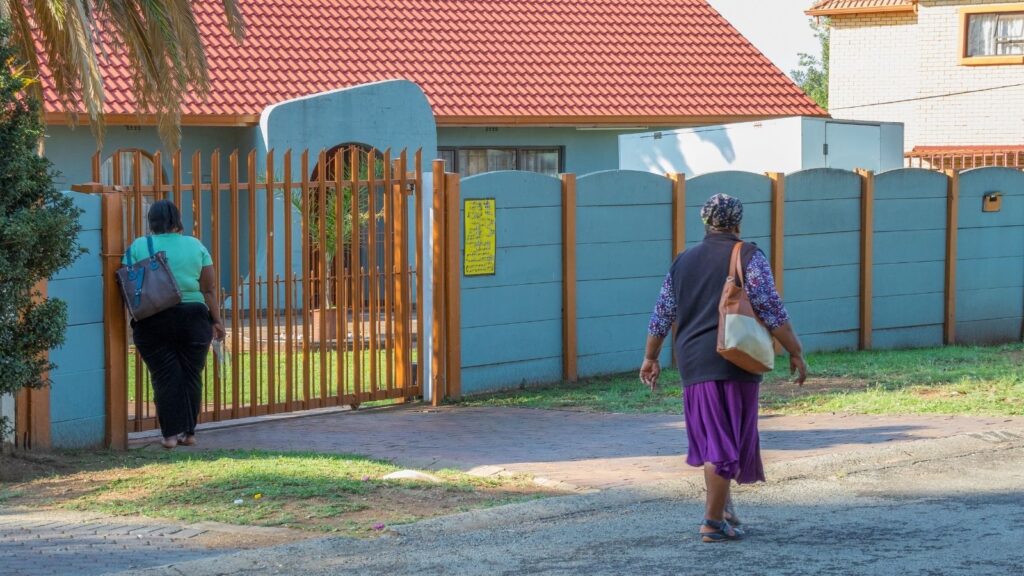
New restrictions and harsh penalties for hiring illegal foreign nationals, including households that employ them as domestic workers, are now open for public comment.
The Portfolio Committee on Employment and Labour has formally opened the proposed Employment Services Amendment Bill for comment, calling on all stakeholders to have their say.
According to the committee, the bill’s main aim is to regulate the employment of foreign nationals amid shifting economic and demographic dynamics.
The committee said this needs to be shaped by views from all sectors of the South African society.
The proposed laws were gazetted at the end of May after receiving Cabinet approval for introduction to Parliament. They were handed to the committee for processing at the end of August.
Broadly, the bill aims to tighten enforcement against the employment of undocumented foreign nationals in the country and forms part of the government’s response to illegal immigration.
The bill wants to close “loopholes” in the current labour laws, establish a legislative framework for labour migration, and protect jobs for South Africans by setting sector-specific quotas for foreign employment.
However, as part of this process, the bill also proposes steep penalties for employers in the country who step outside the upcoming boundaries.
Most notably, the bill proposes imposing a R100,000 fine on employers hiring illegal foreign workers as a first offence.
This penalty can escalate to up to R1 million or even jail time if employers continue to disregard the country’s employment laws.
The bill applies to all employers, including private households.
This means any homeowners who employ domestic workers without the legal right to work in South Africa could face significant penalties.
Under the proposed framework, a first offence would attract a fine of R100,000 per undocumented worker.
A second offence within three years would result in a R200,000 fine per worker, while multiple or ongoing violations could lead to penalties of up to R1 million.
Notably, employing undocumented foreign nationals is already a criminal offence under Section 38 of the Immigration Act and can result in imprisonment.
To avoid penalties, employers must ensure that foreign domestic workers have valid passports and the appropriate visas or permits authorising them to work in South Africa.
Punishing employers, not foreign workers

The Department of Employment and Labour has stressed that the proposed laws are not meant to punish foreign workers, but rather clamp down on “unscrupulous” employers who seek to take advantage of them.
The penalties, meanwhile, are harsh, intended to deter employers from even trying.
“The bill is not aimed at denying migrant workers their rights, but rather at ensuring that all workers are protected from unfair labour practices and exploitation,” the department said.
“Under the proposed amendments, foreign nationals employed in contravention of the law will retain the right to enforce employment-related claims against employers.”
This provision seeks to prevent unscrupulous employers from taking advantage of workers’ immigration status by paying wages below the regulated minimum or imposing conditions that fall short of South African labour standards and collective agreements.
Labour inspectors and bargaining council agents will also be empowered to pursue claims on behalf of affected workers where necessary.
Additionally, employers will be prohibited from assigning foreign nationals work that is not authorised under their visas, permits or relevant legislation.
Key to the new laws is enforcement, with labour inspectors given more power to monitor and enforce compliance, including in private households.
“These measures are intended to discourage unlawful employment practices and ensure that compliant employers are not placed at a competitive disadvantage,” the department said.
Stakeholders submitting written representations are requested to indicate if they wish to deliver a verbal presentation during the upcoming parliamentary public hearings.
Written submissions should be addressed to the Portfolio Committee on Employment and Labour, for the attention of Mr Zolani Sakasa, by email at this email address: [email protected]
The comment period is open until 6 November 2026 at 16h00.
The full draft bill can be read below:
















 Loading ...