

Another national disaster for South Africa


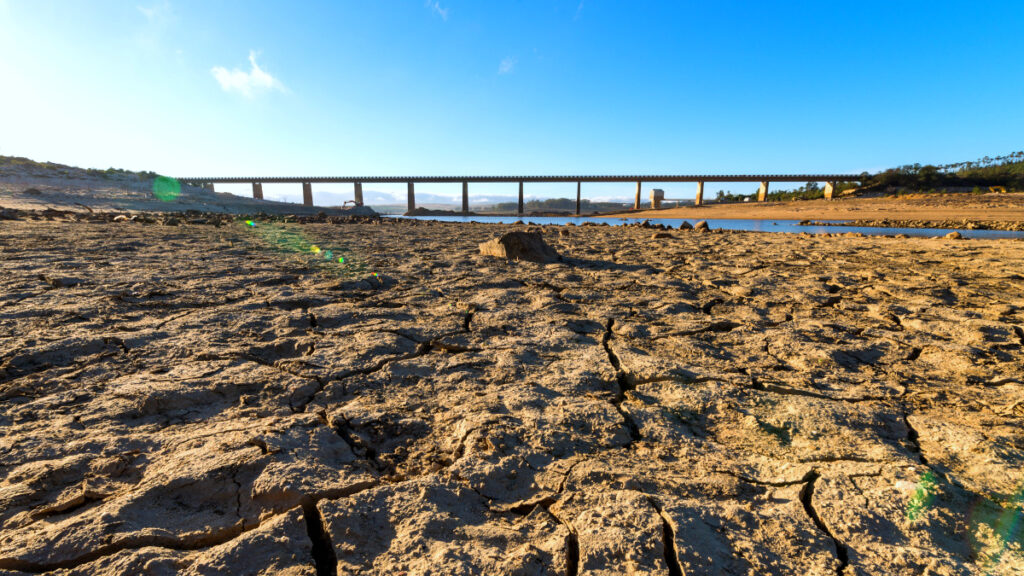
The Department of Cooperative Governance and Traditional Affairs (COGTA) has classified yet another national disaster in South Africa, this time flagging drought conditions and water provision.
Head of the National Disaster Management Centre, Dr Elias Sithole, classified the disaster after considering reports on drought and the possible interruption of large-scale water provision by organs of state.
This could impact the provinces of the Eastern Cape, Western Cape, and Northern Cape.
The provinces have already been on high alert about dry conditions for some time, with many municipalities, metros and provincial departments warning of impending ‘day zeros’.
Day zero refers to the point at which water cannot be provisioned for use, ie, the taps running dry.
The country has experienced wetter conditions in recent months, particularly in the eastern part of the country, driven by the La Niña weather pattern, which brings rain.
However, meteorologists have already marked the end of La Niña, warning that its hotter, drier counterpart, El Niño, is on the way.
“I hereby give notice that I regard the life safety risk and impact posed as a potential disaster,” Sithole said.
Emanating from the classification, the primary responsibility for coordinating and managing the disaster, in accordance with existing legislation and contingency arrangements, is now designated to the National Executive.
The government and all organs of state are now required to further strengthen their support provided to the existing structures to implement their contingency arrangements.
The centre encouraged organs of state, the private sector, communities, and individuals to improve their risk-avoidance programmes through the implementation of targeted drought-alleviation measures and the conservation of water, on both the supply and demand sides of water provision.
In line with this, the same should reduce their use of water in line with any water restrictions issued, which municipal councils should implement to deal with the effects of the disaster.
Disaster on disaster

South Africa’s water provision issues are not only down to the weather, however. Infrastructure issues and municipal mismanagement are also to blame.
Major metros in Gauteng are currently experiencing severe water outages due to local infrastructure issues, which are prone to breaking due to a lack of maintenance.
While not part of the national disaster classification, these are certainly a localised disaster for the hundreds of thousands of people living in affected areas.
The country has also seen multiple national disasters declared due to a number of issues.
In January, the National Disaster Management Centre classified a disaster following severe weather and widespread flooding that affected Limpopo, Mpumalanga, KwaZulu-Natal, the Eastern Cape, and the North West.
These floods resulted in a loss of life, significant damage to infrastructure and property, environmental degradation, displacement of communities, disruption to schooling and agricultural activities.
The Kruger National Park was also forced to close.
In November 2025, a national state of disaster was also declared to deal with gender-based violence in South Africa. This followed a national shutdown led by NGOs, criticising the government’s lack of action.
Notably, a classification of a national disaster does not invoke emergency powers and instead reinforces and strengthens the systems already in place.
This is a notable distinction between a state of disaster being “classified” and “declared”.
Classifying a state of disaster allows the government to coordinate and manage disaster response by assigning responsibility to specific spheres of government.
A national state of disaster is classified when more than one province is impacted, where response cannot be managed effectively.
Where existing legislation and contingency measures are inadequate to address the situation, or where other special circumstances exist, the government would declare a state of disaster.












 Loading ...