

R1,000 driving licence warning in South Africa – even if yours is still valid


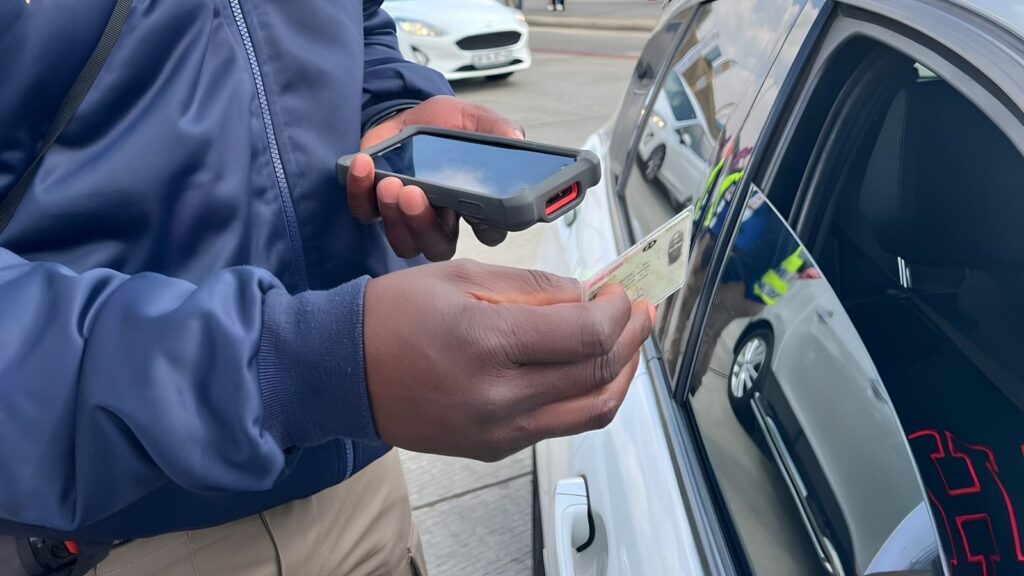
A motorist in Johannesburg faced arrest for leaving his valid driving licence at home after traffic officers misinterpreted the new AARTO laws.
However, while this incident was not lawful, the Road Traffic Infringement Agency (RTIA) warned that leaving your driving licence at home is a R1,000 offence under the correct interpretation of the law.
In an interview with HOT Business, the motorist explained that he was stopped shortly after making a turn at a traffic light when officers on motorcycles pulled him over, accusing him of driving through a red light.
Trying to avoid an argument, he accepted the officer’s version of events and said he wanted to remain calm because he was already late for a meeting.
The motorist realised he had misplaced the card and searched his wallet, vehicle and bag before handing over his identity document instead.
He told the officer that his licence was valid and suggested it could be verified electronically.
According to the motorist, the officer then told him that, under the new AARTO regulations, not having his driver’s licence card with him was now an offence punishable by immediate arrest.
“He says, ‘Are you aware that due to the new AARTO rules, when I stop you, and you don’t have your licence on you, it is an offence,'” the motorist recalled.
The officer allegedly showed him a charge book and explained that offences, unlike infringements, required motorists to be arrested and taken to a police station.
The motorist questioned whether this was the correct interpretation of the law and argued that he held a valid licence that could be confirmed electronically.
According to him, the officer replied that this was how the regulations had been explained during recent training.
In the same interview, RTIA spokesperson Monde Mkalipi said the incident highlights confusion around the distinction between an infringement and an offence under the AARTO regulations.
Teething issues as new laws come into effect

He explained that motorists are legally required to carry their physical driver’s licence whenever they operate a vehicle.
“In terms of Schedule 3 of the AARTO regulations, if a motorist operated a motor vehicle whilst he or she did not keep a driving licence in the vehicle, that is an infringement,” Mkalipi said.
He said this attracts a R1,000 fine. However, Mkalipi stressed that failing to carry the licence card is fundamentally different from driving without ever having been issued a licence.
“If the driving licence was never issued, that is an offence. Then the person needs to be arrested on the spot,” he said.
By contrast, where a motorist has a valid licence but has simply forgotten to carry it, officers should first verify the driver’s details.
“In this particular case involving the motorist, they should have perhaps checked on the system. However, they still should’ve issued them with a R1,000 fine,” Mkalipi said.
He acknowledged that the officer in this incident may have misunderstood the regulations. “Perhaps in a way, there was a bit of a misinterpretation of the regulation,” he said.
“Not to say, if you don’t have it in your possession, then you are facing arrest. That is an incorrect interpretation of the regulation in this instance.”
Mkalipi added that the RTIA is planning a broader public education campaign, including training for enforcement officers, to improve understanding of the regulations.
He also revealed that some AARTO charges and regulations are already under review as the system expands into additional municipalities.
“The regulations are still undergoing a review so that they are not open to misinterpretation and they are also not open to abuse by anyone who is supposed to enforce them on the roads,” he said.
While he could not say whether this incident was unique, Mkalipi said similar cases may emerge as AARTO is rolled out more widely.
“There could be a few of them popping up, and I think it’s a matter that we are looking at to ensure that there’s accurate interpretation and implementation of these charges by our officers on the road.”


















 Loading ...