

Another national disaster called in South Africa


The Department of Cooperative Governance and Traditional Affairs has classified yet another national disaster in South Africa, marking the fourth such call in as many months, and the second in February.
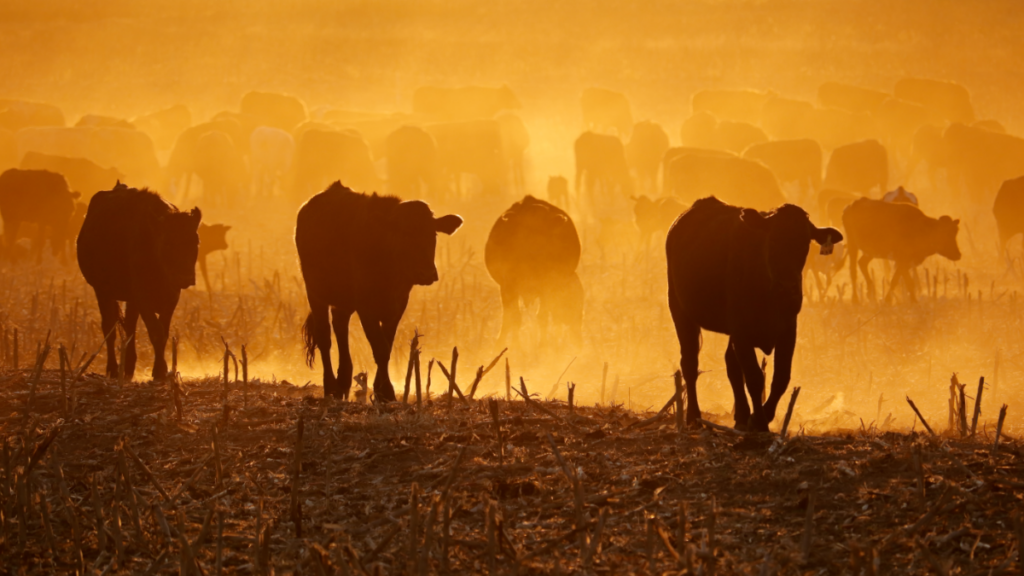
Head of the National Disaster Management Centre, Dr Elias Sithole, has classified the outbreak of Foot and Mouth Disease (FMD) as a national disaster.
The outbreak, which erupted in April and May 2025, has impacted almost all provinces in the country.
Specifically, the disease has spread in the Eastern Cape, Free State, Gauteng, KwaZulu-Natal, Limpopo, Mpumalanga, North West and the Western Cape.
Due to the scale and impact of the outbreak, Sithole said the matter is a national disaster.
“Emanating from the classification, the primary responsibility to coordinate and manage this national disaster, in terms of existing legislation and contingency arrangements, is designated to the National Executive,” he said.
Through the classification, the centre has called upon all organs of state across the three spheres of government to further strengthen their support to tackle the disaster.
In addition, it encouraged organs of state, the private sector, communities, and individuals to improve their implementation of targeted foot-and-mouth disease management practices.
This includes establishing a multisectoral plan for prevention, mitigation, relief, and rehabilitation to address the effects of the disaster.
Agriculture Minister John Steenhuisen welcomed the declaration, saying it will support and strengthen the department’s ongoing work to tackle the outbreak.
This includes “accelerating rollout, tightening movement controls, and unlocking the resources our veterinary teams and farmers urgently need,” he said.
The minister has come under scrutiny from the private sector and farmer lobby groups for his handling of the outbreak, particularly the vaccine rollout, which has been accused of becoming a centralised and state-controlled process.
Steenhuisen has committed to working with the private sector to eradicate the disease, but stressed that regaining FMD-free status for international trade requires a strictly controlled vaccine rollout.
“In order to regain FMD-free status with vaccination from the World Organisation for Animal Health, South Africa must prove there has been no virus transmission for at least 12 months,” he said.
“This requires a strictly controlled vaccination rollout, official surveillance, strict movement controls, and systematic vaccination coverage that can be documented and verified.”
Disaster on disaster on disaster

The latest national disaster marks the fourth such classification since November 2025.
Earlier in February, the National Disaster Management Centre classified drought conditions impacting three provinces as national disasters.
The provinces had already been on high alert about dry conditions for some time, with many municipalities, metros and provincial departments warning of impending ‘day zeros’.
Day zero refers to the point at which water cannot be provisioned for use, ie, the taps running dry.
In January, classified a disaster following severe weather and widespread flooding that affected Limpopo, Mpumalanga, KwaZulu-Natal, the Eastern Cape, and the North West.
These floods resulted in a loss of life, significant damage to infrastructure and property, environmental degradation, displacement of communities, disruption to schooling and agricultural activities.
In November 2025, a national state of disaster was also declared to deal with gender-based violence in South Africa.
This followed a national shutdown led by NGOs that criticised the government’s lack of action.
Notably, a classification of a national disaster does not invoke emergency powers and instead reinforces and strengthens the systems already in place.
This is a notable distinction between a state of disaster being “classified” and “declared”.
Classifying a state of disaster allows the government to coordinate and manage disaster response by assigning responsibility to specific spheres of government.
A national state of disaster is declared when more than one province is impacted, where response cannot be managed effectively.
Where existing legislation and contingency measures are inadequate to address the situation, or where other special circumstances exist, the government would declare a state of disaster.

















 Loading ...