

Big Foot and Mouth Disease win for South Africa


The government, in collaboration with the private sector, is making significant progress in the fight against Foot-and-Mouth Disease (FMD), having imported 23 million vaccines into the country.
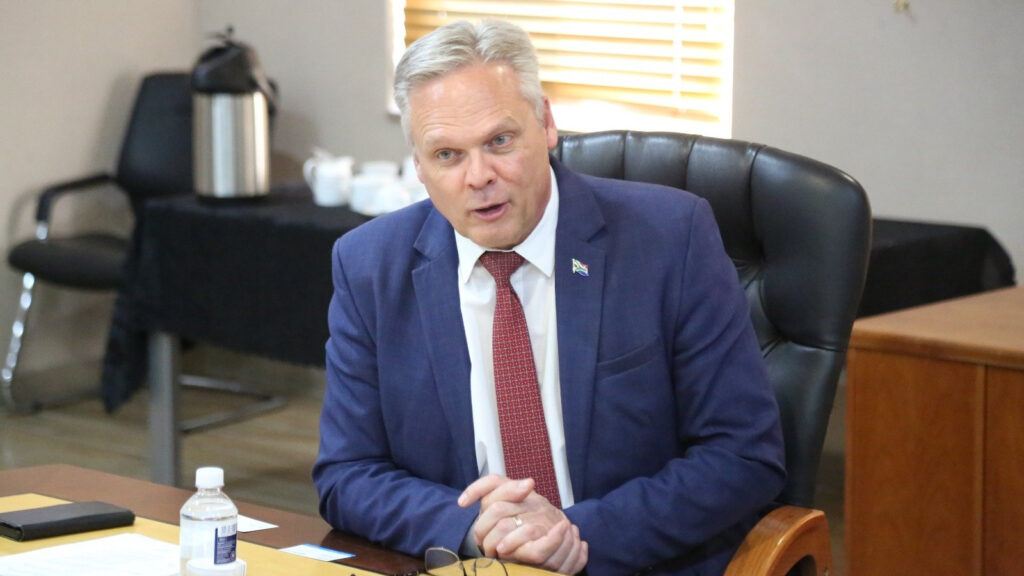
This statement was made by Agriculture Minister Willie Aucamp during his address at the TLU SA Congress held in Pretoria.
The North West province has reported no new cases of FMD for the first time since December 2025.
“Government and the private sector have worked together to import over 23 million vaccine doses. We are making steady progress with the vaccination of cattle in all provinces,” said Aucamp.
Aucamp said that all commercial dairy cows in South Africa have received their first dose of vaccine. That is over 1.38 million animals.
He said that second-round booster distributions are already moving forward rapidly.
“Government must not become a bottleneck in animal healthcare. That is why we established a legal path for farmers to vaccinate their own herds,” Aucamp said.
To date, more than 1,000 farmers have registered on the department’s online systems to be classified as authorised persons to vaccinate their own cattle.
“Farmers also have the option to use any of the approved online systems provided by private sector stakeholders,” he said.
“I want to urge farmers who have the means to proactively vaccinate their cattle to do so,” the Minister said.
He told the congress that partnering with the government can “unlock incredible potential”.
“We can cut through red tape, streamline strict regulations, and open lucrative new export markets,” said Aucamp.
“Joint action, as seen in our fight against foot-and-mouth disease, allows us to secure necessary vaccines more quickly and protect vital supply chains.”
Aucamp said that when state policy aligns directly with the practical needs of organised agriculture, stability can be created.
The tides have changed

Earlier this year, experts warned that foot-and-mouth disease was getting out of control in South Africa and poses an existential threat to many livestock farmers.
The disease was present in South Africa for a few years. However, it exploded into a national disaster in early 2025.
Infected cattle from KwaZulu-Natal were sold at an auction, and the virus was transported by unsuspecting buyers into Mpumalanga and Gauteng.
In September 2025, the former Agriculture Minister John Steenhuisen rejected claims from the Red Meat Producers Organisation that the disease was out of control.
However, he soon changed his tune after experts described the outbreak as one of the most severe in South Africa’s history.
In November 2025, Steenhuisen admitted there were serious problems despite vaccinating 931,200 animals with vaccines purchased from Botswana.
“We must be honest with the public and with our farming sector. This is a battle we are currently not winning,” he said.
Steenhuisen announced plans to vaccinate all cattle in South Africa against Foot and Mouth Disease (FMD), starting in February 2026.
However, many experts said this vaccination initiative was unlikely to succeed as intended and that a more urgent response was necessary.
Initially, farmers were prohibited from purchasing vaccines and vaccinating their livestock because FMD was classified as a state-controlled disease.
This meant that only the government could procure and distribute vaccines, preventing farmers from sourcing or administering vaccines themselves, even if they had the financial means to do so.
In May 2026, the Gauteng High Court in Pretoria granted an interim order that allowed livestock owners to privately procure and administer FMD vaccines.
This decision followed a legal challenge by agricultural groups such as SAAI, Sakeliga, and Free State Agriculture.
In July 2026, the Department of Agriculture and various farming groups reached a historic settlement, formally lifting the strict state monopoly on FMD vaccines.
This settlement allowed the private sector to import, distribute, and administer FMD vaccines under specific traceability and biosecurity regulations.
Later that month, the Department of Agriculture launched an online self-vaccination application portal to streamline the process for livestock owners to register and perform voluntary vaccinations.














 Loading ...