

Government sends a message to South Africans as petrol prices hit R30 a litre – with worse to come


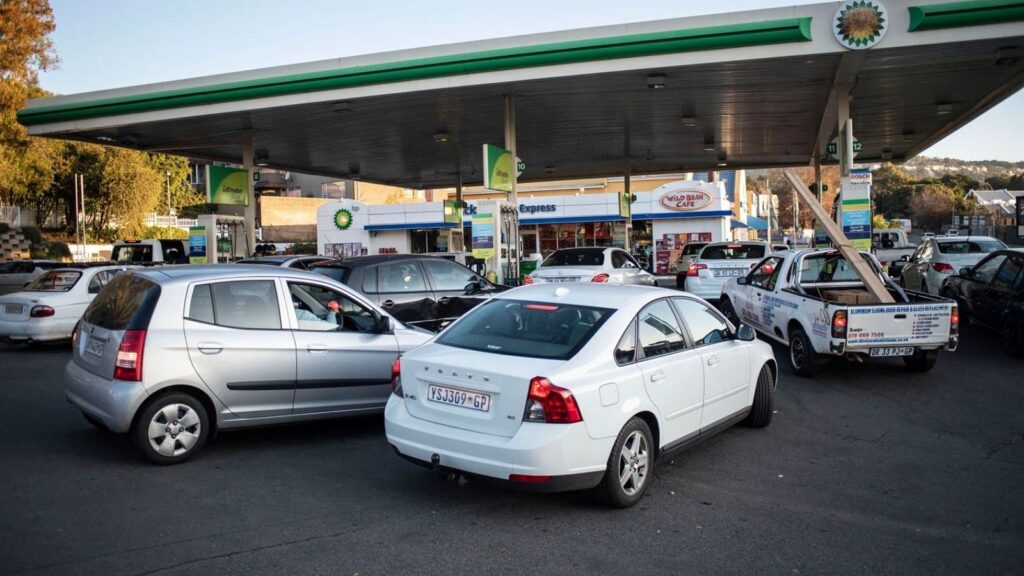
The South African government has urged motorists not to panic-buy petrol ahead of price increases on Wednesday, and instead to drive more efficiently to make their fuel last longer.
The message came in response to petrol prices hitting a record R30 per litre this week, with early indications from the Central Energy Fund (CEF) pointing to worse ahead.
The Department of Mineral and Petroleum Resources announced on Monday that petrol prices would be rising by R3.12 and R3.33 per litre from Wednesday (7 October).
Diesel prices would also be facing steep hikes, rising by R2.84 and R3.24 per litre.
In a public notice, the South African government urged motorists not to panic-buy petrol, as this may cause unnecessary supply shortages.
Instead, it said that motorists should ‘make every kilometre count’ by adjusting their driving habits to be more efficient.
This includes driving “smoothly”—accelerating gradually, braking gently and maintaining a steady speed—to avoid unnecessary fuel consumption.
Other practical tips include:
- Avoid excessive speeding
- Reduce idling by switching off the engine when stationary for extended periods
- Plan journeys to combine errands, avoid traffic and choose more efficient routes
- Ensure vehicles are properly serviced
- Limit aircon use and use eco-modes where possible
- Carpool or walk and cycle when practical.
Motorists reacted incredulously to the notice, remarking that the state should be working to lower fuel prices rather than telling South Africans to drive better.
This comes as the new review period for price adjustments in November kicks off, with the CEF pointing to another R4 per litre under-recovery waiting in the wings.
Call for tax relief that probably won’t come

Ahead of the fuel hikes, various sectors of the economy called for direct government intervention, proposing that fuel levies be cut, as they had been in April 2026.
However, the National Treasury had previously made it clear that such an option would not come without its own costs.
The April intervention set the budget back by over R17 billion—an amount that would have to be recovered elsewhere.
Finance Minister Enoch Godongwana also made it clear that the budget cannot shield motorists from every external price shock.
According to Sanisha Packirisamy, Group Economist at Momentum, the National Treasury has no easy options when it comes to the rising fuel prices.
On the one hand, the department has to protect immediate tax revenues, but rising fuel costs are eroding the broader economy that generates them.
“The economic case for fuel relief, to offset the dent to purchasing power, is compelling,” she said.
“October’s record price spikes, on top of previous steep increases, act as an immediate squeeze on household budgets and business margins.”
Higher diesel costs, meanwhile, filter rapidly into freight, agricultural and broader operating costs for businesses.
“If these supply-side pressures feed into secondary or underlying inflation pressures, the South African Reserve Bank may keep interest rates higher for longer, further dampening growth and consumer spending,” she said.
If South Africa experiences a severe economic downturn as a result of this, it could potentially cost the fiscus even more in lost personal, corporate and VAT collections.
This could be more severe than the direct cost of a fuel levy reduction, she said.
However, echoing Godongwana’s previous statements, Packirisamy said tax relief comes at a fiscal price.
“The government’s previous relief package partly relied on windfall revenues—higher commodity prices—that may no longer exist,” she said.
“Absorbing high fuel prices through additional government borrowing risks driving up government bond yields and weakening the rand, while cutting public spending elsewhere carries its own growth and socio-economic penalties.”
The economist noted that there are also political factors at play.
She said that withholding tax relief is difficult to defend to strapped consumers, “yet repeated extensions create an unrealistic expectation that the government will absorb every external energy shock,” she said.
Packirisamy said support for vulnerable groups may be necessary if the price shock threatens lasting structural damage.
However, this, too, would require Treasury to clearly articulate both the revenue cost of intervening and the broader economic risk of withholding support to limit fiscal damage.
















 Loading ...