

From Mineshafts to Boardrooms: Mpho Phakedi on the Workers Who Built a Legacy


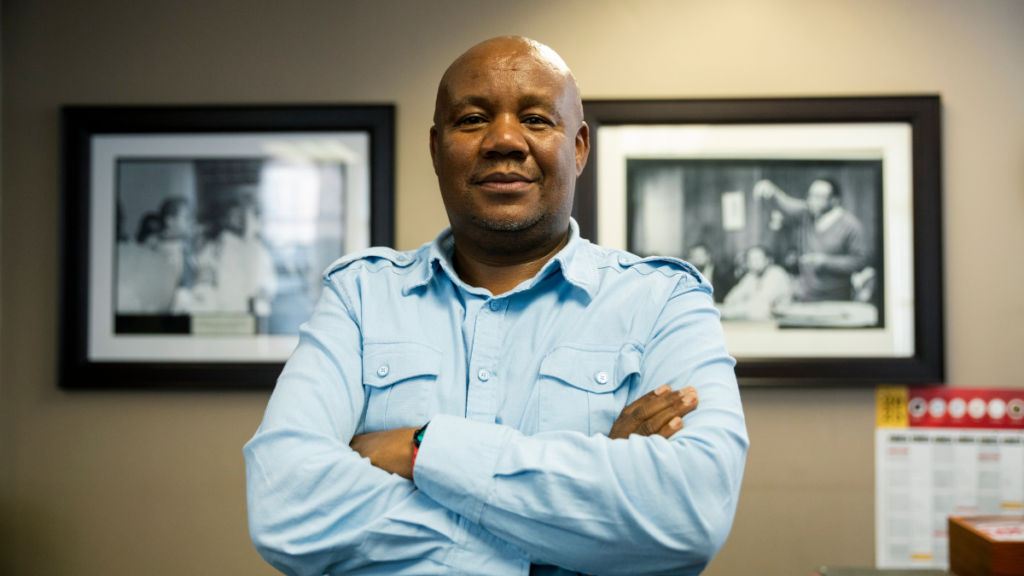
When Mpho Phakedi walks into a room, he brings with him the weight of history, not just his own, but that of an entire movement that dared to dream beyond the dust and danger of the mines.
As the current General Secretary of the National Union of Mineworkers (NUM), Phakedi isn’t just a labour leader. He is a steward of a legacy carved out in picket lines, forged in strikes, and sustained through a bold vision that believed mineworkers could own their future.
“In my role,” he says, “I’m responsible for the day-to-day operations of the union. I work like an executive manager in any other organisation, coordinating, overseeing, planning, and ensuring that all parts of our machinery are working.” But unlike the average executive, his mandate stretches far beyond budgets and minutes. It extends into memory, justice, and a future still being built.
In 1995, just a year after democracy bloomed in South Africa, the NUM launched a daring idea. It birthed the Mineworkers Investment Trust (MIT), seeded with borrowed capital of R3 million, and soon after, the Mineworkers Investment Company (MIC).
These were not vanity vehicles. They were, as Phakedi insists, “instruments of transformation,” designed to ensure that mineworkers did not remain trapped at the bottom of the economic pyramid in the new South Africa.
Over the past 30 years, the two entities have grown into formidable forces in black economic empowerment.
MIC alone now manages close to R8 billion in assets. Yet what sets MIT apart is not the financial headline, it is the social dividend.
“The Trust was built with discipline,” says Phakedi. “NUM office bearers were appointed as trustees, but we always maintained a ‘Chinese wall’.
We were clear, when you sit in the MIT boardroom, you do not wear your NUM cap. That governance principle of respect for boundaries, is why MIT still stands today.”
For Phakedi, the numbers are secondary to the lives transformed. Through the JB Marks Education Trust Fund, more than 3,000 young South Africans, children of mineworkers have walked onto graduation stages. Some are doctors. Others are lawyers.
A great many are engineers, once unimaginable in families where fathers barely had access to schooling.
He tells the story of one young woman from the University of Pretoria whose father, a mineworker, had passed away.
She had no idea that the Trust would still support her studies. “She came to thank us with tears in her eyes,” Phakedi recalls. “This is what it means when we say we are a union of the people, not just for the people.”
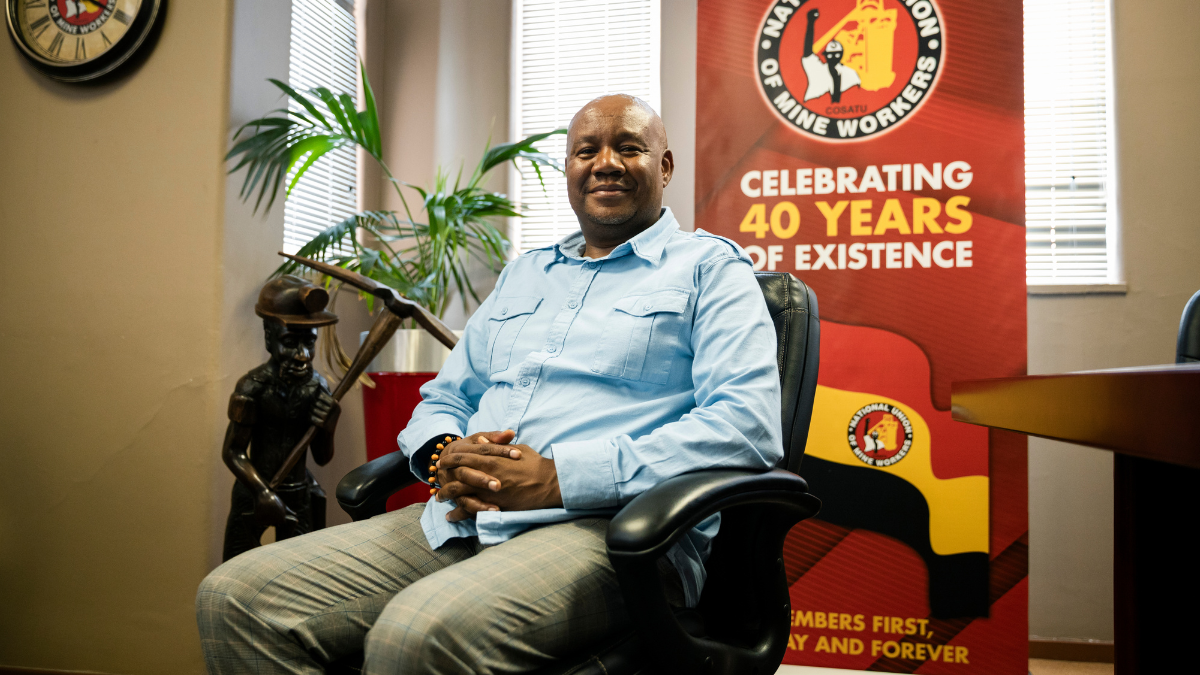
Another story etched into his memory is of a former bursary recipient who returned, years later, with her own children.
“She told me, ‘I am here because of NUM. I am raising my family on the back of the education you gave me.’” Phakedi pauses. “You don’t forget moments like that.”
The legacy of MIT is also rooted in tragedy. The 1987 miners’ strike, followed by sweeping retrenchments, left many workers destitute.
The NUM responded not just with protest but with solutions. They launched the Mineworkers Development Agency (MDA) to retrain and reintegrate former miners into new economic lives, farming, small business, trades.
“We realised,” says Phakedi, “that our work couldn’t end at the mine gate. We had to help our comrades start again. MIT funded that recovery process. It wasn’t charity, it was solidarity.”
Today, that thinking still informs every programme MIT supports. It’s about more than money. It’s about dignity.
As the breadwinners of their families, mineworkers have always carried the hopes of multiple generations on their shoulders. Phakedi believes this is where MIT and MIC have quietly reshaped South African life.
“Many of our graduates are the first in their families to get a degree,” he explains. “And when they succeed, they uplift entire households.”
He shares how some graduates have returned to fund scholarships of their own, while others serve on boards, in government, or as professionals in rural clinics and urban engineering firms. “These are the children of mineworkers,” he says with pride. “Our people.”
Phakedi is unequivocal, what has made MIT different is the integrity of its design. “From the beginning, we separated political power from financial oversight. That’s how you build a lasting institution.”
He warns that too many empowerment initiatives have failed because they lacked discipline, or were used for personal gain. “If you want transformation that lasts 30 years, it must be rooted in purpose, not personality.”
His admiration for the original architects of MIT is clear. “They were ahead of their time. They built something for generations they would never meet. That’s what true leadership is.”
More than just a trade unionist, Phakedi speaks as a social thinker. He challenges the modern tendency to box unions into narrow labour issues.
“NUM has always been a revolutionary union,” he says. “We don’t just bargain for wages, we fight for education, for housing, for dignity.”
This broader vision of “social unionism” underpins everything MIT supports. Whether it’s small business development or training programmes at the Elijah Barayi Memorial Training Centre, the goal is to give mineworkers and their families tools to thrive in every sphere of life.
“We want tomorrow’s mine bosses to come from today’s mineworkers’ homes,” Phakedi says. “That’s transformation.”
As MIT and MIC look to the next 30 years, Phakedi is both cautious and hopeful. He sees threats such as complacency, leadership drift, political interference. But he also sees possibilities, expansion into new sectors, more scholarships, even global partnerships.
“We started with R3 million. Today, we’re managing billions. But our job is not done. We must scale our impact. We must keep asking. How many more lives can we change?”
In a political moment where Broad-Based Black Economic Empowerment is being questioned, and where trust in public institutions is fraying, the story of MIT stands as a quiet counterpoint.
It is not a perfect story, but it is an honest one, rooted in vision, governance, and the enduring belief that ordinary workers can build extraordinary futures.
Phakedi is clear-eyed about the stakes. “Our people are still waiting for their share of democracy’s promise. Through MIT, we’ve shown it’s possible to deliver that promise, brick by brick, bursary by bursary, family by family.”
And with that, he returns to his work, not just as a union leader, but as a custodian of a dream still unfolding.


















 Loading ...