

What to expect for interest rates in South Africa next week


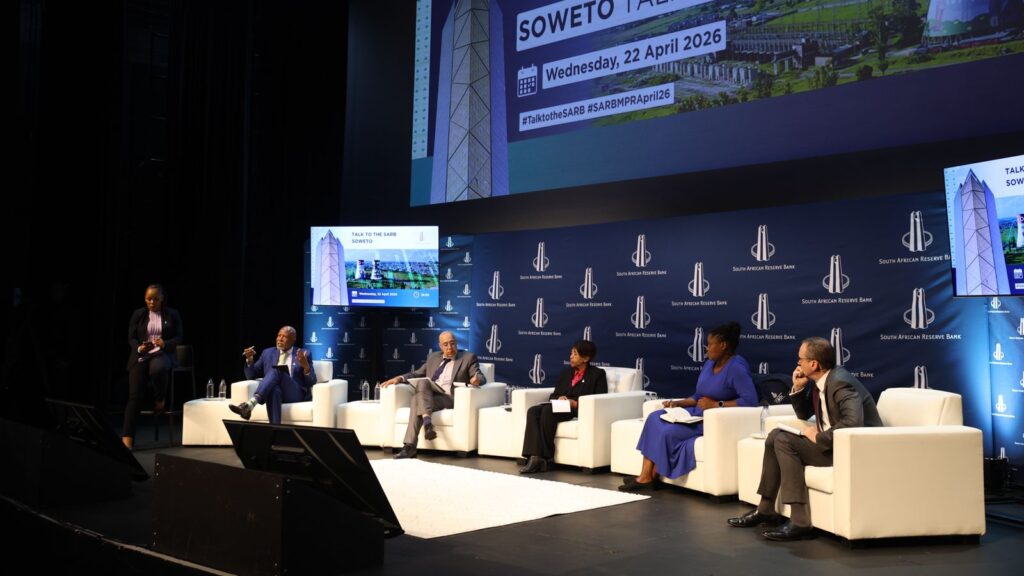
Bank of America believes that the South African Reserve Bank (SARB) will hike interest rates in its July Monetary Policy Committee (MPC) meeting amid heightened inflation.
America’s second-largest bank expects CPI to rise to 4.7% in June, followed by 4.2% in July, driven by fuel and rental inflation. This would be well above the SARB’s new 3% target.
Despite a 9% increase in electricity tariffs, economist Tatonga Rusike believes that lower fuel inflation will help bring down CPI to 4.2%.
Over the medium term, Rusike believes that CPI will peak at 4.7% in 1Q27, before decelerating again. Headline inflation is thus expected to average 4.1% in 2026.
Over the medium term, we see CPI peaking 4.7% in 1Q27 before decelerating again. Bank of America estimates headline inflation to average 4.1% in 2026, down from 4.3% previously.
“We expect headline inflation to remain above the SARB’s preferred upper end, while both goods and services inflation are likely to stay above the upper end of its 3-4% tolerance range.”
“Meanwhile, we forecast core inflation to remain unchanged at 3.8% y/y in June, before gradually rising to around 4.0%, broadly in line with the timing of the projected headline inflation peak.”
Bank of America thus expects the MPC to hike interest rates by 25 basis points at its July meeting, following the May repo rate hike to 7.0%. The MPC is then expected to pause.
Rusike does not believe that the call to hike will be unanimous across the MPC’s six members, with the last vote split 4-2. Another close call between a hike and a hold is expected for July.
“The case for a hold has strengthened somewhat because oil prices have fallen after the mid-June Iran ceasefire.”
“But we lean towards a hike because inflation expectations have moved higher and inflation remains above the SARB’s comfort range.”
While Bank of America expects a hike, not all financial service providers agree. Investec Chief Economist Annabel Bishop believes that the SARB will keep the rate steady at its July MPC meeting.
However, other economists align with BofA’s views.
Goldman Sachs is also anticipating a hike, while Reserve Bank Governor Lesetja Kganyago has also signalled further tightening, given the recent rise in inflation expectations.
Not dependent on the United States

While South African interest rates are often viewed through the lens of the US Federal Reserve, Rusike believes the SARB will not follow the US path.
Higher interest rates in the United States would, in theory, lead to an appreciation of the US dollar as capital flows into the world’s largest economy. The SARB would then respond by hiking rates.
While Bank of America’s economists expect the Fed to implement 75-basis-point hikes, history suggests there is little reason to expect the SARB to match those policies one-for-one.
“The broader lesson from previous cycles is that the SARB’s policy decisions are primarily driven by domestic inflation dynamics and inflation expectations, rather than by the Fed,” said Rusike.
The Fed is widely expected to hike rates three times between September and December after a prolonged hold cycle.
As US monetary policy plays a central role in global financial conditions, questions remain on whether the SARB would need to follow suit.
“We believe the answer is no. Although there is a strong historical relationship between the Fed funds rate and the SARB policy rate, the correlation masks important differences in timing and magnitude.”
“The experience of recent cycles suggests that while the two central banks often move in the same direction, the SARB is not compelled to mirror Fed actions mechanically.”
The SARB has historically moved ahead of the Fed, especially during inflationary episodes, while also delivering a smaller cumulative tightening cycle.
While both central banks started cutting rates in September 2024, the cycles were not perfectly synchronised thereafter, with the SARB cutting by 150 basis points and the Fed by 175.









 Loading ...