

Here’s how many South Africans are in hospital, isolation or ICU due to the coronavirus


The Department of Health has provided more data on the coronavirus in South Africa as well as its current testing patterns.
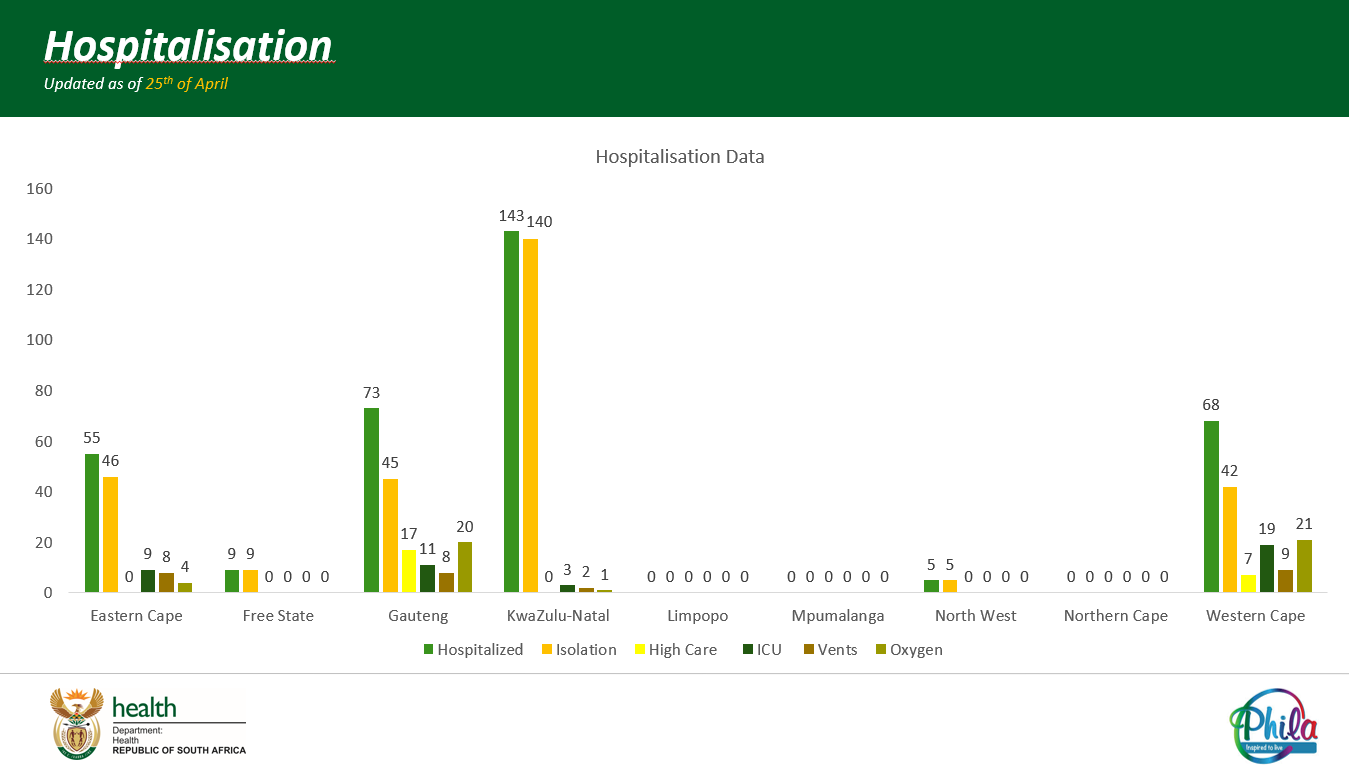
In a parliamentary presentation on Monday (27 April), the department indicated that just over 353 South Africans have been hospitalised due to the coronavirus as of this weekend (25 April).
The majority of these patients are in KZN (143), followed by Gauteng (73) and the Western Cape (68). The province also reported the most number of cases when it comes to patients who have gone into isolation.
By comparison, the Western Cape has reported the most number of cases where patients have required some form of machine assistance – either through ventilators or oxygen. It is also the province with the most patients in ICU.
However, it is closely followed by Gauteng which currently has the most patients in a ‘high-care’ hospital facility.
The data below reflects the picture as of 25 April. The health department has since updated the reported figures, noting 4,793 confirmed cases and 90 deaths.

The Department of Health also provided more information on its testing rates as well as the fatality rates across the country’s provinces.
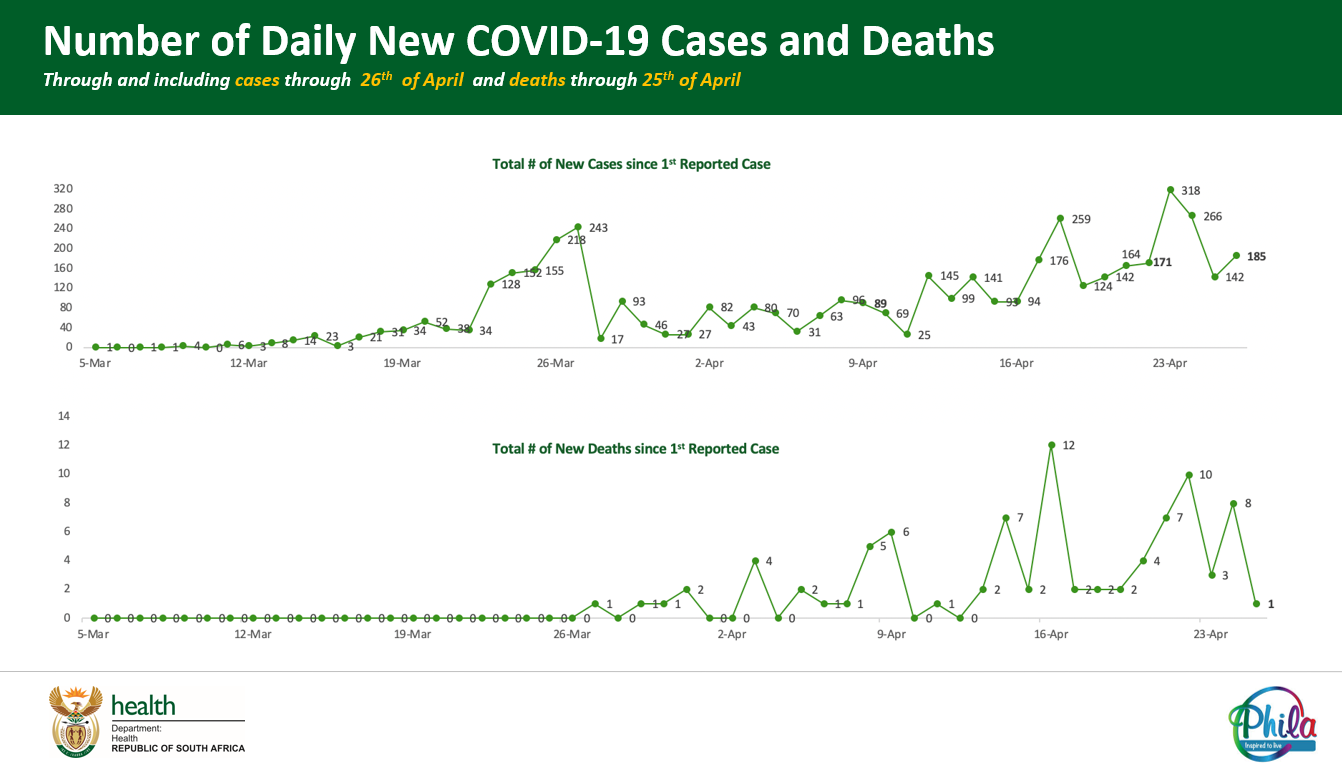
This data is reflective of reported cases up to Sunday (26 of April) while the deaths are reflective of data up until Saturday (25 April).
Health minister Zweli Mkhize told the parliamentary joint committee that Gauteng and the Western Cape provinces remain the highest infected provinces with the virus.
He added that the Free State Province has been overtaken by the Eastern Cape when it came to infections. He said funerals and correctional services (prisons) are the main sources of the spread of the virus.
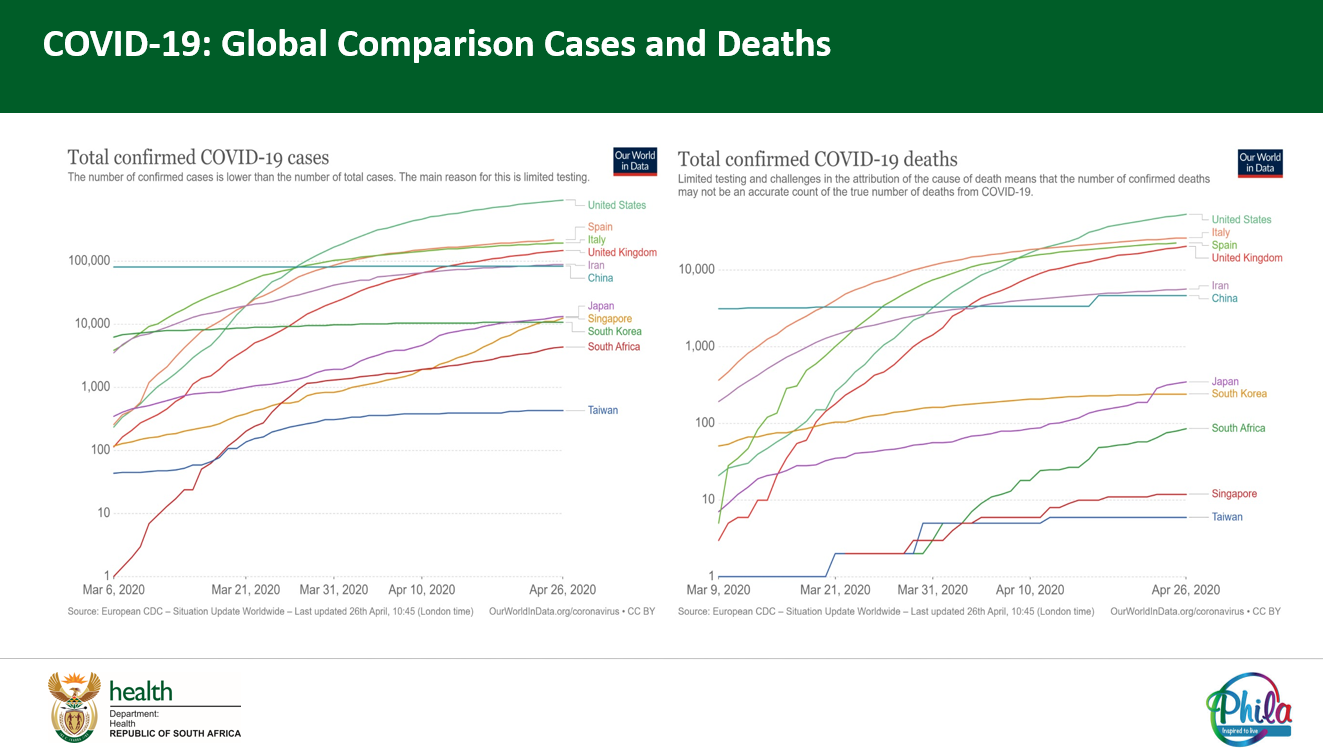
Acting director-general of the Department of Health, Dr Anban Pillay, noted that South Africa is still very low in connection with infections and deaths when it compares to other African countries.
He attributed this to the effectiveness of the national lockdown and the high degree of adherence by South Africans to all the other strategies.
Despite this success, he noted that the rate of infections was reported as rising in the Eastern Cape, KwaZulu-Natal and Western Cape provinces, and in the metros in those provinces – the City of Ethekwini, Nelson Mandela Metro, Buffalo City and the City of Cape Town.
These areas have been identified as Covid-19 hotspots – epicentres of the virus and the big drivers of the pandemic.
To combat this, Pillay told the committee that the Department of Health is accelerating the implementation of strategies to fight the coronavirus in these areas.
This will include door-to-door testing of the people, while he said the number of tests being concluded will continue to increase, he said.
Read: The big problem with South Africa’s new Level 4 lockdown restrictions for businesses


















 Loading ...