

Two developments coming to Cape Town that require enough electricity to power 130,000 homes


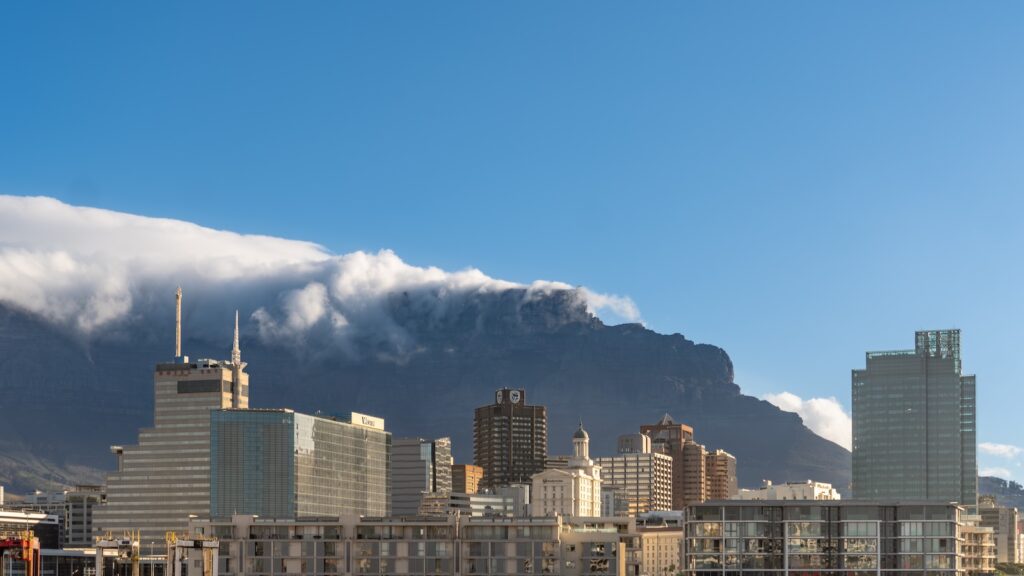
Two new large data centres are set to be built in Cape Town, covering over 120,000 square meters—approximately the size of 17 full-sized soccer fields placed side by side.
The Municipal Planning Tribunal has approved the construction of these centres, although the decision has faced backlash from groups concerned about the significant electricity and water requirements.
Opponents estimate that traditional cooling methods, specifically water-based evaporative cooling systems such as cooling towers and water chillers, could require approximately 4.4 billion litres of water annually.
In addition to large water demand, the new developments are expected to need around 174 megawatts of power.
According to Eskom’s guidelines, each megawatt (MW) of grid capacity can supply approximately 650 to 750 average South African homes at any given time.
Based on the Eskom baseline of 750 homes per MW, the 174 MW required to run the data centres could continuously power about 130,000 average homes.
For lower-income households or those with low energy consumption, 174 MW could easily keep the lights on in over 200,000 to 250,000 homes simultaneously.
The applications reportedly lacked specific details regarding water usage, electricity supply, diesel generators, pollution, and noise levels.
Four members of the tribunal voted in favour of the plans, while one voted against them.
The projects will still require additional approval through the Site Development Plan and building plan processes.
A data centre is a secure physical facility filled with networked computer servers, storage drives, and networking equipment.
It acts as the backbone of the internet and the digital economy, enabling organisations to process, store, and distribute large volumes of data in real time.
Data centres are responsible for all digital processes used daily, such as WhatsApp, email, banking, and AI chatbots.
Data centres as digital clouds

Data centres need cooling systems, similar to how a computer activates its fan after running for a long time.
It is this cooling that requires large amounts of electricity.
University of Cape Town CITANDA Associate and Senior Lecturer, Pitso Tsibolane, told Cape Talk that, in addition to high usage of both water and electricity, the data centres would also be responsible for high carbon emissions.
“Because we are cooling down a massive amount of IT infrastructure, the water actually evaporates,” said Tsibolane.
He explained that, unlike many other industries where water is drawn in and sometimes returned, albeit slightly contaminated, for recycling, in this case, the water actually disappears.
Tsibolane explained that while electricity generation capacity could be increased, rainfall cannot be manufactured or created. Once the water evaporates, it is gone.
Tsibolane explained that this is a problem because Cape Town is considered a water-scarce area.
Although the impacts of the data centres may be significant, Tsibolane highlighted that these centres also offer economic benefits.
“I’m concerned about how technology is used for development, and I believe that South Africa should be within the AI economy. South Africa should play a part within the digital economy and the global digital economy,” said Tsibolane.
Tsibolane said that South Africa should be thinking about how to enter this ecosystem as a participant with agency, setting terms by demanding transparency.
He explained that in making these decisions, it is important to involve the local communities and allow them to project their thoughts and fears around the development, and ensure their voices are included.
Tsibolane emphasised the importance of understanding that data centres represent a new business model.
He said that people should not hold the same assumptions that apply to traditional industries, which are well known for their usage and capacity.
According to Tsibolane, it is very important to note that the data centre business is capital-intensive rather than labour-intensive.
















 Loading ...