

How much it costs to drive South Africa’s most popular cars after the latest petrol price hike


South African motorists are still paying over R20 per litre to fill up their cars this month, with the cost of diesel and petrol climbing by around R0.30 and R1.27 per litre, respectively, on Wednesday (1 March 2023).
Fuel prices have increased consecutively over the past two months after the brief reprieve in January, where petrol and diesel prices came down by as much as R2.06 and R2.80 per litre, respectively.
According to the Department of Mineral Resources and Energy, the increases for March are mainly attributable to rising international petroleum prices, while the rand depreciated against the US Dollar during the period under review, on average, compared to the previous period.
As of Wednesday, inland 95 octane petrol costs R22.95/l, while at the coast, it costs R22.30/l, factoring in the slate levy and other costs.
These increases are, on average, over R1 more expensive than the corresponding petrol prices in March 2022 – the first time in South African history inland petrol rose above R21 a litre, and by a significant margin.
The National Association of Automobile Manufacturers of South Africa (Naamsa) noted that the rising costs of fuel and other essentials, such as food, are not only impacting the average South African but also negatively impacting the automotive industry, as many South Africans stave off buying new cars during these prevailing economic conditions.
“The South African Reserve Bank’s decision to increase interest rates for the eighth time in a row is a reminder that South Africa, like much of the world, is still in the midst of an increased cost-of-living predicament,” it said.
“The current inflationary environment means consumer spending and household discretionary income continue to shrink with increases in fuel costs, electricity costs and many other essential costs that directly impact on vehicle sales decisions of our motorists,” it added.
According to Naamsa’s New Vehicle Sales report for February 2023, although domestic vehicle sales increased year-on-year, momentum slowed to 2.6% compared to the 4.8% experienced in January.
The table below shows the latest pump prices as of March 2023.
| Inland | February Official | March Official |
|---|---|---|
| 93 Petrol | R21.38 | R22.65 |
| 95 Petrol | R21.68 | R22.95 |
| 0.05% diesel (wholesale) | R21.32 | R21.63 |
| 0.005% diesel (wholesale) | R21.41 | R21.72 |
| Illuminating Paraffin | R15.84 | R15.97 |
| LPGAS (p/kg) | R33.46 | R38.68 |
The table below shows how much you pay to fill up your car’s tank with 95 and 93 unleaded inland in March compared to February 2023.
| Tank size | 93 unleaded | Added cost from February | 95 unleaded | Added cost from February |
|---|---|---|---|---|
| 45 litres | R1 019 | +R57.15 | R1 033 | +R57.15 |
| 60 litres | R1 359 | +R76.20 | R1 377 | +R76.20 |
| 80 litres | R1 812 | +R101.60 | R1 836 | +R101.60 |
While it is impossible to accurately track exactly how much petrol you will consume due to traffic and road quality, it is possible to get a rough estimate of how these petrol prices will impact your current petrol allowance based on manufacturer estimates.
Below, BusinessTech looks at how much it will now cost you to travel 100km right now in some of the country’s best-selling cars.
Toyota Hilux 2.4GD-6 double cab Raider
- 7.1 litres/100km*
- R151.37/100km

Ford Ranger 2.0 SiT double cab
- 6.9 litres/100km*
- R147.10/100km

Isuzu D-Max 1.9TD double cab
- 7.3 litres/100km*
- R155.64/100km

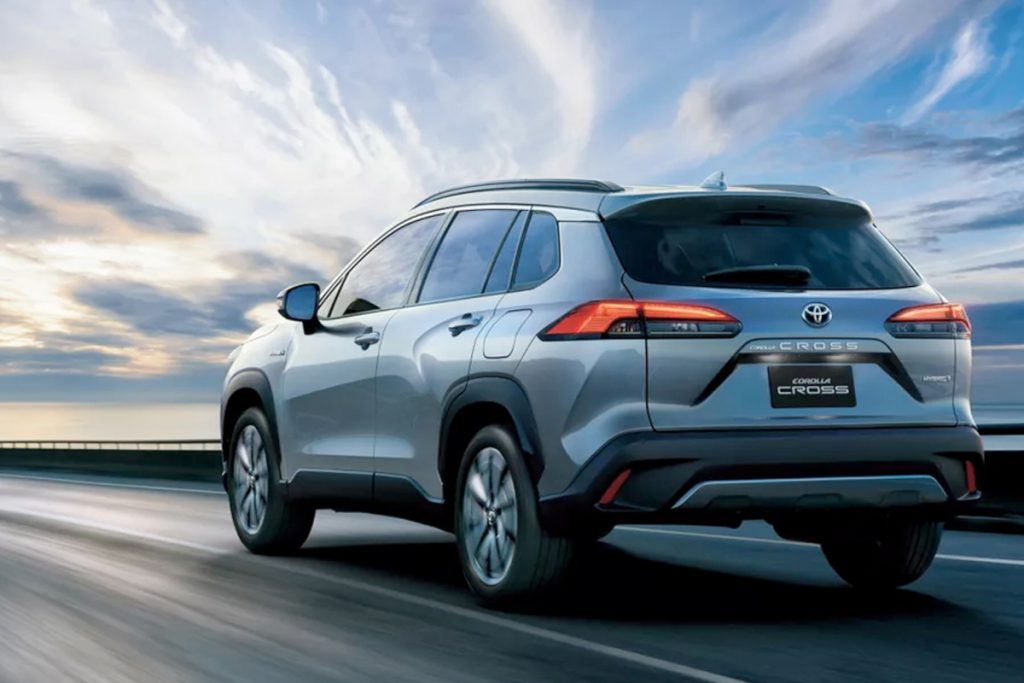
Toyota Corolla Cross 1.8 Xi
- 6.8 litres/100km
- R156.06/100km

VW Polo Vivo hatch 1.4 Trendline
- 5.7 litres/100km
- R130.82/100km

Suzuki Swift 1.2 GA
- 4.9 litres/100km
- R112.45/100km

*Indicates a car has a diesel engine.
All prices are estimates based on the manufacturer’s average fuel consumption per/100km.
The manufacturer’s least expensive double-cab, Crossover, and hatchback models were considered in each case. 95 octane (R22.95) and 0.05% diesel price (R21.32) as of March 2023 were used for comparison purposes.















 Loading ...