

South Africa’s R100 billion private smart city


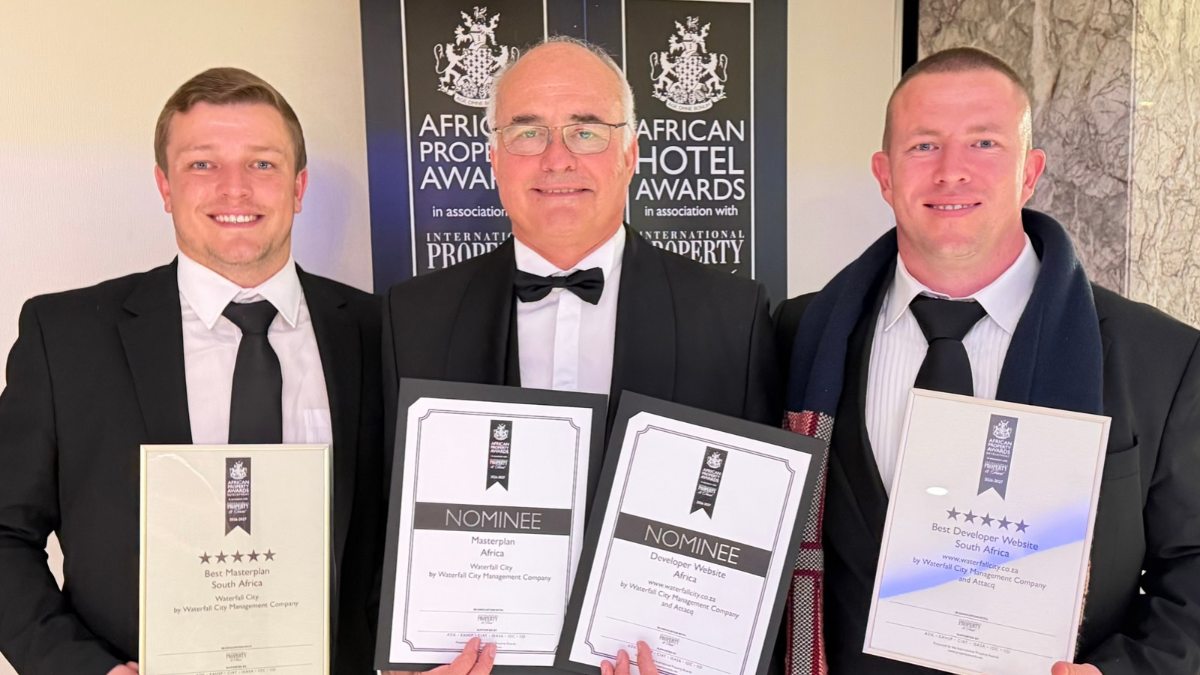
Waterfall City Management Company (WCMC), which oversees property, asset, and operational management of Waterfall City, has received two prestigious international awards.
WCMC was named Best Masterplan South Africa for 2026-2027 at the International Property Awards, Africa Chapter, marking the third consecutive year it has received this award.
This award recognises the development’s innovative urban design and its integrated approach to creating a smart, sustainable, and people-focused city.
Waterfall City also won the award for Best Developer Website South Africa for 2026-2027, for the third time.
This award highlights the website’s unique user experience, which allows visitors to explore the Waterfall City precinct virtually and showcases the innovation and creativity behind its design.
WCMC CEO Willie Vos said that Waterfall City won the Best International Developer Website 2023-2024 award and is striving for top honours again this awards season.
This accolade was presented to both WCMC and Attacq, Waterfall City’s strategic development partner.
The awards were presented during a ceremony held at The Royal Lancaster London hotel in October 2026.
This recognition further positions Waterfall City for the Best Masterplan Africa award, which it has won for the last two consecutive years.
“Receiving international recognition for our city masterplan and website demonstrates that we are living our brand values of innovation, passion, and excellence in everything we do, as we continue to grow Waterfall City into a place where people love to be,” said Vos.
“What we are achieving in Waterfall City would not be possible without our brilliant team, partners and stakeholders supporting our vision, and I would like to thank and congratulate everyone involved on these achievements.”
176-year-old land inspired by a waterfall
The land now known as Waterfall City was originally a farm established in 1850, named “Waterval” by surveyor Peter McDonald, who was inspired by a small waterfall on the property.
In 1888, McDonald’s land survey plan was approved, and the farm was registered a year later, with the title deed signed by President Paul Kruger in 1889.
The first documented owner was Miss Pimond, who sold the land to the Gibson brothers, British settlers who arrived around 1871.
They operated the Red Star Line stagecoach service, transporting passengers and goods between major settlements.
They also raised cattle on the farm, establishing a stopping point for travellers, which was named “Halfway House.”
In 1934, Moosa Ismail Mia purchased the farm for £16,000 and registered it under Witwatersrand Estates Limited due to land ownership restrictions.
At this point, the South African Rand did not exist, yet South Africa used the South African pound, which was kept at a direct 1:1 parity with the British pound.
By 1985, the land’s strategic location prompted discussions about its development. In 1996, planning for Waterfall City began in collaboration with real estate investment trust Attacq.
In 2008, Attacq gained the rights for commercial development. This allowed for the creation of the central business district, the Mall of Africa, and the office towers that define Waterfall City’s skyline.
Today, Waterfall City is a mixed-use urban hub featuring commercial and residential spaces, including the Mall of Africa and the headquarters of companies such as PwC.
Over 8,000 homes have been completed, and Waterfall City said that long-term master plans target a total of 21,000 homes.
About 40,000 residents currently live in the precinct, while around 25,000 commuters work there each day.
An investment of R3 billion was made in infrastructure, which includes roads, utilities, a dedicated lake treatment facility, and a security network that has over 2,000 monitored facial-recognition cameras.
The current municipal valuation of Waterfall City is estimated to be close to R50 billion, generating about R6.5 billion in annual GDP.
All properties within Waterfall City operate on a leasehold model rather than freehold ownership.
One of the most notable projects, Balwin Properties’ Munyaka development, is valued at over R10 billion and follows this model.
The leasehold structure is based on 99-year agreements, which ensure that while buyers do not own the land outright, they have secure long-term lease rights.
In 2023, Waterfall City said that once the entire city is complete, its estimated developed value would sit at around R100 billion.














 Loading ...