

Telkom loses regulatory head


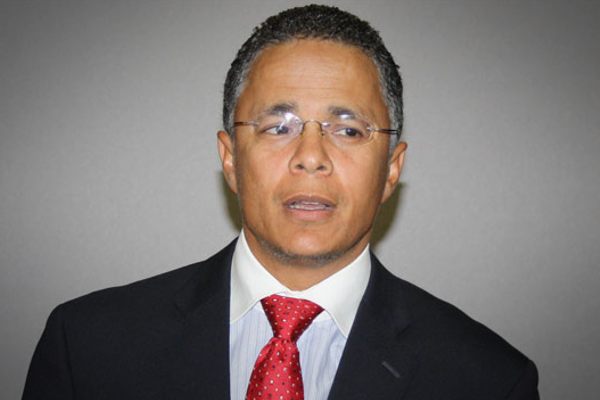
Telkom has confirmed that its head of regulatory affairs, Andrew Barendse has resigned from the company.
His resignation is effective immediately (Friday, 30 August 2013).
Barendse joined Telkom in 2006 as executive for government and external affairs. He was promoted to his current position in 2007.
As group executive he was responsible for, among other things, regulatory strategy and analysis, compliance, pricing and costing, as well as protecting Telkom’s regulatory rights.
“Steps have been taken to ensure continuity in Telkom’s engagement with all its stakeholders in the regulatory environment. The process of filling the position vacated by Dr Barendse will begin shortly and an announcement will be made at the appropriate time,” Telkom said.
In the past, Barendse has been key to Telkom’s defense against regulatory action by Icasa.
He has been vocally opposed to local loop unbundling (LLU), going as far as to caution against seeing LLU as a remedy for the ills affecting broadband in South Africa.
In particular, in 2011 Barendse said that there is no correlation between LLU and increasing access to broadband in deep rural areas, adding that LLU is pro-rich and anti-poor.
Industry speculation indicates that Barendse may be heading to Vodacom in a regulatory position.
That was then, this is now
Since taking the reins at Telkom in April 2013, CEO Sipho Maseko has been very vocal about the incumbent’s desire to change and rectify its past mistakes – a position vastly different from Barendse’s adamant defense of Telkom’s past business practices.
Speaking at the troubled operator’s results presentation in Rosebank in June, Maseko admitted that a big point for the company is taking accountability.
“We want to assure you that we will not be repeating the mistakes of the past. We’ve had a bit of a tough time over the past few years. We have a number of issues to address,” he said.
Telkom once again made its intentions to change known at the recent settlement ruling at the Competition Tribunal, where a settlement was drawn between Telkom and Competition Commission, which would see the incumbent telco pay a R200 million fine and make the telecoms market more competitive moving forward.
According to Maseko, reaching the settlement allows the telco the opportunity to move beyond its legacy complaints and litigation and focus on aspects of its business that are critical to its future success.
Local loop unbundling
In July, rumours emerged from industry sources saying that Telkom has plans to set up a legal entity known as a special purpose vehicle (SPV) to which it will sell its copper cable infrastructure.
According to the speculation, the sale of the copper network won’t include any fibre, or civil infrastructure such as ducting, exchanges, or street-side cabinets – therefore indicating that Telkom is getting ready to allow others direct access to its copper, which is a form of local loop unbundling (LLU).
The Independent Communications Authority of South Africa (Icasa) announced in June that it has set a new deadline for the publication of Local Loop Unbundling (LLU) regulations: 4 March 2014.
In late August, Minister of Communications, Yunus Carrim indicated that LLU may still be a while off, while relevant parties – including Icasa and Telkom – work to resolve persistent issues.
“I’m making no commitment it’s going to be resolved overnight, but what I can commit to is that we’re going to ask the parties concerned to try to settle this reasonably soon,” he said.
“Insofar as our (government’s) role is concerned in providing policy directives, that’ll come soon,” he said.
More on Telkom, the DoC and regulation
Carrim on LLU: wait a little bit longer
Local Loop Unbundling regulations get new deadline

















 Loading ...