

Two-metre social distancing rule based on ‘outdated’ science – droplets can travel up to 8 metres


A new study by the British Medical Journal (BMJ) finds that the two-metre social distancing rule around Covid-19 is based on outdated science.
The peer reviewed publication said that high-risk environments including nightclubs and bars should have stricter distancing rules.
Social distancing helps reduce the risk of a virus, and is one of the cornerstones of preventing the spread of Covid-19 in South Africa, along with wearing a mask, and proper sanitising.
“We know that the most effective defence against this virus is also the simplest,” said president Cyril Ramaphosa. “Washing our hands regularly, wearing a face mask, keeping at least a 1.5 metre distance from other people, avoiding touching our faces with unwashed hands and cleaning surfaces we touch regularly.
“It is through diligently and consistently observing these basic practices that we will overcome this pandemic.”
According to BMJ, smaller airborne droplets containing Covid-19 may spread up to 7-8 meters from an infected person.
“Rules that stipulate a single specific physical distance (1 or 2 metres) between individuals to reduce transmission of SARS-CoV-2, the virus causing Covid-19, are based on an outdated, dichotomous notion of respiratory droplet size,” it said.
“This overlooks the physics of respiratory emissions, where droplets of all sizes are trapped and moved by the exhaled moist and hot turbulent gas cloud that keeps them concentrated as it carries them over metres in a few seconds.”
The journal noted that in eight of 10 studies in a recent systematic review showed horizontal projection of respiratory droplets beyond 2 metres. In one study, droplet spread was detected over 6-8 metres. “These results suggest that SARS-CoV-2 could spread beyond 1-2 metres in a concentrated packet through coughs or sneezes.”
Rules on distancing should reflect the multiple factors that affect risk, including ventilation, occupancy, and exposure time, the journal said. This would impact areas including bars, clubs, and gyms.
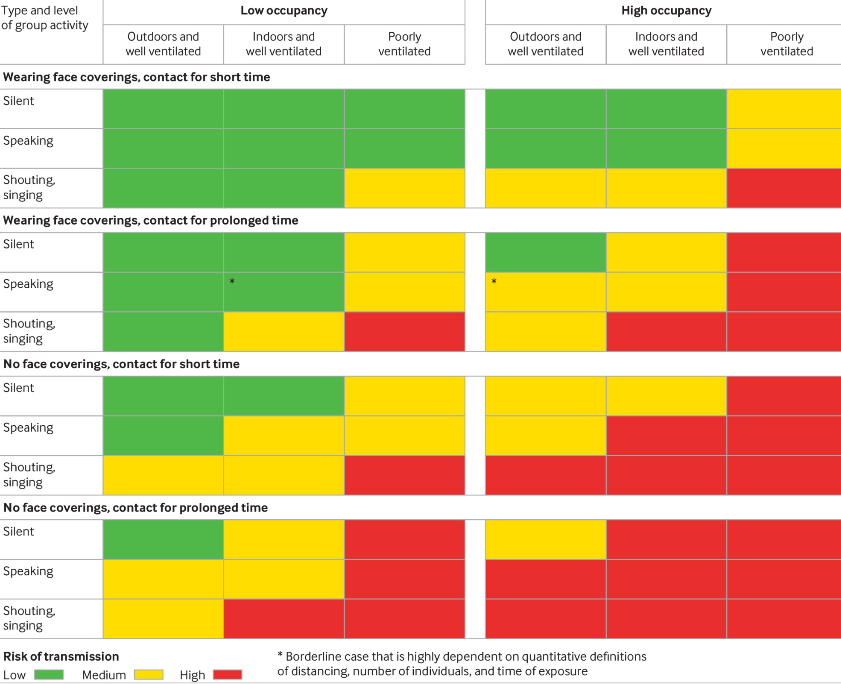
BMJ said that ventilation, specific patterns of airflow, and type of activity are important factors to consider. “Viral load of the emitter, duration of exposure, and susceptibility of an individual to infection are also important,” it said.
“Instead of single, fixed physical distance rules, we propose graded recommendations that better reflect the multiple factors that combine to determine risk. This would provide greater protection in the highest risk settings but also greater freedom in lower risk settings, potentially enabling a return towards normality in some aspects of social and economic life,” the publication said.


















 Loading ...