

The economics of slavery


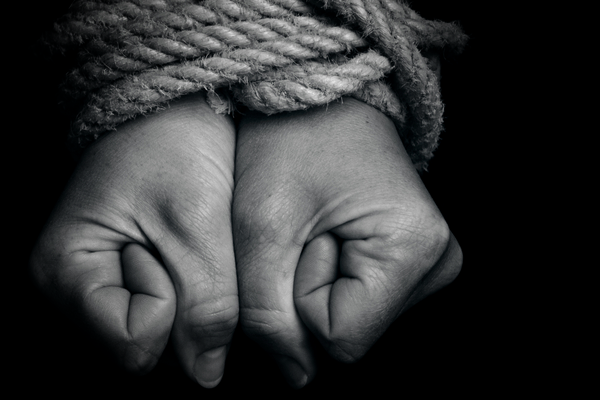
A new report by the International Labour Organization (ILO) says that modern slavery is generating as much as $150.2 billion in illegal annual profits.
In its report, Profits and Poverty: The Economics of Forced Labour, the ILO estimates that these profits are as much as three times more than previously estimated.
Over a third of the profits – $51.2 billion – are made in forced labour exploitation, the ILO said, including nearly $8 billion generated in domestic work by employers who use threats and coercion to pay no or low wages.
“Globally, two thirds of the profits from forced labour were generated by commercial sexual exploitation, amounting to an estimated US$ 99 billion per year,” the group said.
The profits across all sectors are highest in Asia ($51.8 billion) and Developed Economies ($46.9 billion). According to the ILO, this is mainly due to the high number of victims in Asia and the high profit per victim in Developed Economies.

Annual profits from forced labour per region
The ILO estimates that there are about 21 million people who are victims of forced labour, human trafficking and modern slavery – the majority of which (55% or 11.4 million) are women or girls.
Women and girls were primarily found to be captive in commercial sexual exploitation and domestic work, while men and boys were primarily in forced economic exploitation in agriculture, construction, and mining, the ILO said.
While the bulk of these people are held captive in the forced labour market – agriculture, construction, manufacturing, mining, et al – the biggest annual profits are made off of the sexual exploitation trade at $21,800 per victim.
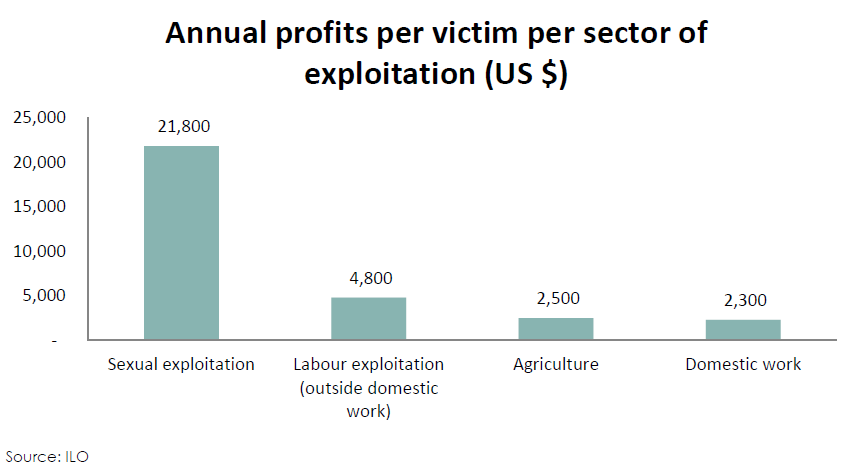
Annual profits per sector
Annual profit per victim is highest in the Developed Economies ($34,800 per victim), followed by countries in the Middle East ($15,000 per victim), and lowest in the Asia-Pacific region ($5,000 per victim) and in Africa ($3,900 per victim).
“In Africa, the traditional forms of ‘vestiges of slavery’ are still prevalent in some countries, leading to situations where whole families (adults and children, men and women) are forced to work the fields of landowners in exchange for food and housing,” the report said.
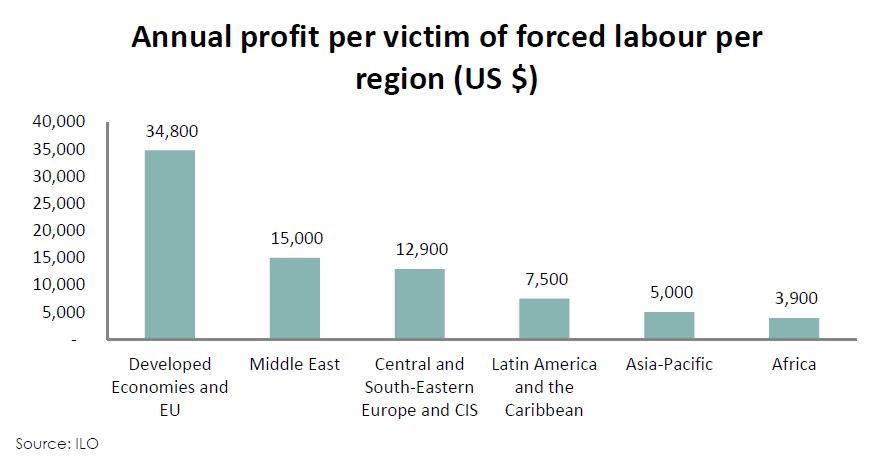
Annual profits per vitim
Measuring the price of slavery
In a previous ILO report, in 2005, the group defined profits as the difference between the average economic value added and the sum of expenditures on wage payments and intermediate consumption – simply put, how much workers are being underpaid, if at all.
In 2009, the estimates were updated to reflect the financial costs workers incurred as a result of being held in forced labour (ie, recruitment fees).
The new estimate (2012) is the aggregation of regional profit figures for three forms of forced labour, namely forced economic exploitation outside domestic work, forced domestic work and forced sexual exploitation.
The estimate does not take into account profits generated by forced labour imposed by state authorities.
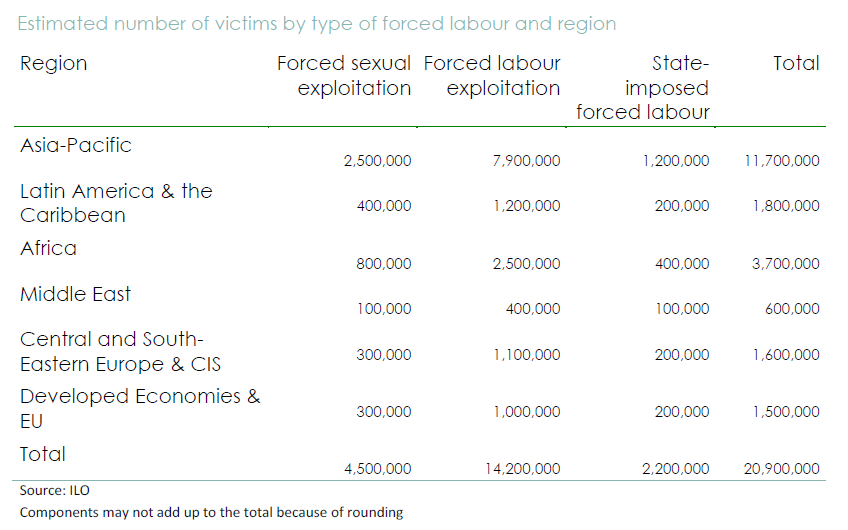
Estimated number of victims per region, per sector
“Forced labour is bad for business and development and especially for its victims. Our new report adds new urgency to our efforts to eradicate this fundamentally evil, but hugely profitable practice as soon as possible.”
“Comprehensive measures are required that involve governments, workers, employers and other stakeholders working together to end forced labour. It is a practice that has no place in modern society and should be eradicated as a matter of priority,” the ILO said.
More on world economics
The world’s biggest drinking nations
The most violent countries in the world
















 Loading ...