

Think twice before installing security cameras inside a complex or estate in South Africa


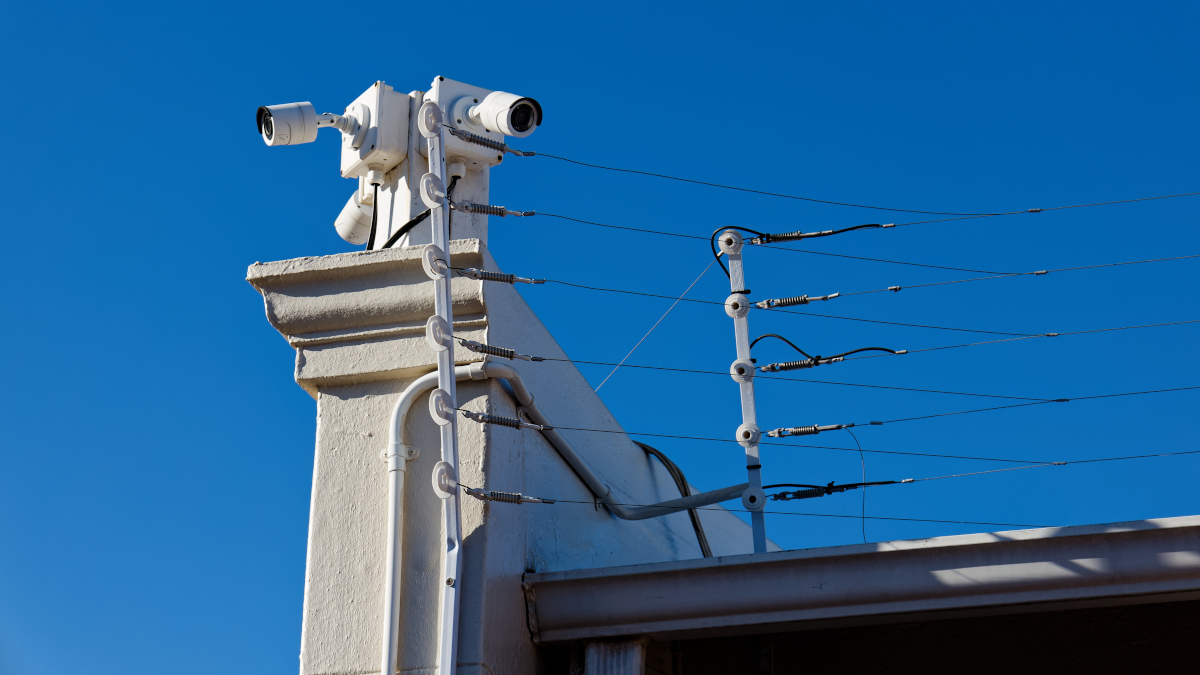
Legal experts have warned residents in complexes, estates and other sectional title communities in South Africa to ensure that the setup of CCTV surveillance—whether private or by a body corporate—is in line with the law.
Even as concerns about safety, security, and crime increase, surveillance systems set up around units, sections, or properties in these residential schemes need to consider the various legal implications of installing cameras.
According to law firm Wright Rose-Innes, South Africa does not have national laws regulating CCTV use in residential settings, but there are several pieces of legislation that guide boundaries.
These relate to the Sectional Titles Act, where applicable, as well as the Protection of Private Information Act (POPIA), and the Constitution more generally.
The Sectional Titles Act plays an essential role in regulating the incidents related to individual ownership in sections or units of a scheme, as well as joint ownership of common property, which are managed by the Body Corporate.
This differentiates between common and exclusive property (sections) within these schemes. Even putting up surveillance cameras in exclusive sections call fall foul of wider laws, if they capture common areas.
When it comes to CCTV cameras that capture common areas, the Sectional Title Schemes Management Act empowers a Body Corporate to make rules that govern the use of common property.
This includes the authority to regulate the installation, location, and purpose of surveillance systems.
“The intrusive nature of surveillance systems necessitates that their installation and operation be authorised and regulated in accordance with the Sectional Titles Schemes Management Act, including the installation of such cameras by owners or residents,” the firm said.
Ideally, trustees should adopt rules that outline where cameras may or may not be placed; whether notification or consent is required; and how footage should be stored and accessed.
These rules must be reasonable and comply with both the Constitution and POPIA.
You have a right to privacy
The Constitution enshrines one’s right to privacy, confirming that everyone has the right to privacy, including the right not to have the privacy of their communications infringed.
It also provides for the right of access to information that is held by another person and that is required for the exercise or protection of any rights.
Personal information in a sectional title scheme is not confined to written or digital records held by the Body Corporate.
It also extends to video footage capturing the movement and behaviour of individuals within the scheme by the cameras of the owners.
While the installation of surveillance systems does not, of itself, constitute a violation of POPIA, it is important to recognise that video and audio recording systems are inherently intrusive by nature as they can capture personal information about individuals.
Because of the intersection of these laws, the firm said that when a surveillance system is installed within a sectional title scheme, the Body Corporate should adopt a comprehensive written privacy policy to ensure compliance with the POPIA and promote transparency among residents.
“The policy should clearly set out the purpose of the surveillance and specify who is authorised to view the footage, and under what circumstances,” the firm said.
For example, trustees and the managing agency’s portfolio manager may access the footage when there is reliable evidence of a security breach or rule violation.
It should also:
- State the number and location of all cameras.
- Indicate the operating times of the surveillance system.
- Outline how long footage will be retained and how it will be securely stored.
- Provide procedures for owners and bondholders to request access to recordings, including timelines for responding to such requests.
- Detail the signage and other measures used to notify owners, tenants, guests, and visitors of the surveillance system and its usual hours of operation.
“While surveillance systems can play an important role in promoting safety, their use in sectional title schemes must be carefully balanced against (Residents’) rights,” the firm said.
“Owners and trustees must understand that surveillance, by its nature, can be legally and ethically sensitive, particularly when it impacts common property or other units.”















 Loading ...