

The province in South Africa that had the biggest increase in unemployment


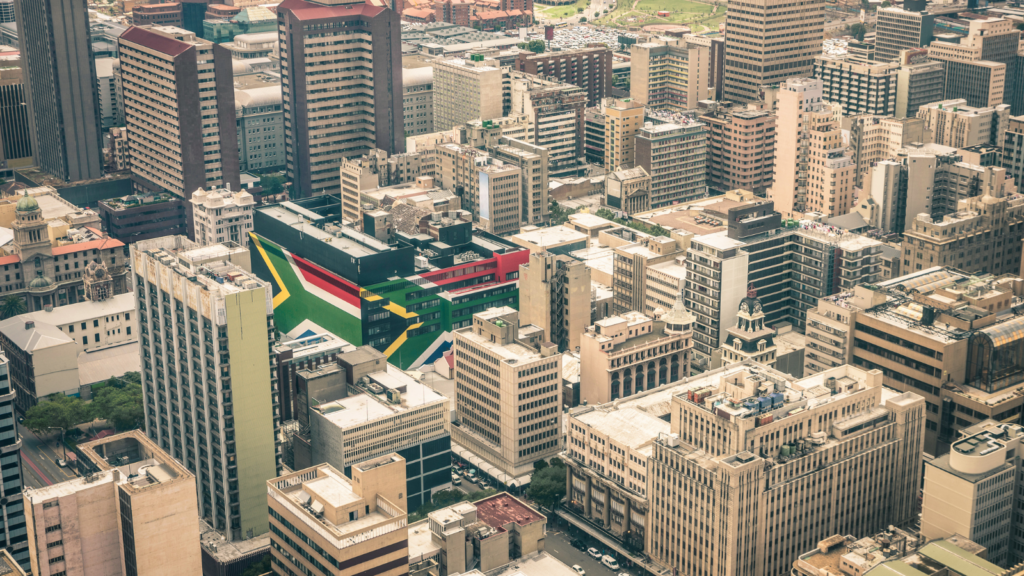
Despite Gauteng experiencing the largest quarter-on-quarter employment declines, it remains the wealthiest province in South Africa.
The Quarterly Labour Force Survey for the first quarter of 2026 indicates a significant decline in the South African job market, with employment decreasing by 345,000 compared to the previous quarter.
This change has pushed the official unemployment rate up to 32.7%, while a broader measure of labour underutilisation has reached 46.3%.
Data from Statistics South Africa shows that the formal sector experienced the most substantial job losses, particularly in the community and social services and construction industries.
According to the statistics, the provinces most affected by quarter-on-quarter decreases in employment were Gauteng (GP), North West (NW), and Mpumalanga (MP).
According to SEO Backlinks data experts, South Africa’s richest province in 2026 is Gauteng, with the latest provincial wealth ranking putting it well ahead of the rest of the country on GDP per person.
The data company analysed the latest annual provincial economic figures, population estimates, and labour market data to rank all nine provinces from richest to poorest, using nominal GDP per capita as the primary measure.
The results show Gauteng leading with R161,729 per person, followed by the Western Cape at R140,104.
At the bottom of the table is the Eastern Cape, with R77,072 per person, despite having a larger total economy than several smaller provinces.
Gauteng has a GDP per capita of R161,729, accounting for 33.2% of the national GDP, with a population of about 15.9 million.
As South Africa’s smallest province by land area, it remains the country’s largest economic engine, driven by Johannesburg and Pretoria, as well as by finance, real estate, business services, and government activities.
The richest provinces in South Africa

According to SEO Backlinks, the Western Cape comes in second after Gauteng, with a GDP per capita of R140,104, contributing 14.2% to the national GDP, and a population of approximately 7.6 million.
Cape Town serves as the anchor of the Western Cape economy, centred around finance, trade, tourism, accommodation, manufacturing, and services.
The Free State is the third richest province, with a GDP per capita of R123,100, accounting for 5.0% of the national GDP, with a population of about 3 million.
Bloemfontein provides the province with a strong base for government and judicial services, while mining, agriculture, trade, and finance remain important sectors.
In the Northern Cape, the GDP per capita is R121,409, which accounts for 2.2% of the national GDP, with a population of about 1.4 million.
Known as the Diamond Province, it ranks high per person due to its mining base being spread across the country’s largest land area and smallest population.
North West has a GDP per capita of R120,856, accounting for 6.3% of the national GDP, with a population of about 4.2 million.
The Platinum Province is largely influenced by mining, alongside contributions from government services, finance, and agriculture.
Mpumalanga has a GDP per capita of R110,366, contributing 7.7% to the national GDP, with a population of about 5.1 million.
The province shares borders with Eswatini and Mozambique and relies heavily on sectors such as mining, manufacturing, construction, trade, and agriculture.
KwaZulu-Natal has a GDP per capita of R95,308, contributing 16.1% to the national GDP and has a population of around 12.3 million.
It is the second-largest provincial economy in the country, but its larger population results in a lower ranking per capita.
Limpopo has a GDP per capita of R86,823, contributing 7.8% to the national GDP, with a population of approximately 6.4 million.
In 2024, Limpopo recorded the highest provincial growth rate, yet it still ranks near the bottom in output per resident.
The Eastern Cape has a GDP per capita of R77,072, contributing 7.6% to the national GDP with a population of approximately 7.2 million.
Although the province has a significant economy and a large population, it ranks last when output is assessed per resident.

















 Loading ...