

Government coming after one group of homeowners, and bad news for bacon lovers in South Africa


The South African rand has been weaker over the past week as investors await South Africa’s inflation data and the next interest rate decision this week.
The rand traded at 16.57 against the dollar on Friday, roughly down 1% from its previous close.
The currency has remained under pressure for most of the week as tensions in the Middle East weighed on risk sentiment, pushing it to its weakest level this month.
Traders are now focused on June consumer inflation data due on Wednesday for fresh clues on the South African Reserve Bank’s (SARB) plans on interest rates.
Headline inflation rose less than expected to 4.5% year on year in May, from 4.0% in April. Analysts had forecast 4.7% for the May figure.
Johann Els, chief economist at PSG Financial Services, expects inflation to edge up to 4.7% in June and for the SARB to leave its main lending rate unchanged at next week’s meeting.
However, Els said the renewed conflict in the Middle East and the resulting rise in oil prices had complicated the policy outlook, keeping a 25-basis-point increase on the table.
The central bank raised its main lending rate for the first time in three years at its previous meeting.
On the Johannesburg Stock Exchange, the Top-40 index was down 1.2%. The yield on South Africa’s benchmark 2035 government bond dropped by 9 basis points to 8.54%.
On Monday, 20 July 2026, the rand was trading at R16.52 to the dollar, R22.24 to the pound, and R18.90 to the euro. Gold is trading at $4,014.34 an ounce, while oil prices were at $90.24 a barrel.
5 important things happening today

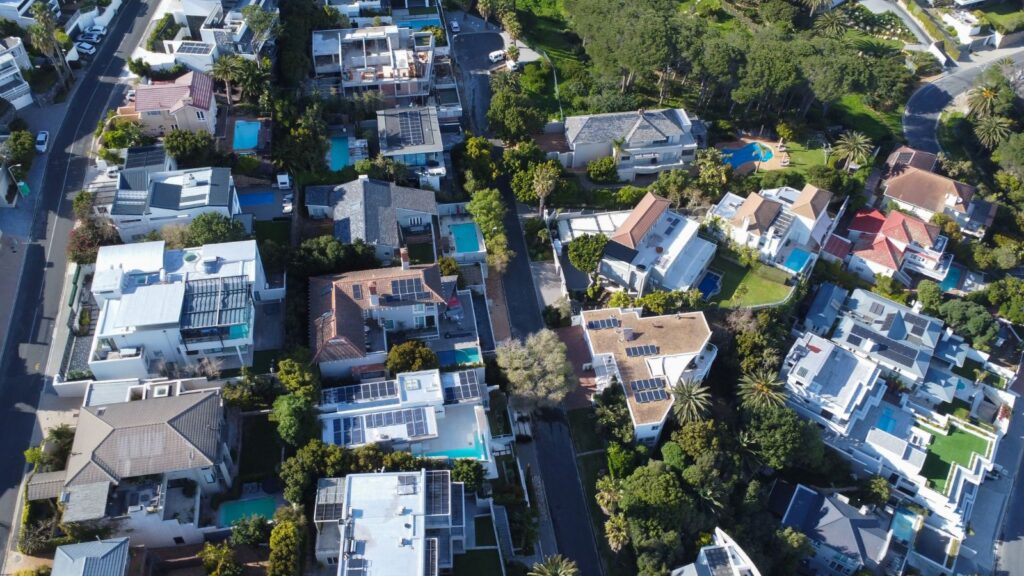
Struggling municipalities coming after solar users: Financially distressed municipalities are turning to additional charges on households with rooftop solar systems as a new source of funding, rather than addressing the root causes of their financial problems. [MyBroadband]
Bad news for bacon lovers: South African consumers may see higher pork prices due to outbreaks of African swine fever and foot-and-mouth disease, adding pressure to already strained household food budgets. [Business Day]
New BEE tax proposed: Former Reserve Bank Deputy Governor Kuben Naidoo supports entrepreneur Alan Knott-Craig’s proposal for a new tax or voluntary levy to fund black economic empowerment (BEE). Knott-Craig suggested a 3% levy on company revenue to South Africa’s Minister of Trade and Industry, which would help companies achieve a Level 3 B-BBEE certification. [Daily Investor]
Scam targeting shoppers in South Africa: South Africans are being warned about a scam targeting people outside supermarkets, where someone asks for food instead of cash but allegedly exploits the transaction to get money back. [BusinessTech]
Government struggle to identify hijacked buildings: Gauteng’s Department of Cooperative Governance and Traditional Affairs (CoGTA) has missed its deadline to identify hijacked buildings in the province due to the proliferation of the problem. [Newsday]
















 Loading ...