

To get South Africa back on track, we must resist the bullshit: Jonas


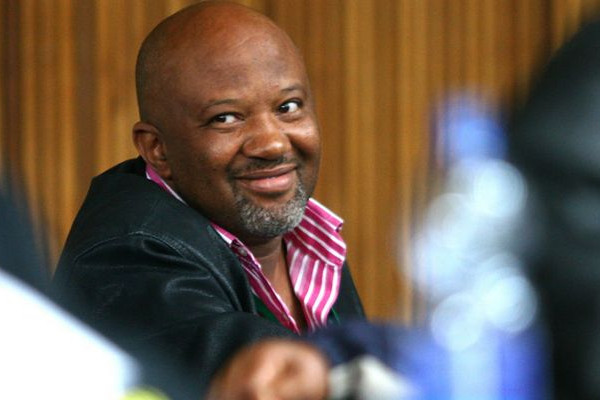
Former deputy finance minister Mcebisi Jonas has given a breakdown on the current state of South Africa, including the country’s strengths, weaknesses, threats and opportunities in the face of junk status and recession.
The former official warned of the rise of populism in South Africa, and said that citizens should fight back by “resisting the bullshit” that threatens to divide and distract from what needs to be done to get South Africa back on track.
In a column for the Daily Maverick, Jonas highlighted the four major reasons why South Africa is currently stuck in an economic growth slump:
- South Africa is too dependent on unreliable sources of investment to finance our growth ambitions. As a result, we are extremely vulnerable to external shocks, even small ones.
- The country is not investing enough in fixed capital. Our own big firms are investing in other emerging markets, not here in SA – we need to ask ourselves why and address these reasons.
- There is inherent inequality in the economy. Asset inequality is a major problem, but there is no quick fix for it. Simple asset redistribution may work to reduce inequality, but also increases unemployment and poverty – so SA needs to focus on building new wealth.
- The state is unable to lead economic reform and is trapped in tending to the needs of a narrow political-business complex (ie, state capture). State has a vital role to play in economic reform, and SOEs should lead the charge – however, corruption and patronage needs to be rooted out.
According to Jonas, all of these factors are keeping South Africa in a low-economic growth loop, where even boosts from global factors – such as a recovery in commodities, or political events in the USA and UK – can’t dig us out.
This year alone, South Africa has faced three ratings downgrades, two of which were to junk status, and the latest GDP data showed the country has officially moved into a recession.
“What has happened is history, but how we manage things going forward is critical,” Jonas said.
The ratings agencies gave several reasons for the downgrade – from policy uncertainty to governance of our SOEs (corruption and contingent liability), but among the worries were concerns of growing social pressures (citizen unrest) which could result in populist spending decisions.
“These will have to be attended to with urgency if we are to avoid further downgrades, and regain our sovereign investment grade,” Jonas said.
The rise of populism is a big threat, Jonas argued, as it distracts from what really needs to be done to save the economy. The former official said that populism arises in low-trust societies where there is demand for the state to ‘take sides’ on social issues.
It shuts down democratic dialogue and gives the government freedom to do whatever it says the populace demands. It gives “absolute creative freedom to the bullshitter to come up with whatever the audience would enjoy hearing”, Jonas said.
“Hence its appeal to desperate politicians (and unfortunately we have a few of those) and the massive traction it enjoys among electorates.
“We need the wisdom and the courage to resist the bullshit, especially bullshit that divides us as South Africans and bullshit that threatens to destroy the economy.”
One of the key tactics of those pushing populist rhetoric is the movement around “white monopoly capital” (WMC) and a focus on “radical economic transformation”.
“In its worst iteration, (WMC) casts established business, industrialists and farmers as some kind of enemy that must be defeated,” Jonas said. This, despite two-thirds of the economy being either foreign owned or owned by pension funds.
This rhetoric creates mistrust and uncertainty among businesses and investors – something South Africa simply cannot afford.
“It creates further mistrust and policy confusion. It is also probably leading to disinvestment, or the lack of investment especially in long term fixed capital,” he said.
“We must collectively defeat populism and recast radical economic transformation as a genuine programme of inclusive growth around which society can be mobilized.
“The role of established business in this programme of inclusive growth must be affirmed. Without it, there is no inclusive growth,” Jonas said.
You can read Jonas’ full post on the Daily Maverick.















 Loading ...