

Interest rate cuts back on the table for South Africa


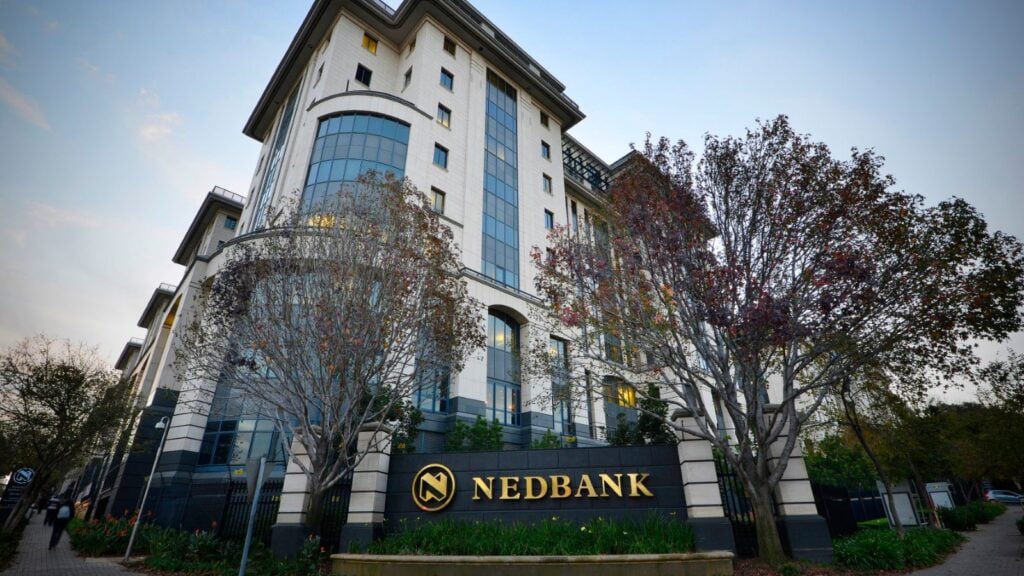
Nedbank believes that the South African Reserve Bank (SARB) will keep interest rates on hold following the peace agreement between the United States and Iran, with cuts on the cards in 2027.
In a pre-close update for the first five months of the year, Nedbank said that the operating environment has been mixed.
Higher fuel prices drove local inflation up from a low of 3% in February to 4.5% in May. In response, SARB’s Monetary Policy Committee (MPC) increased interest rates by 25 bps in May.
This raised the repo rate to 7% and the prime lending rate to 10.5%.
Nedbank said that inflation will likely rise further to a peak of around 4.6% in June, before easing to roughly 3.2% by year-end.
This comes as global oil prices have reduced in recent weeks after the US and Iran reached an agreement to end hostilities and reopen the Strait of Hormuz.
“Against this backdrop, the MPC is likely to hold interest rates at current levels until inflation trends clearly towards the 3% target, creating space for further monetary easing in 2027,” Nedbank said.
The MPC was widely expected to cut interest rates at the start of the year, but the war in Iran and the subsequent rise in oil prices led to the opposite.
When it comes to the economy, Nedbank said real GDP growth surprised on the upside in Q1, expanding by a slightly faster 0.5% quarter-on-quarter.
Most of the momentum came from a significant improvement in South Africa’s net trade position, it said.
Nevertheless, domestic demand contracted over the quarter, hurt by a relapse in fixed investment and slower consumer spending.
The big four banks now expect GDP to grow by roughly 1.3% in 2026, revised down from the 1.5% forecasted in February 2026.
For the five months under review, Nedbank said that industry-wide credit extension strengthened modestly, with private sector credit growth rising to around 9% year-on-year in April 2026.
Corporate credit growth rose into double digits, driven by general loan activity, even as demand remained sensitive to weak business confidence and subdued fixed investment.
It added that credit growth has improved gradually but remains relatively weak, which reflects ongoing affordability constraints.
“Credit growth across both corporates and households is expected to remain positive in H2 2026, albeit at more moderate levels, as heightened uncertainty and cautious borrowing behaviour persist,” it said.
Nedbank performance
For the period, the group said Corporate and Investment Banking (CIB) delivered strong performance in 5M 2026, supported by healthy balance-sheet growth.
The group said that the strong growth in Investment Banking was partially offset by slow growth in
Property Finance and a low impairment charge.
It added that Business and Commercial Banking (BCB) was negatively impacted by a one-off client impairment, which masked strong underlying core business fundamentals.
This included better loan growth and double-digit NIR growth, supported by increased transactional client activity.
Earnings in Personal and Private Banking (PPB) were also impacted by lower endowment income and higher impairments.
This offset stronger performance in insurance, fee and commission income and secured lending.
While its SADC operations in Nedbank Africa Regions (NAR) increased earnings strongly, this came off a low base. The group added that its acquisition of Kenya’s NCBA should be completed by the year-end.
At the end of the period, the group’s impairment charge and the annualised credit loss ratio (CLR) increased on a period-on-period basis.
CLR moved into the upper half of our through-the-cycle (TTC) target range of 60 bps to 100 bps.
CIB’s CLR remained at the bottom of its TTC range, reflecting the health of corporates in South Africa and a high-quality portfolio, Nedbank said.
BCB’s CLR increased into the lower end of its TTC target range due to the single client default, while PPB’s CLR increased to slightly above the top end of its TTC target range.
PPB’s increase was due to “deteriorating underlying macroeconomic assumptions and increased delinquencies across most asset classes as affordability remains an issue for consumers.”
Looking ahead, the group said that its guidance is for its CLR to be slightly above the midpoint of the group’s TTC target range for FY 2026, and slightly higher in H1 than H2.

















 Loading ...