

Baidu announces $1.5 billion fund for self-driving cars to rival Tesla


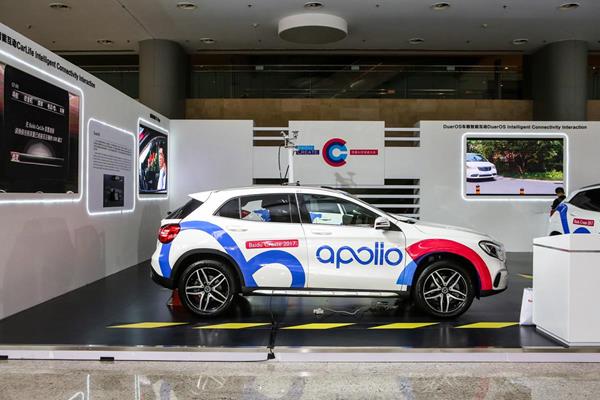
Chine internet giant Baidu has announced a 10 billion RMB ($1.5 billion) Apollo Fund to invest in 100 autonomous driving projects in the next three years.
It also announced the release of Apollo 1.5, the latest iteration of the company’s Apollo open-source autonomous driving platform that has gathered 70 strong partners so far.
Building on Apollo 1.0, Apollo 1.5 opens up five additional core capabilities which include obstacle perception, planning, cloud simulation, High-Definition (HD) maps and End-to-End deep learning, providing more comprehensive solutions to developers and ecosystem partners to accelerate the deployment of autonomous driving, the company said.
The obstacle perception capability enables vehicles to accurately identify obstacles during both day and night.
With the planning capability, vehicles can plan the correct driving path and make optimal driving decisions.
The cloud simulation system on Apollo is the only platform that provides open, built-in HD maps tailored for autonomous driving.
Based on large scale cloud computing capacity, Apollo has a vast amount of real traffic data in China, and has a virtual running capacity of one million kilometers per day, Baidu said.
Apollo is an open platform that provides a comprehensive, secure, and reliable all-in-one solution that supports all major features and functions of an autonomous vehicle.
Its first iteration, Apollo 1.0, with capabilities enabling vehicles to do autonomous waypoint driving in enclosed venues, was announced in July at Baidu’s inaugurate AI Developers Conference in Beijing.
Over the past two months, Apollo has seen dozens of code updates each week and the addition of more than 65,000 lines of new code.
At the same time, Apollo has received a positive response from global developers.
To date, more than 1,300 companies have downloaded Apollo source code and nearly 100 companies have applied for open data via the Apollo website.
Apollo has attracted 70 global and Chinese partners, including OEMs, Tier 1 suppliers, developer platforms and technology start-ups.
Newly joined members include Hyundai Motor, ROS, esd electronics, Neousys Technology, and autonomous driving startups such as Momenta and iDriver+ Technologies.
Read:

















 Loading ...